Introduction
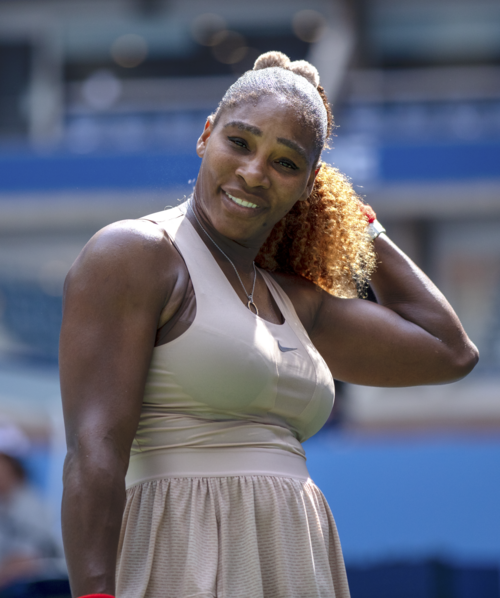
Learning to hit tennis balls over a chain-link net on cracked public asphalt courts in Compton, California, with her older sister Venus and their father Richard Williams, Serena Williams (born 1981) revolutionized women’s tennis with the most powerful serve in the history of the women’s game! Winning 23 Grand Slam singles titles (the most by any player in the Open Era!), 14 Grand Slam doubles titles alongside her sister Venus, and 4 Olympic Gold Medals, Serena dominated world tennis across three different decades!
A foundational concept in this investigation is Grand Slam (The Four Tennis Majors) (pronounced grand slam), which refers to: The four most prestigious annual tennis tournaments: the Australian Open (hard court), French Open (clay), Wimbledon (grass), and US Open (hard court). Every part of Serena Williams: 23 Grand Slams & Queen of the Court within ⚽ Global Sports Legends: Soccer, Basketball, Golf, Tennis & Track builds upon this essential concept.
In Grade 5 advanced nonfiction inquiry across Sports & Entertainment (⚽ Global Sports Legends: Soccer, Basketball, Golf, Tennis & Track), synthesizing primary evidence around Grand Slam (The Four Tennis Majors), , and Kinetic Chain (Serve Biomechanics) reveals how complex systems operate and adapt over time.

Key Features
Born on September 26, 1981, in Saginaw, Michigan, and raised in Compton, California, Serena was the youngest of five sisters! When she was just three years old, her father Richard (who taught himself how to coach tennis from instructional books and videotapes!) and her mother Oracene Price brought Serena and four-year-old Venus to the local public park courts every morning with a shopping cart full of 500 worn-out tennis balls. Even though Serena’s first racket was an adult-sized frame taller than her own legs, she practiced two hours every day while maintaining an A average in school!
To analyze these defining traits accurately, specialists examine (GOW-duhn slam): Winning all four Grand Slam tournaments plus an Olympic Gold Medal during a player’s career—achieved by Serena Williams in both singles and doubles! Alongside Grand Slam (The Four Tennis Majors) (The four most prestigious annual tennis tournaments: the Australian Open (hard court), French Open (clay), Wimbledon (grass), and US Open (hard court).), these specialized characteristics set Serena Williams: 23 Grand Slams & Queen of the Court apart within ⚽ Global Sports Legends: Soccer, Basketball, Golf, Tennis & Track.
Field Observation & Evidence: Researchers studying Serena Williams: 23 Grand Slams & Queen of the Court observe how physical form matches function in Sports & Entertainment. Each observable feature provides a clear advantage that supports stability, survival, or performance across changing conditions.
How It Works
In 1999, just weeks before her 18th birthday, Serena won her very first Major championship at the US Open in New York—becoming the first African American woman to win a Grand Slam singles title since Althea Gibson in 1958! Two years later, Serena achieved the "Serena Slam" (2002–2003)—winning the French Open, Wimbledon, the US Open, and the Australian Open all in a row (defeating her sister Venus in all four finals!)—and then remarkably pulled off a SECOND "Serena Slam" twelve years later in 2014–2015 at age 33!
This step-by-step process relies on Kinetic Chain (Serve Biomechanics) (pronounced kih-NET-ik chayn), defined as: Transferring energy smoothly from the ground up through the knees, hips, core, shoulder, elbow, and wrist to launch a 125+ mph tennis serve. Each stage of the process prepares the way for the next phase to unfold.
Cause-and-Effect Balance: When conditions remain balanced, Grand Slam (The Four Tennis Majors) and Kinetic Chain (Serve Biomechanics) interact inside the to keep the system running smoothly. If any single link in this sequence is disrupted, the entire pace of activity shifts.
In Our World
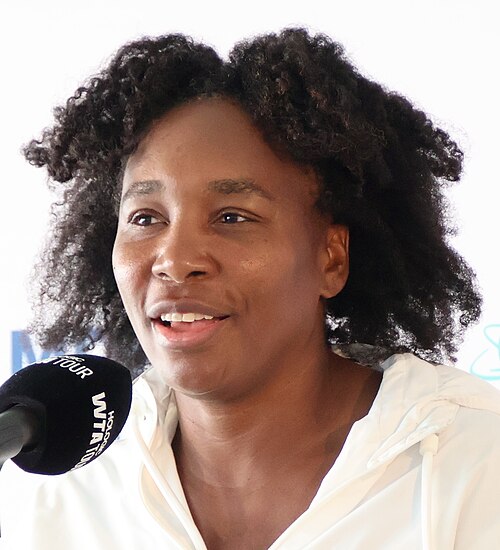
How did Serena generate serves clocked at 128.6 mph (207 km/h)? Sports physicists point to her textbook kinetic chain: coiling her legs and hips like a spring, tossing the ball slightly forward into the court, and snapping her shoulder, elbow, and wrist in an explosive upward sequence! Off the court, Serena and Venus teamed up to go a perfect 14–0 in Grand Slam Doubles Finals, won 3 Olympic Doubles Gold Medals together (2000 Sydney, 2008 Beijing, 2012 London—plus Serena’s 2012 Singles Gold!), funded schools in Kenya and Jamaica, and built Serena Ventures to invest in women- and minority-founded tech startups!
Understanding how Serena Williams: 23 Grand Slams & Queen of the Court functions in real environments also involves (GOW-duhn slam): Winning all four Grand Slam tournaments plus an Olympic Gold Medal during a player’s career—achieved by Serena Williams in both singles and doubles! Even when surrounding conditions shift across seasons or regions, the interaction between Grand Slam (The Four Tennis Majors), Career Golden Slam, and Kinetic Chain (Serve Biomechanics) helps sustain balance and resilience in the wider environment.
Global & Practical Significance: The Williams sisters developed their legendary focus and strokes on the public park courts of Compton, California. Furthermore, Serena won 23 Grand Slam singles titles (7 Australian Opens, 3 French Opens, 7 Wimbledons, and 6 US Opens).
Amazing Facts
1. Remarkable Scale & Numbers: When Serena Williams and her older sister Venus Williams reached the final of a Grand Slam Women’s Doubles tournament together, their record was an unbeatable 14 wins and 0 losses (14–0)—and they also won 3 Olympic Gold Medals as a doubles team! This discovery highlights why Grand Slam (The Four Tennis Majors) is central to understanding Serena Williams: 23 Grand Slams & Queen of the Court.
2. Extraordinary Adaptation & Design: Serena Williams pulled off the "Serena Slam"—holding all four Grand Slam singles trophies (Australian Open, French Open, Wimbledon, and US Open) at the exact same time—TWICE, more than a decade apart (in 2002–2003 and again in 2014–2015)! Specialized conditions involving make these adaptations possible.
3. Surprising Scientific & Historical Record: How fast was Serena’s fastest recorded tennis serve? At the 2013 Australian Open, her serve was clocked at 207 km/h (128.6 mph)—faster than a Category 3 hurricane wind! Over time, processes linked to Kinetic Chain (Serve Biomechanics) leave a lasting mark across ⚽ Global Sports Legends: Soccer, Basketball, Golf, Tennis & Track.
Read & Review
Chapter Synthesis: Throughout this investigation of Serena Williams: 23 Grand Slams & Queen of the Court in Sports & Entertainment (⚽ Global Sports Legends: Soccer, Basketball, Golf, Tennis & Track), we examined its core foundations, defining traits, step-by-step mechanisms, and real-world connections using key terms like Grand Slam (The Four Tennis Majors), , and Kinetic Chain (Serve Biomechanics).
Academic Vocabulary Review: • Grand Slam (The Four Tennis Majors) (grand slam): The four most prestigious annual tennis tournaments: the Australian Open (hard court), French Open (clay), Wimbledon (grass), and US Open (hard court). • (GOW-duhn slam): Winning all four Grand Slam tournaments plus an Olympic Gold Medal during a player’s career—achieved by Serena Williams in both singles and doubles! • Kinetic Chain (Serve Biomechanics) (kih-NET-ik chayn): Transferring energy smoothly from the ground up through the knees, hips, core, shoulder, elbow, and wrist to launch a 125+ mph tennis serve.
Critical Thinking Check: (1) Where did young Serena and Venus Williams first learn to play tennis with their father Richard and mother Oracene? — On the public park asphalt courts of Compton, California, practicing with a shopping cart of 500 used tennis balls. (2) How many Grand Slam singles championships did Serena Williams win—the all-time record for any man or woman in the Open Era until 2023 and the Open Era women’s record today? — 23 Grand Slam singles titles.