Introduction
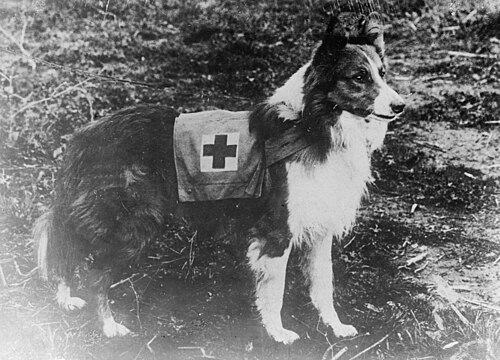
When hikers get lost in dense forests, skiers are buried under mountain avalanches, or buildings collapse in earthquakes, search-and-rescue (SAR) animals race against the clock to save human lives using senses no machine can match!
A foundational concept in this investigation is (pronounced ol-FAK-tuh-ree), which refers to: Relating to the sense of smell and the specialized nerve receptors inside the nose. Every part of Search-and-Rescue Animals within Animal Behavior & Working Animals builds upon this essential concept.
At the Grade 4 level of Animals (Animal Behavior & Working Animals), researchers compare structure, function, and environmental context to see how , , and shape measurable outcomes.
Key Features
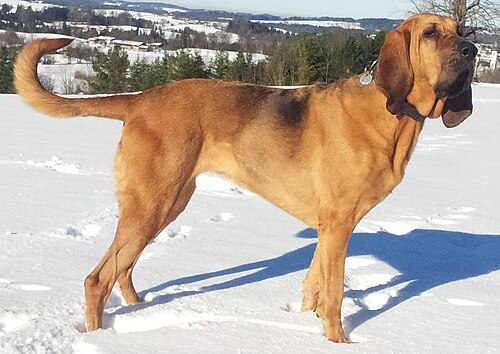
A human nose has about 5 million scent receptors, while a Bloodhound or German Shepherd has up to 300 million! Dogs also have a specialized nasal fold that separates breathing air from smelling air, and can move each nostril independently to tell which direction a scent is coming from.
To analyze these defining traits accurately, specialists examine (AIR-sen-ting): A search technique where a rescue dog catches human scent particles carried on wind currents across a wide area. Alongside (Relating to the sense of smell and the specialized nerve receptors inside the nose.), these specialized characteristics set Search-and-Rescue Animals apart within Animal Behavior & Working Animals.
Field Observation & Evidence: Researchers studying Search-and-Rescue Animals observe how physical form matches function in Animals. Each observable feature provides a clear advantage that supports stability, survival, or performance across changing conditions.
How It Works
Every minute, a human body sheds roughly 40,000 microscopic skin cells ("rafts") that float on the wind or settle on trails. Trailing dogs follow a specific person’s ground footsteps using a piece of their clothing, while air-scent dogs sweep large disaster zones with their noses held high to catch any human scent drifting on the breeze.
This step-by-step process relies on (pronounced AV-uh-lanch), defined as: A rapid, dangerous slide of a large mass of snow and ice down a steep mountainside. Each stage of the process prepares the way for the next phase to unfold.
Cause-and-Effect Balance: When conditions remain balanced, and interact inside the to keep the system running smoothly. If any single link in this sequence is disrupted, the entire pace of activity shifts.
In Our World
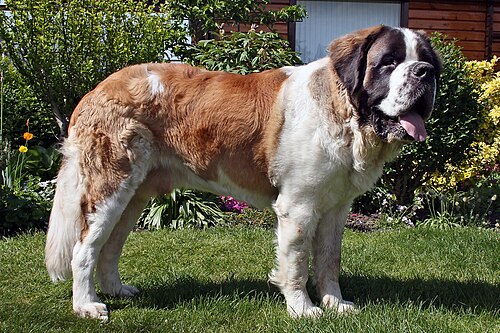
Beginning in the 1600s, monks at the Great St. Bernard Hospice high in the snowy Swiss Alps trained muscular St. Bernard dogs to locate travelers buried in blizzards. Today, scientists even train African giant pouched rats ("HeroRATs") to sniff out landmines and locate earthquake survivors in tiny rubble gaps!
Understanding how Search-and-Rescue Animals functions in real environments also involves (AIR-sen-ting): A search technique where a rescue dog catches human scent particles carried on wind currents across a wide area. Even when surrounding conditions shift across seasons or regions, the interaction between , Air-Scenting, and helps sustain balance and resilience in the wider environment.
Global & Practical Significance: Dogs possess 50 to 60 times more receptors than humans, plus a much larger brain region dedicated to analyzing scents. Furthermore, Both methods work together during wilderness and disaster rescue operations.
Amazing Facts
1. Remarkable Scale & Numbers: A famous St. Bernard rescue dog named Barry saved more than 40 people lost in snowy Alpine passes during the early 1800s! This discovery highlights why is central to understanding Search-and-Rescue Animals.
2. Extraordinary Adaptation & Design: A Bloodhound’s sense of smell is so accurate that its trail evidence can be admitted in a court of law—and it can follow a scent trail over 130 miles long. Specialized conditions involving make these adaptations possible.
3. Surprising Scientific & Historical Record: African giant pouched rats are so lightweight that they can walk across buried landmines without setting them off while sniffing out explosives. Over time, processes linked to leave a lasting mark across Animal Behavior & Working Animals.
Read & Review
Chapter Synthesis: Throughout this investigation of Search-and-Rescue Animals in Animals (Animal Behavior & Working Animals), we examined its core foundations, defining traits, step-by-step mechanisms, and real-world connections using key terms like , , and .
Academic Vocabulary Review: • (ol-FAK-tuh-ree): Relating to the sense of smell and the specialized nerve receptors inside the nose. • (AIR-sen-ting): A search technique where a rescue dog catches human scent particles carried on wind currents across a wide area. • (AV-uh-lanch): A rapid, dangerous slide of a large mass of snow and ice down a steep mountainside.
Critical Thinking Check: (1) Roughly how many scent receptors does a search-and-rescue dog have compared to a human’s 5 million? — Up to 300 million scent receptors. (2) What is the difference between a trailing dog and an air-scent rescue dog? — A trailing dog follows one specific person’s ground path, while an air-scent dog detects any human scent drifting on the wind.