Introduction
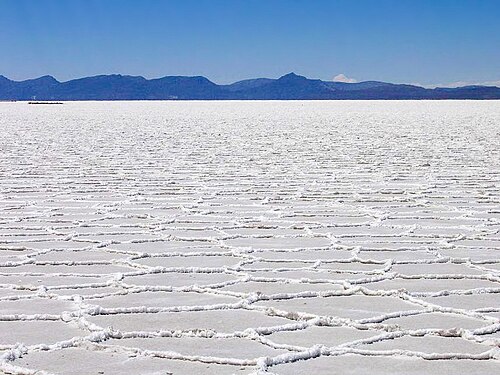
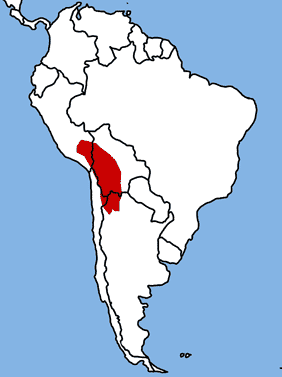
High in the Andes Mountains of southwestern Bolivia—at an breathtaking altitude of nearly 12,000 feet (3,656 meters) above sea level—stretches Salar de Uyuni, a dazzling white desert of salt covering over 4,000 square miles (10,582 square kilometers). It is the largest salt flat on Earth!
An important word to know in this book is (DES-ih-kay-tid). Desiccated means: Completely dried up; having had all water removed by evaporation over time. Learning about Desiccated helps us understand how Salar de Uyuni, Bolivia: Earth's Largest Sky Mirror fits into 🧭 Unsolved & Unexplained: 10 Mysterious Places on Earth.
Key Features
During Bolivia’s dry winter months (May to November), Salar de Uyuni hardens into a blindingly bright white plain etched with geometric, six-sided honeycomb polygons of salt crust up to several meters thick. Scattered across this white expanse are rocky "islands" topped with giant, slow-growing cardón cacti.
Scientists and explorers also look closely at (al-tih-PLAH-noh), which means: The high-altitude plateau basin sitting between the mountain ranges of the central Andes in South America. These special traits make Salar de Uyuni, Bolivia: Earth's Largest Sky Mirror easy to spot and study.
How It Works
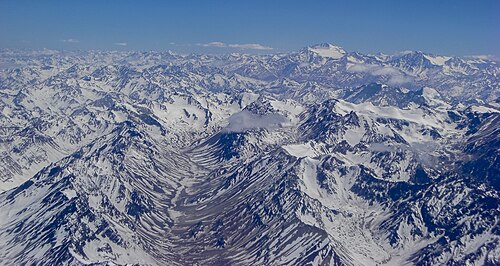
The Mystery: How did an ocean’s worth of over 10 billion tons of salt end up stranded near the top of the Andes mountain range, and why does the horizon completely vanish during the rainy season? The Science: Between 40,000 and 10,000 years ago, the high Andean plateau () held giant prehistoric lakes—including Lake Minchin and Lake Tauca—that had no river outlet to the sea. When the climate warmed and those prehistoric lakes (evaporated completely), they left behind a thick, level crust of salt and mineral-rich brine. Because the salt crust is astonishingly flat—varying in elevation by less than three feet across the entire 4,000-square-mile expanse—a thin, calm layer of rainwater from December to March turns the salt flat into the world’s largest natural mirror, seamlessly reflecting the sky and clouds above!
Here is another helpful term: (LITH-ee-uhm). It means: The lightest metal element on the periodic table, found in salt-flat brines and used to power rechargeable batteries in phones and electric vehicles. Step by step, and Lithium work together in nature.
In Our World
Beneath Salar de Uyuni’s white crust lies one of the world’s largest reserves of dissolved —the lightweight silvery metal essential for making rechargeable batteries in electric cars, laptops, and smartphones—alongside breeding grounds for three species of South American pink flamingos!
Understanding how Salar de Uyuni, Bolivia: Earth's Largest Sky Mirror works in our world also involves (al-tih-PLAH-noh): The high-altitude plateau basin sitting between the mountain ranges of the central Andes in South America. Because the lakebed varies by less than one meter in elevation over thousands of square miles, NASA and ESA satellites actually use Salar de Uyuni as a giant precision calibration target from space!
Amazing Facts
Amazing Fact #1: Across more than 4,000 square miles, the surface of Salar de Uyuni varies in height by less than 3 feet (1 meter)—making it flatter than almost any parking lot on Earth!
Amazing Fact #2: When a thin film of rainwater covers the salt crust between December and March, the reflection is so perfect that you cannot tell where the ground ends and the sky begins!
Amazing Fact #3: Every November, Salar de Uyuni becomes the summer breeding ground for thousands of James’s, Andean, and Chilean pink flamingos that feed on microscopic brine organisms.
Read & Review
Let's review what we discovered about Salar de Uyuni, Bolivia: Earth's Largest Sky Mirror! In this book, we explored how , , and connect to 🧭 Unsolved & Unexplained: 10 Mysterious Places on Earth.
Key Question #1: How did more than 10 billion tons of salt end up at Salar de Uyuni, nearly 12,000 feet high in the Andes Mountains of Bolivia? Answer: Giant prehistoric lakes trapped on the high Andean plateau evaporated () thousands of years ago, leaving behind their dissolved minerals and salt. Prehistoric lakes like Lake Minchin and Lake Tauca had no outlet to the ocean; when they evaporated, thick salt crusts remained behind.
Key Question #2: Why does Salar de Uyuni transform into "the world’s largest natural mirror" during the rainy season? Answer: Because the salt crust is extraordinarily flat (varying by less than 3 feet across 4,000 square miles), so a thin calm sheet of rainwater reflects the sky without waves. Extreme flatness prevents water from draining away or forming deep waves, creating a still mirror film over the white salt.