Introduction
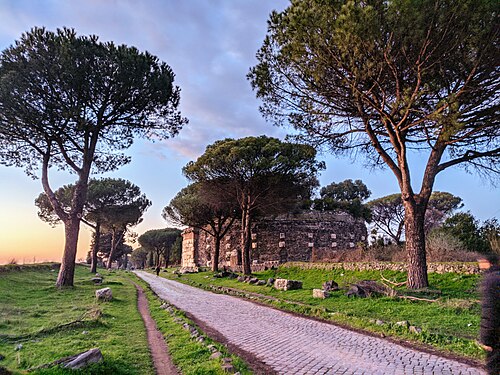
You have probably heard the famous saying "All roads lead to Rome!" At the height of the Roman Empire, Roman engineers built a network of more than 80,000 kilometers (50,000 miles) of stone-paved highways stretching from Scotland and Spain all the way to Egypt and Iraq—and sections of those roads are still walked on 2,000 years later!
An important word to know in this book is (KAM-ber). Camber means: A slight upward arch across the center of a road surface engineered so rainwater drains quickly into side ditches. Learning about Camber helps us understand how Roman Roads fits into Ancient Civilizations.
Key Features
Beginning in 312 BCE with the famous Via Appia (the Appian Way), Roman surveyors used a sighting instrument called a groma to lay out roads as straight as an arrow! Whenever a river or deep canyon stood in the way, Roman engineers didn’t detour around it—they built stone-arch bridges or tunneled straight through rock!
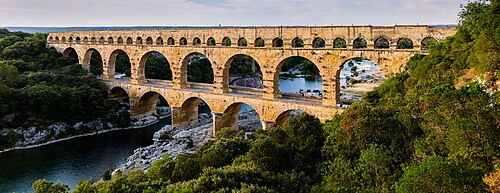
Scientists and explorers also look closely at (AK-wuh-dukt), which means: A Roman stone bridge-and-channel system engineered with arches and a gentle downward slope to carry fresh water into cities. These special traits make Roman Roads easy to spot and study.
How It Works
Why have Roman roads lasted for 23 centuries without washing away? Because Roman soldiers and engineers dug a deep trench and built a 4-layer engineered foundation: 1) A bottom layer of flat stones (statumen), 2) A layer of crushed rock and lime mortar (rudus), 3) Fine gravel and volcanic concrete (nucleus), and 4) Tightly fitted polygonal paving stones (summa crusta) on top! Even smarter, the center of the road was slightly curved upward (cambered) so rainwater ran straight off into drainage ditches on both sides!
Here is another helpful term: (KEE-stohn). It means: The wedge-shaped stone at the very top center of a Roman arch that locks all the other stones into place under gravity. Step by step, and Keystone work together in nature.
In Our World
Every Roman mile (1,000 double-steps, or mille passus, where our word "mile" comes from!) was marked by a carved stone pillar called a milestone telling travelers the distance to the next town and to Rome. Alongside roads, Roman engineers also built towering stone aqueducts (like the Pont du Gard) that carried fresh mountain spring water into cities using gentle gravity slopes and self-supporting semicircular stone arches!
Understanding how Roman Roads works in our world also involves (AK-wuh-dukt): A Roman stone bridge-and-channel system engineered with arches and a gentle downward slope to carry fresh water into cities. Even when surrounding conditions shift across seasons or regions, the interaction between , Aqueduct, and helps sustain balance and resilience in the wider environment.
Amazing Facts
Amazing Fact #1: Our English word "mile" comes from the Latin mille passus—meaning 1,000 double-steps marched by a Roman soldier (about 1,480 meters)!
Amazing Fact #2: Roman engineers built the center of their stone roads slightly higher than the edges (cambered) so rainwater drained off into side ditches instead of making mud puddles—a trick modern highway engineers still copy today!
Amazing Fact #3: Roman imperial couriers (cursus publicus) changing horses at relay stations along Roman roads could carry urgent messages up to 270 kilometers (170 miles) in a single day!
Read & Review
Let's review what we discovered about Roman Roads! In this book, we explored how , , and connect to Ancient Civilizations.
Key Question #1: Why did Roman engineers build the middle of their stone roads slightly curved upward (cambered)? Answer: So rainwater would roll off into drainage ditches on the sides instead of pooling and eroding the road. Proper drainage via a cambered crown and deep multi-layer foundations kept Roman roads intact for millennia.
Key Question #2: Where does our modern English word "mile" come from? Answer: From the Latin mille passus ("one thousand double-paces"), measured between stone milestones along Roman roads. Roman soldiers measured 1,000 two-step paces (mille passus) and placed carved stone markers at each mile.