Introduction
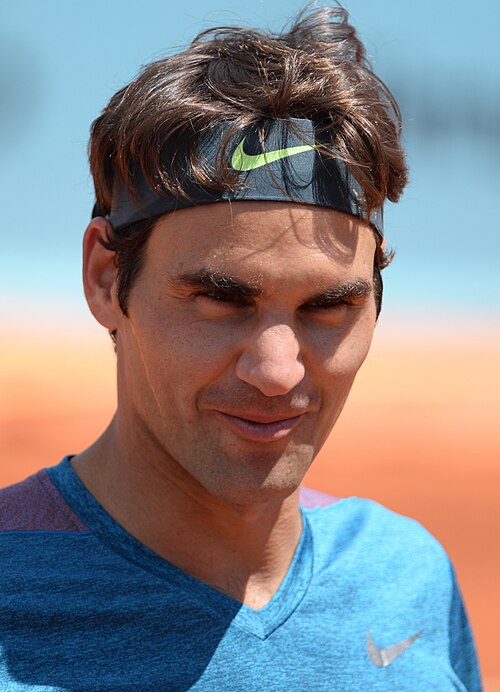
Watching Roger Federer (born 1981) glide across the green grass of Centre Court at Wimbledon looked less like a grueling physical battle and more like a ballet dancer conducting a symphony orchestra with a ! Known around the world as "the Swiss Maestro," Federer became the first man in history to win 20 Grand Slam singles titles (including an all-time record 8 Wimbledon Men’s Singles championships), held the World #1 ranking for a record 237 consecutive weeks, and won the Stefan Edberg Award 13 times as elected by his fellow players!
An important word to know in this book is Wimbledon (Grass-Court Tennis) (WIM-buhl-duhn). Wimbledon (Grass-Court Tennis) means: The oldest tennis tournament in the world (founded in 1877 in London), played on real rye-grass courts where the ball skids low and fast—won a record 8 times by Roger Federer. Learning about Wimbledon (Grass-Court Tennis) helps us understand how Roger Federer: Grace, Precision & the Swiss Maestro fits into ⚽ Global Sports Legends: Soccer, Basketball, Golf, Tennis & Track.
Key Features
Born on August 8, 1981, in Basel, Switzerland, to a Swiss father (Robert) and a South African mother (Lynette), young Roger grew up speaking Swiss German, French, and English—and Served as a ballboy at his hometown Basel indoor tennis tournament (where every ballboy receives a post-tournament pizza and a commemorative medal—an experience he loved so much that even after becoming World #1, he still bought pizza personally for the Basel ballkids every single year!). Believe it or not, as a 12-year-old junior player, Roger actually had a fiery temper—tossing his racket and crying whenever he missed an easy shot!
Scientists and explorers also look closely at (wun HAN-did BAK-hand), which means: A classic, artistic tennis stroke hit with one arm swinging freely across the body to generate either heavy topspin or a knifing underspin slice. These special traits make Roger Federer: Grace, Precision & the Swiss Maestro easy to spot and study.
How It Works
How did a frustrated teenager transform into the calmest, most graceful champion in sports? At age 16, Federer realized that getting angry wasted mental energy needed for the very next point; he trained himself to stay ice-calm between points, using deep breaths and fixing his racket strings to reset his focus! In 2001, 19-year-old Federer shocked four-time defending champion Pete Sampras at Wimbledon, and in 2003 he won his first Wimbledon trophy—launching a historic five-year stretch (2004–2008) where he stayed World #1 for 237 weeks straight without interruption!
Here is another helpful term: (SPORTS-muhn-ship). It means: Competing with fairness, grace, honesty, and respect for opponents, officials, and fans—whether winning or losing. Step by step, Wimbledon (Grass-Court Tennis) and Sportsmanship work together in nature.
In Our World
Part of tennis’s legendary "Big Three" alongside his great rivals and friends Rafael Nadal and Novak Djokovic, Federer played until age 41—even returning from knee surgery at age 35 to win the 2017 Australian Open, the 2017 Wimbledon title (without dropping a single set!), and the 2018 Australian Open (returning to World #1 at age 36, the oldest #1 in ATP history!). Off the court, the Roger Federer Foundation (founded when he was just 22 years old in 2003!) has funded early-childhood schooling and tablet learning programs for over 2.5 million children across southern Africa and Switzerland!
Understanding how Roger Federer: Grace, Precision & the Swiss Maestro works in our world also involves (wun HAN-did BAK-hand): A classic, artistic tennis stroke hit with one arm swinging freely across the body to generate either heavy topspin or a knifing underspin slice. Even when surrounding conditions shift across seasons or regions, the interaction between Wimbledon (Grass-Court Tennis), One-Handed Backhand, and helps sustain balance and resilience in the wider environment.
Amazing Facts
Amazing Fact #1: As a boy in Basel, Switzerland, Roger Federer worked for two years as a volunteer ballboy at the Swiss Indoors tournament—and throughout his entire 24-year pro career, whenever the Basel tournament ended, Roger still hosted a pizza party for all the tournament ballkids!
Amazing Fact #2: Roger Federer won the Wimbledon Men’s Singles trophy an all-time record 8 times (2003, 2004, 2005, 2006, 2007, 2009, 2012, and 2017)—and between 2003 and 2008 he won 65 consecutive matches on grass courts without a single loss!
Amazing Fact #3: Between February 2, 2004, and August 17, 2008, Federer was ranked World #1 for 237 consecutive weeks—more than 4.5 straight years at #1 without dropping to #2 even for a single day!
Read & Review
Let's review what we discovered about Roger Federer: Grace, Precision & the Swiss Maestro! In this book, we explored how Wimbledon (Grass-Court Tennis), , and connect to ⚽ Global Sports Legends: Soccer, Basketball, Golf, Tennis & Track.
Key Question #1: What important mental transformation did Roger Federer make as a teenager in Switzerland that unlocked his championship career? Answer: He learned to conquer his childhood temper on the court, staying calm after mistakes so he wouldn’t waste energy needed for the next point. Learning emotional self-control turned a fiery teenager into the calmest, most composed player on tour.
Key Question #2: At which historic Grand Slam tournament—played on grass courts in London—did Roger Federer win an all-time Men’s Singles record of 8 championships? Answer: Wimbledon (The Championships). Federer won 8 Wimbledon Men’s Singles titles between 2003 and 2017.