Introduction
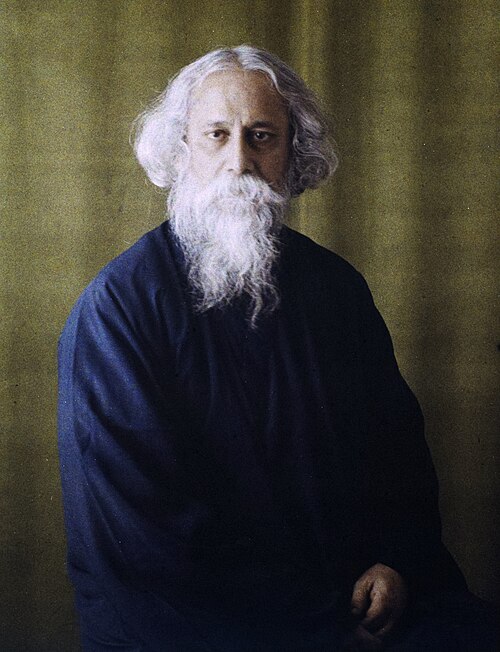
Known across India and the world as Gurudev ("Revered Teacher") and the Bard of Bengal, Rabindranath Tagore (1861–1941) was a towering poet, composer, playwright, painter, and educator from Kolkata (Calcutta). In 1913, he became the very first non-European in history to win the Nobel Prize in Literature, and he achieved a feat unmatched by any other writer on Earth: composing the national anthems of two different sovereign nations!
A foundational concept in this investigation is (pronounced POL-ee-math), which refers to: A person of wide-ranging knowledge and creative mastery across many fields, such as poetry, music, painting, and philosophy. Every part of Rabindranath Tagore: Poet, Philosopher & Nobel Laureate within 🌍 World Leaders, Statesmen & Global Voices builds upon this essential concept.
In Grade 3 Famous People (Movers & Shakers) studies (🌍 World Leaders, Statesmen & Global Voices), understanding how , , and work together helps explain real-world patterns. As you read each chapter, notice how these key terms connect structure, process, and environment.
Key Features
Born into a creative family during the , young Rabindranath disliked rigid, windowless classrooms where students only memorized lines by rote. Instead, he loved nature, rivers, and music. Over his lifetime, Tagore wrote more than 2,000 songs (known as ), dozens of volumes of poetry, short stories, and plays, and—starting in his sixties—painted over 2,000 expressive artworks!
To analyze these defining traits accurately, specialists examine (gee-TAHN-juh-lee): Meaning "Song Offerings," the famous collection of poems for which Rabindranath Tagore won the 1913 Nobel Prize in Literature. Alongside (A person of wide-ranging knowledge and creative mastery across many fields, such as poetry, music, painting, and philosophy.), these specialized characteristics set Rabindranath Tagore: Poet, Philosopher & Nobel Laureate apart within 🌍 World Leaders, Statesmen & Global Voices.
Field Observation & Evidence: Researchers studying Rabindranath Tagore: Poet, Philosopher & Nobel Laureate observe how physical form matches function in Famous People (Movers & Shakers). Each observable feature provides a clear advantage that supports stability, survival, or performance across changing conditions.
How It Works
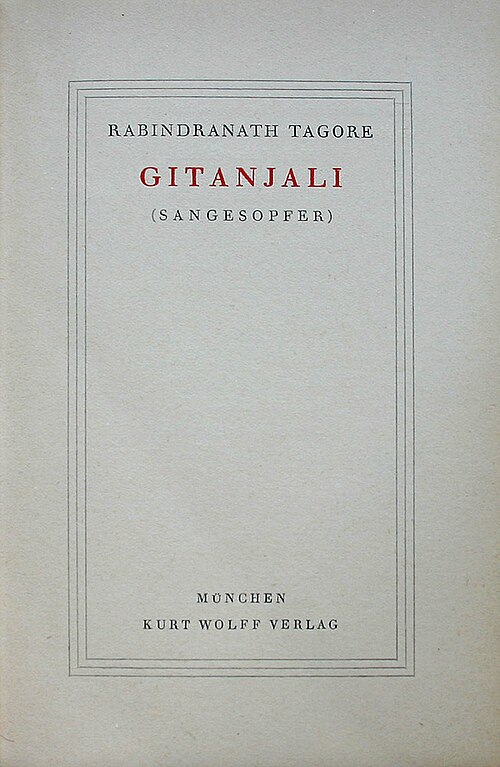
Tagore’s collection of deeply spiritual, lyrical poems titled (Song Offerings), which he translated into English himself, moved readers around the world and earned him the 1913 Nobel Prize in Literature. Even more remarkably, two of his Bengali songs became national anthems: "Jana Gana Mana" (composed in 1911) was adopted as the National Anthem of India, and "Amar Shonar Bangla" ("My Golden Bengal", composed in 1905) was adopted in 1971 as the National Anthem of Bangladesh (plus he inspired Sri Lanka’s national anthem poet Ananda Samarakoon)!
This step-by-step process relies on (pronounced ruh-BIN-druh sun-GEET), defined as: The body of more than 2,200 distinctive songs written and composed by Rabindranath Tagore that remain beloved across South Asia. Each stage of the process prepares the way for the next phase to unfold.
Cause-and-Effect Balance: When conditions remain balanced, and interact inside the to keep the system running smoothly. If any single link in this sequence is disrupted, the entire pace of activity shifts.
In Our World
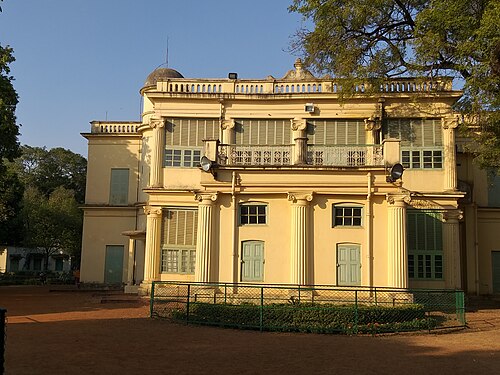
To transform how children learn, Tagore used his Nobel Prize money to build ("Abode of Peace") and Visva-Bharati University in rural West Bengal. At Santiniketan, classes were held outdoors under the shade of mango and banyan trees so children could learn science, literature, music, and art in harmony with nature—a school whose graduates later included Nobel Prize–winning economist Amartya Sen and filmmaker Satyajit Ray!
Understanding how Rabindranath Tagore: Poet, Philosopher & Nobel Laureate functions in real environments also involves (gee-TAHN-juh-lee): Meaning "Song Offerings," the famous collection of poems for which Rabindranath Tagore won the 1913 Nobel Prize in Literature. Even when surrounding conditions shift across seasons or regions, the interaction between , Gitanjali, and helps sustain balance and resilience in the wider environment.
Global & Practical Significance: Tagore composed both "Jana Gana Mana" (India) and "Amar Shonar Bangla" (Bangladesh), and also mentored the composer of Sri Lanka’s anthem. Furthermore, The Swedish Academy awarded Tagore the 1913 Nobel Prize in Literature for his deeply sensitive, fresh, and beautiful verse.
Amazing Facts
1. Remarkable Scale & Numbers: Rabindranath Tagore is the only person in world history to have written the words and music for the official national anthems of two nations: India ("Jana Gana Mana") and Bangladesh ("Amar Shonar Bangla")! This discovery highlights why is central to understanding Rabindranath Tagore: Poet, Philosopher & Nobel Laureate.
2. Extraordinary Adaptation & Design: When Tagore won the 1913 Nobel Prize in Literature for , he became the first person from Asia—and the first non-European—ever to win a Nobel Prize. Specialized conditions involving Gitanjali make these adaptations possible.
3. Surprising Scientific & Historical Record: It was Rabindranath Tagore who popularized the title "Mahatma" ("Great Soul") for his close friend Mohandas Karamchand Gandhi, while Gandhi affectionately called Tagore "Gurudev" ("Revered Teacher")! Over time, processes linked to leave a lasting mark across 🌍 World Leaders, Statesmen & Global Voices.
Read & Review
Chapter Synthesis: Throughout this investigation of Rabindranath Tagore: Poet, Philosopher & Nobel Laureate in Famous People (Movers & Shakers) (🌍 World Leaders, Statesmen & Global Voices), we examined its core foundations, defining traits, step-by-step mechanisms, and real-world connections using key terms like , , and .
Academic Vocabulary Review: • (POL-ee-math): A person of wide-ranging knowledge and creative mastery across many fields, such as poetry, music, painting, and philosophy. • (gee-TAHN-juh-lee): Meaning "Song Offerings," the famous collection of poems for which Rabindranath Tagore won the 1913 Nobel Prize in Literature. • (ruh-BIN-druh sun-GEET): The body of more than 2,200 distinctive songs written and composed by Rabindranath Tagore that remain beloved across South Asia.
Critical Thinking Check: (1) What unique world record does poet and composer Rabindranath Tagore hold among national anthem writers? — He wrote the national anthems of two different countries: India ("Jana Gana Mana") and Bangladesh ("Amar Shonar Bangla"). (2) What historic milestone did Rabindranath Tagore achieve in 1913 with his poetry collection (Song Offerings)? — He became the first non-European and first Asian laureate to win the Nobel Prize in Literature.