Introduction
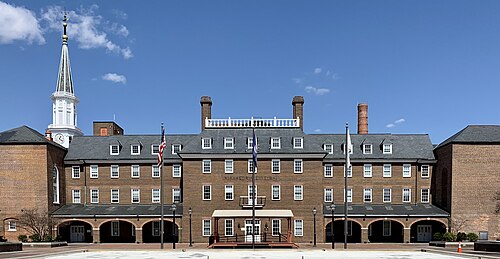
Walking along the riverfront streets and gas-lit brick sidewalks of Old Town Alexandria on the Potomac River feels like stepping into a living 18th-century seaport! Founded in 1749 just six miles south of modern-day Washington, D.C., Alexandria was the bustling hometown market, social center, and worship place of George Washington!
A foundational concept in this investigation is (pronounced ser-VAY-er), which refers to: A person who measures land boundaries, angles, and distances using a compass and chain to lay out town streets and property lots, like young George Washington in 1749. Every part of Old Town Alexandria: George Washington's Hometown within 🏛️ Virginia's Founding Fathers & Presidential Estates builds upon this essential concept.
In Grade 5 advanced nonfiction inquiry across History (American & Virginia) (🏛️ Virginia's Founding Fathers & Presidential Estates), synthesizing primary evidence around , , and reveals how complex systems operate and adapt over time.
Key Features
Did you know that when Alexandria was laid out in July 1749, a 17-year-old ’s assistant named George Washington drew a famous hand-drawn map of the new town’s grid of streets along the Potomac River? Named after Scottish merchant John Alexander, Old Town Alexandria quickly grew into one of Colonial America’s busiest deep-water ports, shipping Virginia wheat, flour, and tobacco across the Atlantic Ocean.
To analyze these defining traits accurately, specialists examine (KOB-uhl-stohn): Naturally rounded river stones set into sand or mortar to pave 18th-century port streets like Captain’s Row in Old Town Alexandria. Alongside (A person who measures land boundaries, angles, and distances using a compass and chain to lay out town streets and property lots, like young George Washington in 1749.), these specialized characteristics set Old Town Alexandria: George Washington's Hometown apart within 🏛️ Virginia's Founding Fathers & Presidential Estates.
Field Observation & Evidence: Researchers studying Old Town Alexandria: George Washington's Hometown observe how physical form matches function in History (American & Virginia). Each observable feature provides a clear advantage that supports stability, survival, or performance across changing conditions.
How It Works
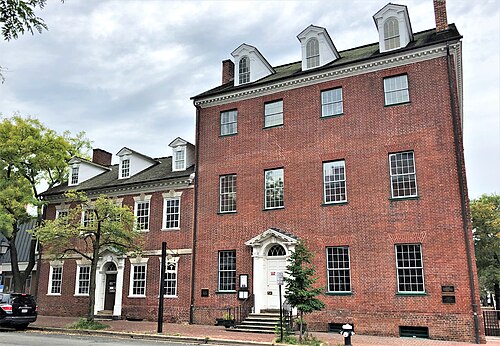
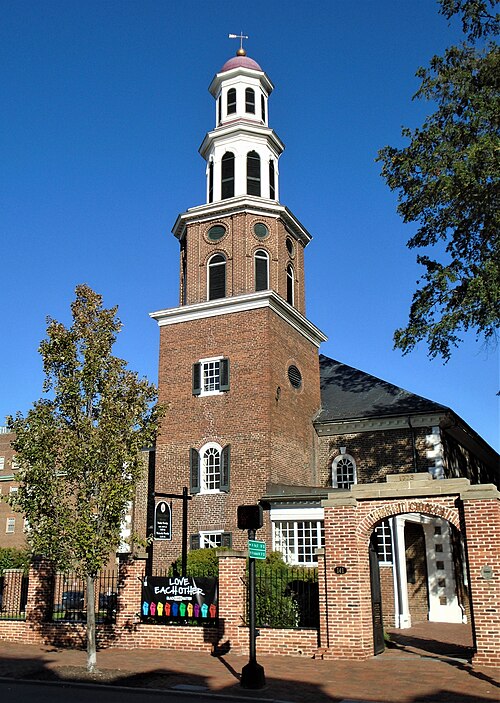
Over 4,000 historic 18th- and 19th-century buildings still stand in Old Town Alexandria today! At Gadsby’s (built in 1785 and 1792), George Washington reviewed militia troops from the steps, attended glittering Birthnight Balls, and dined alongside Thomas Jefferson, John Adams, James Madison, and the Marquis de Lafayette! Two blocks away stands Christ Church (completed in 1773), where visitors can still sit inside George Washington’s original family (#60)!
This step-by-step process relies on (pronounced spyte hows), defined as: Alexandria’s famous 7-foot-wide brick rowhouse built in 1830 inside a narrow alley to stop noisy wagons from cutting through. Each stage of the process prepares the way for the next phase to unfold.
Cause-and-Effect Balance: When conditions remain balanced, and interact inside the to keep the system running smoothly. If any single link in this sequence is disrupted, the entire pace of activity shifts.
In Our World
Every block of Old Town holds surprises: at 523 Queen Street sits the —Just 7 feet (2.1 meters) wide and 325 square feet total, built in 1830 by John Hollensbury to block noisy horse-drawn wagons and loiterers from using his brick alleyway! Nearby, the Stabler-Leadbeater Apothecary Museum (founded in 1792) preserves thousands of original hand-blown glass medicine bottles, dragon’s blood resin, and a real 1802 handwritten note from Martha Washington ordering a quart of castor oil! And along the waterfront and Duke Street, Freedom House Museum and Contraband and Freedmen Cemetery Memorial honor the thousands of enslaved and newly emancipated people whose lives shaped Alexandria.
Understanding how Old Town Alexandria: George Washington's Hometown functions in real environments also involves (KOB-uhl-stohn): Naturally rounded river stones set into sand or mortar to pave 18th-century port streets like Captain’s Row in Old Town Alexandria. Even when surrounding conditions shift across seasons or regions, the interaction between , Cobblestone, and helps sustain balance and resilience in the wider environment.
Global & Practical Significance: At age 17, George Washington assisted county John West in laying out Alexandria along the Potomac River in July 1749. Furthermore, By bricking a two-story, 7-foot-wide house directly between the two neighboring brick walls, Hollensbury permanently blocked wagon traffic in the alley.
Amazing Facts
1. Remarkable Scale & Numbers: In July 1749, a 17-year-old George Washington helped survey the original street plan of Alexandria—and you can still see his teenage handwriting on the 1749 map at the Library of Congress! This discovery highlights why is central to understanding Old Town Alexandria: George Washington's Hometown.
2. Extraordinary Adaptation & Design: Alexandria’s blue-painted (built in 1830 at 523 Queen Street) is only 7 feet wide—narrow enough that you can stand in the living room and touch both side walls with your outstretched fingertips! Specialized conditions involving make these adaptations possible.
3. Surprising Scientific & Historical Record: Inside the Stabler-Leadbeater Apothecary Museum (which operated from 1792 to 1933), shelves still hold over 15,000 original objects, including herbal remedies and an 1802 order note from Martha Washington at Mount Vernon! Over time, processes linked to leave a lasting mark across 🏛️ Virginia's Founding Fathers & Presidential Estates.
Read & Review
Chapter Synthesis: Throughout this investigation of Old Town Alexandria: George Washington's Hometown in History (American & Virginia) (🏛️ Virginia's Founding Fathers & Presidential Estates), we examined its core foundations, defining traits, step-by-step mechanisms, and real-world connections using key terms like , , and .
Academic Vocabulary Review: • (ser-VAY-er): A person who measures land boundaries, angles, and distances using a compass and chain to lay out town streets and property lots, like young George Washington in 1749. • (KOB-uhl-stohn): Naturally rounded river stones set into sand or mortar to pave 18th-century port streets like Captain’s Row in Old Town Alexandria. • (spyte hows): Alexandria’s famous 7-foot-wide brick rowhouse built in 1830 inside a narrow alley to stop noisy wagons from cutting through.
Critical Thinking Check: (1) Which famous 17-year-old future U.S. President helped survey and draw the map of Alexandria’s streets when the town was founded in 1749? — George Washington. (2) Why did John Hollensbury build the 7-foot-wide "" on Queen Street in Old Town Alexandria in 1830? — To plug up the narrow brick alleyway beside his home so noisy horse-drawn wagons could no longer rattle through.