Introduction
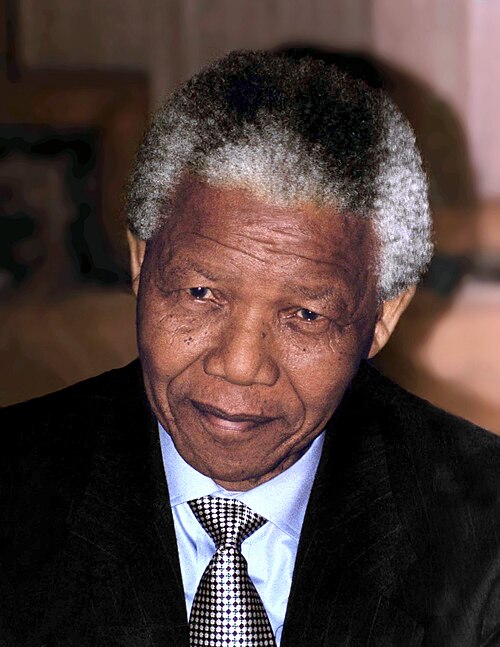
Known affectionately across South Africa by his Xhosa clan name , Nelson Rolihlahla Mandela (1918–2013) spent 27 years in prison for opposing South Africa’s unjust system of racial segregation known as . Emerging without bitterness in 1990, he chose forgiveness and over revenge, won the 1993 Nobel Peace Prize, and in 1994 became South Africa’s first Black President in the nation’s first fully democratic election!
A foundational concept in this investigation is (pronounced uh-PAHR-tayt), which refers to: An Afrikaans word meaning "apartness"; the unjust system of legal racial segregation enforced in South Africa from 1948 until the early 1990s. Every part of Nelson Mandela: From Prisoner to President of South Africa within 🌍 World Leaders, Statesmen & Global Voices builds upon this essential concept.
In Grade 5 advanced nonfiction inquiry across Famous People (Movers & Shakers) (🌍 World Leaders, Statesmen & Global Voices), synthesizing primary evidence around , , and reveals how complex systems operate and adapt over time.
Key Features
Born on July 18, 1918, in the tiny village of Mvezo in South Africa’s Eastern Cape, his birth name Rolihlahla literally meant "pulling the branch of a tree" (or colloquially, "troublemaker"!). The first member of his royal Thembu family to attend school, he was given the English name "Nelson" by his primary school teacher on his first day of class. He studied law at the University of Fort Hare and the University of the Witwatersrand, opening South Africa’s first Black-run law practice in Johannesburg with his friend Oliver Tambo.
To analyze these defining traits accurately, specialists examine (rek-uhn-sil-ee-AY-shuhn): Bringing former opponents together in peace, forgiveness, and mutual respect to build a united country. Alongside (An Afrikaans word meaning "apartness"; the unjust system of legal racial segregation enforced in South Africa from 1948 until the early 1990s.), these specialized characteristics set Nelson Mandela: From Prisoner to President of South Africa apart within 🌍 World Leaders, Statesmen & Global Voices.
Field Observation & Evidence: Researchers studying Nelson Mandela: From Prisoner to President of South Africa observe how physical form matches function in Famous People (Movers & Shakers). Each observable feature provides a clear advantage that supports stability, survival, or performance across changing conditions.
How It Works
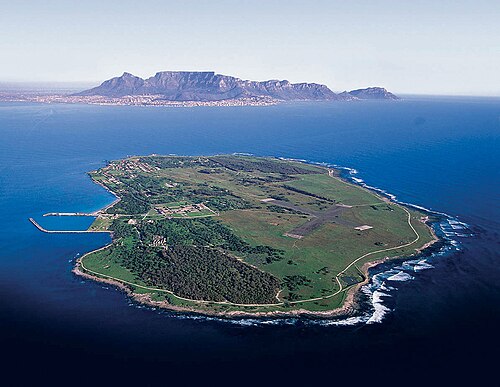
In 1948, South Africa’s minority government enforced ("apartness"), a system of laws that denied Black and non-white South Africans (over 80% of the population) the right to vote, restricted where they could live and work, and segregated schools and hospitals. Leading the African National Congress (ANC), Mandela was arrested and sentenced to life imprisonment in 1964—spending 18 of his 27 prison years in a tiny 8-by-7-foot concrete cell on windswept , where prisoners were forced to break rocks in a blinding lime quarry.
This step-by-step process relies on (pronounced ROB-uhn EYE-luhnd), defined as: The island prison in Table Bay off the coast of Cape Town where Nelson Mandela was imprisoned for 18 of his 27 years in custody. Each stage of the process prepares the way for the next phase to unfold.
Cause-and-Effect Balance: When conditions remain balanced, and interact inside the to keep the system running smoothly. If any single link in this sequence is disrupted, the entire pace of activity shifts.
In Our World
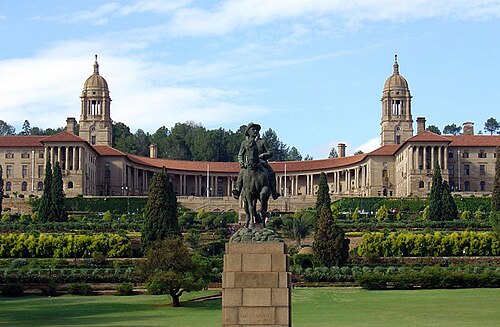
Even inside prison, Mandela inspired his fellow inmates and guards with dignity, reciting William Ernest Henley’s poem Invictus ("I am the master of my fate, I am the captain of my soul"). Released on February 11, 1990, amidst worldwide pressure, Mandela worked with President F. W. de Klerk to dismantle peacefully, sharing the 1993 Nobel Peace Prize. On April 27, 1994 (Freedom Day), millions of South Africans of all races stood in line for hours to vote together for the first time, electing Mandela President of the ""!
Understanding how Nelson Mandela: From Prisoner to President of South Africa functions in real environments also involves (rek-uhn-sil-ee-AY-shuhn): Bringing former opponents together in peace, forgiveness, and mutual respect to build a united country. Even when surrounding conditions shift across seasons or regions, the interaction between , Reconciliation, and helps sustain balance and resilience in the wider environment.
Global & Practical Significance: Mandela was imprisoned from 1962 to 1990 (27 years) before leading South Africa’s peaceful transition to democracy. Furthermore, ("apartness") denied voting and citizenship rights to South Africa’s Black majority until it was dismantled in 1990–1994.
Amazing Facts
1. Remarkable Scale & Numbers: During the 1995 Rugby World Cup hosted in South Africa, President Mandela wore the green-and-gold Springboks jersey of captain François Pienaar onto the field—uniting Black and white South Africans through the power of sport! This discovery highlights why is central to understanding Nelson Mandela: From Prisoner to President of South Africa.
2. Extraordinary Adaptation & Design: Nelson Mandela’s cell on measured just 2.4 by 2.1 meters (8 by 7 feet) with a thin straw mat on the concrete floor—and today Robben Island is a UNESCO World Heritage Site and museum! Specialized conditions involving make these adaptations possible.
3. Surprising Scientific & Historical Record: Every year on July 18 (Nelson Mandela International Day), the United Nations invites people worldwide to spend 67 minutes helping their community—one minute for each of the 67 years Mandela dedicated to public service! Over time, processes linked to leave a lasting mark across 🌍 World Leaders, Statesmen & Global Voices.
Read & Review
Chapter Synthesis: Throughout this investigation of Nelson Mandela: From Prisoner to President of South Africa in Famous People (Movers & Shakers) (🌍 World Leaders, Statesmen & Global Voices), we examined its core foundations, defining traits, step-by-step mechanisms, and real-world connections using key terms like , , and .
Academic Vocabulary Review: • (uh-PAHR-tayt): An Afrikaans word meaning "apartness"; the unjust system of legal racial segregation enforced in South Africa from 1948 until the early 1990s. • (rek-uhn-sil-ee-AY-shuhn): Bringing former opponents together in peace, forgiveness, and mutual respect to build a united country. • (ROB-uhn EYE-luhnd): The island prison in Table Bay off the coast of Cape Town where Nelson Mandela was imprisoned for 18 of his 27 years in custody.
Critical Thinking Check: (1) For how many years was Nelson Mandela imprisoned (mostly on ) before being released in 1990 and elected South Africa’s first Black President in 1994? — 27 years. (2) What was the name of the unjust legal system of racial segregation in South Africa that Nelson Mandela and the ANC worked to end? — .