Introduction
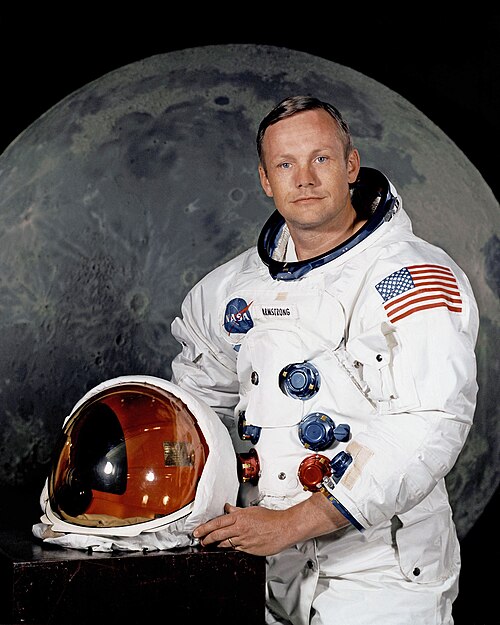
On July 20, 1969, more than 600 million people around Earth watched on live television as Apollo 11 Commander Neil Armstrong (1930–2012) climbed down the ladder of the Eagle, pressed his left boot into the gray dust of the , and became the first human being to walk on another world!
A foundational concept in this investigation is (pronounced LOO-ner MOD-yool), which refers to: The two-stage spider-shaped spacecraft (named Eagle on Apollo 11) designed to land two astronauts on the Moon and launch back into lunar orbit. Every part of Neil Armstrong within Pathfinders & Explorers builds upon this essential concept.
In Grade 5 advanced nonfiction inquiry across Famous People (Movers & Shakers) (Pathfinders & Explorers), synthesizing primary evidence around , , and reveals how complex systems operate and adapt over time.
Key Features
Born in Wapakoneta, Ohio, Neil fell in love with flying as a boy and earned his student pilot certificate on his 16th birthday—before he even had a driver’s license! After studying aeronautical engineering at Purdue University, he served as a Navy pilot and a NACA/NASA test pilot, flying the rocket-powered X-15 plane to the edge of space at 4,000 mph.
To analyze these defining traits accurately, specialists examine (see uv tran-KWIL-uh-tee): The flat, ancient basalt lava plain (Mare Tranquillitatis) on the Moon where Apollo 11 landed on July 20, 1969. Alongside (The two-stage spider-shaped spacecraft (named Eagle on Apollo 11) designed to land two astronauts on the Moon and launch back into lunar orbit.), these specialized characteristics set Neil Armstrong apart within Pathfinders & Explorers.
Field Observation & Evidence: Researchers studying Neil Armstrong observe how physical form matches function in Famous People (Movers & Shakers). Each observable feature provides a clear advantage that supports stability, survival, or performance across changing conditions.
How It Works
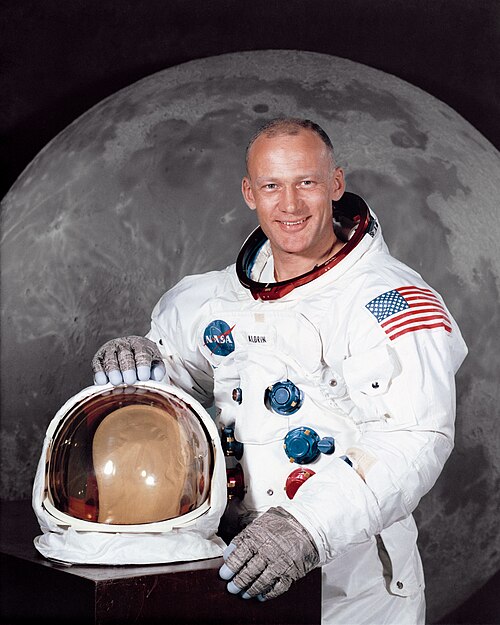
Selected as Commander of Apollo 11 alongside Pilot Buzz Aldrin and Command Module Pilot Michael Collins, Armstrong blasted off atop a 363-foot rocket on July 16, 1969. During the final minutes of landing on the Moon on July 20, Armstrong saw that the computer was steering the Eagle toward a boulder-strewn crater! Cool under pressure, he took manual control, skimmed past the boulders, and landed safely with just 25 seconds of fuel remaining!
This step-by-step process relies on (pronounced SAT-ern fyve), defined as: The 363-foot-tall, three-stage heavy rocket that launched the Apollo astronauts from Kennedy Space Center to the Moon. Each stage of the process prepares the way for the next phase to unfold.
Cause-and-Effect Balance: When conditions remain balanced, and interact inside the to keep the system running smoothly. If any single link in this sequence is disrupted, the entire pace of activity shifts.
In Our World
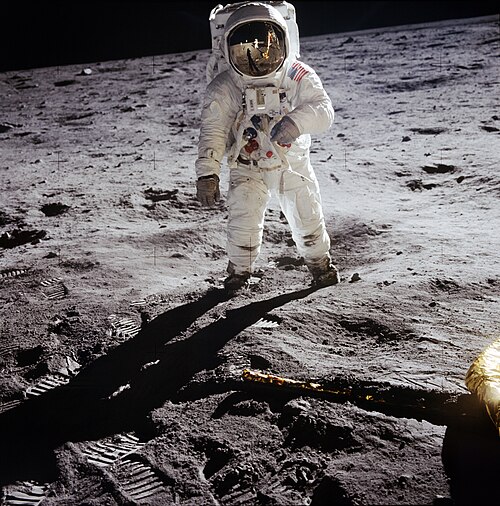
Stepping onto the lunar surface, Armstrong spoke the immortal words: "That’s one small step for [a] man, one giant leap for mankind." For 2.5 hours, Armstrong and Aldrin set up laser reflectors and seismic experiments, photographed the terrain, and collected 21.5 kilograms (47.5 pounds) of Moon rocks before rejoining Michael Collins in orbit for the return trip to Earth.
Understanding how Neil Armstrong functions in real environments also involves (see uv tran-KWIL-uh-tee): The flat, ancient basalt lava plain (Mare Tranquillitatis) on the Moon where Apollo 11 landed on July 20, 1969. Even when surrounding conditions shift across seasons or regions, the interaction between , Sea of Tranquility, and helps sustain balance and resilience in the wider environment.
Global & Practical Significance: Armstrong’s test-pilot skill saved the landing when Eagle approached West Crater’s boulder field. Furthermore, Armstrong and Aldrin walked on the Moon while Michael Collins orbited overhead in the Command Module Columbia.
Amazing Facts
1. Remarkable Scale & Numbers: Neil Armstrong earned his student airplane pilot’s license on his 16th birthday—before he even had a license to drive a family car! This discovery highlights why is central to understanding Neil Armstrong.
2. Extraordinary Adaptation & Design: When Neil Armstrong manually piloted the Eagle past a field of boulders to a smooth landing spot, the lander had only about 25 seconds of hover fuel left! Specialized conditions involving make these adaptations possible.
3. Surprising Scientific & Historical Record: The laser retroreflector mirror that Armstrong and Aldrin placed on the Moon in 1969 is still used by scientists today to measure the Moon’s distance to within millimeters! Over time, processes linked to leave a lasting mark across Pathfinders & Explorers.
Read & Review
Chapter Synthesis: Throughout this investigation of Neil Armstrong in Famous People (Movers & Shakers) (Pathfinders & Explorers), we examined its core foundations, defining traits, step-by-step mechanisms, and real-world connections using key terms like , , and .
Academic Vocabulary Review: • (LOO-ner MOD-yool): The two-stage spider-shaped spacecraft (named Eagle on Apollo 11) designed to land two astronauts on the Moon and launch back into lunar orbit. • (see uv tran-KWIL-uh-tee): The flat, ancient basalt lava plain (Mare Tranquillitatis) on the Moon where Apollo 11 landed on July 20, 1969. • (SAT-ern fyve): The 363-foot-tall, three-stage heavy rocket that launched the Apollo astronauts from Kennedy Space Center to the Moon.
Critical Thinking Check: (1) Why did Neil Armstrong have to take manual control of the Eagle during the final moments of the Apollo 11 landing? — The automatic landing site was filled with giant boulders on the edge of a crater, so he flew forward to a smooth flat patch with 25 seconds of fuel left. (2) Who were Neil Armstrong’s two Apollo 11 crewmates on the July 1969 Moon landing mission? — Buzz Aldrin (Lunar Module Pilot) and Michael Collins (Command Module Pilot).