Introduction
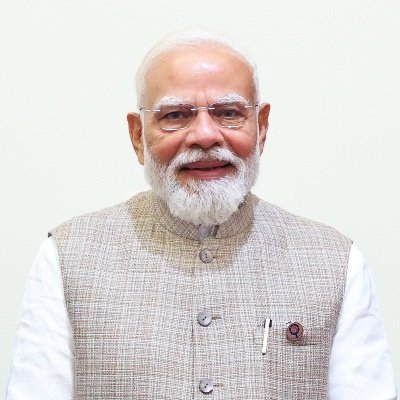
Growing up in the small town of Vadnagar in Gujarat, Narendra Modi (born 1950) helped his father serve hot spiced tea (chai) to travelers at the local railway station platform. Rising from humble roots outside any political dynasty, he became Chief Minister of Gujarat and, in 2014, was elected the 14th Prime Minister of India—leading the (over 1.4 billion citizens!) across three consecutive terms!
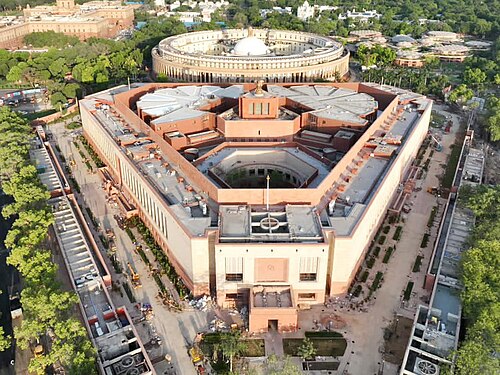
A foundational concept in this investigation is (pronounced wurldz LAHR-jist dih-MOK-ruh-see), which refers to: The Republic of India, where more than 1.4 billion citizens are governed under a parliamentary constitution with universal adult voting rights. Every part of Narendra Modi: Prime Minister of the World's Largest Democracy within 🌍 World Leaders, Statesmen & Global Voices builds upon this essential concept.
At the Grade 4 level of Famous People (Movers & Shakers) (🌍 World Leaders, Statesmen & Global Voices), researchers compare structure, function, and environmental context to see how , ISRO (Indian Space Research Organisation), and Digital Public Infrastructure (UPI) shape measurable outcomes.
Key Features
Born on September 17, 1950—just three years after India gained independence in 1947—Modi became the very first Prime Minister of India born in independent India! After serving for nearly 13 years as Chief Minister of the western state of Gujarat (2001–2014), where he focused on 24-hour rural electricity grids (Jyotigram Yojana), solar power canals, and highway infrastructure, he led his party to national parliamentary victories in 2014, 2019, and 2024.
To analyze these defining traits accurately, specialists examine ISRO (Indian Space Research Organisation) (IS-roh): India’s national space agency, famous for cost-effective engineering milestones like the Mangalyaan Mars orbiter and the Chandrayaan-3 lunar south pole landing. Alongside (The Republic of India, where more than 1.4 billion citizens are governed under a parliamentary constitution with universal adult voting rights.), these specialized characteristics set Narendra Modi: Prime Minister of the World's Largest Democracy apart within 🌍 World Leaders, Statesmen & Global Voices.
Field Observation & Evidence: Researchers studying Narendra Modi: Prime Minister of the World's Largest Democracy observe how physical form matches function in Famous People (Movers & Shakers). Each observable feature provides a clear advantage that supports stability, survival, or performance across changing conditions.
How It Works
During his tenure as Prime Minister, India built the world’s largest digital public infrastructure—known as the "India Stack"! Combining biometric digital identity (Aadhaar) with Jan Dhan bank accounts for over 500 million previously unbanked citizens and the Unified Payments Interface (UPI), even street fruit vendors and rural farmers across India can now send and receive instant, zero-fee digital smartphone payments by scanning a simple QR code!
This step-by-step process relies on Digital Public Infrastructure (UPI) (pronounced DIJ-ih-tuhl PUB-lik IN-fruh-struk-cher), defined as: India’s open digital network (Aadhaar ID + UPI instant payments) that brought banking and cashless smartphone payments to hundreds of millions of citizens. Each stage of the process prepares the way for the next phase to unfold.
Cause-and-Effect Balance: When conditions remain balanced, and Digital Public Infrastructure (UPI) interact inside the ISRO (Indian Space Research Organisation) to keep the system running smoothly. If any single link in this sequence is disrupted, the entire pace of activity shifts.
In Our World
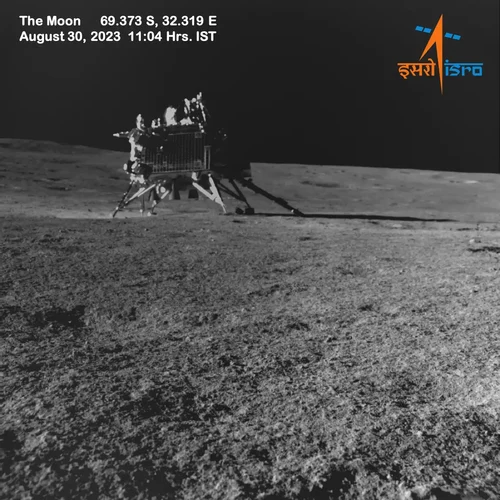
Prime Minister Modi also championed the Swachh Bharat (Clean India) Mission building over 110 million household toilets, launched the International Solar Alliance with France to expand clean solar energy worldwide, proposed International Yoga Day (June 21)—which passed the United Nations General Assembly with a record 177 co-sponsoring nations—and celebrated with ISRO scientists on August 23, 2023, when Chandrayaan-3 made India the first country in history to land a spacecraft near the lunar south pole!
Understanding how Narendra Modi: Prime Minister of the World's Largest Democracy functions in real environments also involves ISRO (Indian Space Research Organisation) (IS-roh): India’s national space agency, famous for cost-effective engineering milestones like the Mangalyaan Mars orbiter and the Chandrayaan-3 lunar south pole landing. Even when surrounding conditions shift across seasons or regions, the interaction between , ISRO (Indian Space Research Organisation), and Digital Public Infrastructure (UPI) helps sustain balance and resilience in the wider environment.
Global & Practical Significance: India’s national elections involve nearly a billion eligible voters across more than a million polling stations. Furthermore, Chandrayaan-3’s Vikram lander and Pragyan rover successfully explored the lunar south polar region on August 23, 2023 (now celebrated as National Space Day in India).
Amazing Facts
1. Remarkable Scale & Numbers: When India’s Chandrayaan-3 Vikram lander touched down softly on the Moon on August 23, 2023, India became the 4th country ever to land on the Moon and the 1st in history to land near the Moon’s south pole (where water ice hides in shadowed craters)! This discovery highlights why is central to understanding Narendra Modi: Prime Minister of the World's Largest Democracy.
2. Extraordinary Adaptation & Design: India’s UPI (Unified Payments Interface) processes over 14 billion instant mobile transactions every single month—allowing someone to buy a 10-rupee cup of tea with a smartphone QR scan in two seconds! Specialized conditions involving ISRO (Indian Space Research Organisation) make these adaptations possible.
3. Surprising Scientific & Historical Record: Every five years during India’s national parliamentary elections, nearly 970 million registered voters can cast ballots at over 1 million electronic voting stations—from the Himalayas to tropical islands—making it the largest democratic exercise in human history! Over time, processes linked to Digital Public Infrastructure (UPI) leave a lasting mark across 🌍 World Leaders, Statesmen & Global Voices.
Read & Review
Chapter Synthesis: Throughout this investigation of Narendra Modi: Prime Minister of the World's Largest Democracy in Famous People (Movers & Shakers) (🌍 World Leaders, Statesmen & Global Voices), we examined its core foundations, defining traits, step-by-step mechanisms, and real-world connections using key terms like , ISRO (Indian Space Research Organisation), and Digital Public Infrastructure (UPI).
Academic Vocabulary Review: • (wurldz LAHR-jist dih-MOK-ruh-see): The Republic of India, where more than 1.4 billion citizens are governed under a parliamentary constitution with universal adult voting rights. • ISRO (Indian Space Research Organisation) (IS-roh): India’s national space agency, famous for cost-effective engineering milestones like the Mangalyaan Mars orbiter and the Chandrayaan-3 lunar south pole landing. • Digital Public Infrastructure (UPI) (DIJ-ih-tuhl PUB-lik IN-fruh-struk-cher): India’s open digital network (Aadhaar ID + UPI instant payments) that brought banking and cashless smartphone payments to hundreds of millions of citizens.
Critical Thinking Check: (1) Why is the Republic of India known around the globe as "the "? — With over 1.4 billion citizens and nearly 970 million registered voters choosing their Parliament, India holds the largest democratic elections in history. (2) What historic space exploration milestone did India’s space agency (ISRO) achieve on August 23, 2023, with the Chandrayaan-3 mission? — India became the first nation in history to soft-land a spacecraft near the Moon’s south pole.