Introduction
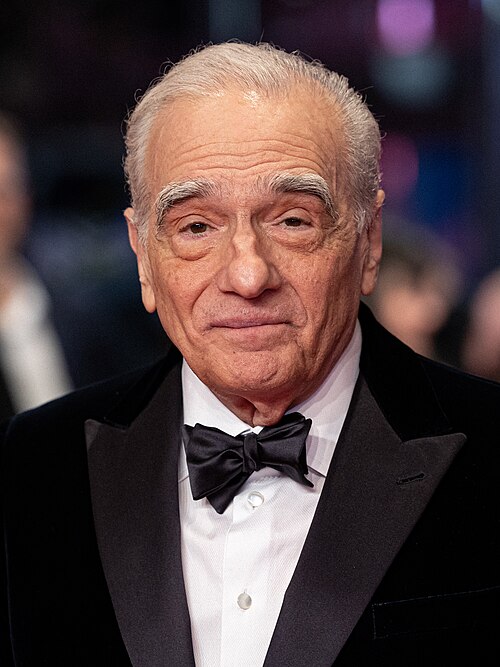
Growing up in New York City’s Little Italy in the 1940s and 1950s, young Martin Scorsese (born 1942) had severe childhood asthma that kept him from running or playing sports in the street with the other neighborhood kids. Instead, sitting at his third-story apartment window or beside his father inside a dark neighborhood movie theater, young Marty discovered the magic of cinema! He grew up to become one of the greatest directors in motion-picture history—earning 10 Academy Award nominations for Best Director (winning for The Departed), directing the magical children’s adventure Hugo (2011) about silent-film pioneer Georges Méliès, and founding The Film Foundation, which has rescued and restored over 1,000 endangered classic movies around the world!
A foundational concept in this investigation is Film Editing (Montage) (pronounced film ED-ih-ting / mon-TAHZH), which refers to: The art and craft (perfected by Scorsese and editor Thelma Schoonmaker) of selecting, timing, and joining individual camera shots together to control the pace, rhythm, and emotion of a movie. Every part of Martin Scorsese: The Art of Editing & Saving Film History within 🎬 Film, Television, Directors & Storytelling Titans builds upon this essential concept.
In Grade 5 advanced nonfiction inquiry across Sports & Entertainment (🎬 Film, Television, Directors & Storytelling Titans), synthesizing primary evidence around Film Editing (Montage), , and Tracking Shot (Steadicam) reveals how complex systems operate and adapt over time.
Key Features
Born on November 17, 1942, in Queens, New York, and raised on Elizabeth Street in Manhattan’s Little Italy by his parents Charles and Catherine Scorsese (both of whom worked in New York’s garment district and later appeared as beloved character actors in Marty’s movies!), young Martin couldn’t play rough street games because an asthma attack could send him to the emergency room. To cheer him up, his father took him to the local cinema to see British classics (The Red Shoes), Italian neorealist films (Bicycle Thieves), and Westerns. At home, eight-year-old Marty drew hundreds of detailed comic-book storyboards—marking every pencil square with "Camera moves in" or "Cut to close-up" years before he ever touched a real camera!
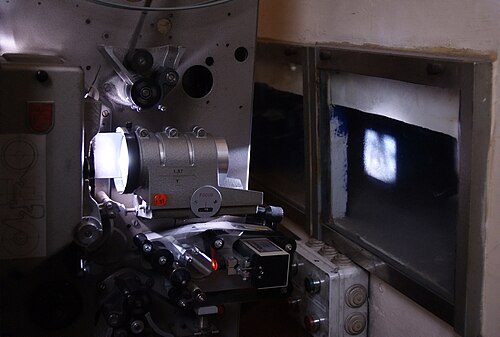
To analyze these defining traits accurately, specialists examine (prez-er-VAY-shuhn): Rescuing aging, scratched, or color-faded celluloid film reels from vaults around the world, cleaning them chemically, and scanning them frame-by-frame in 4K so classic movies survive for future generations. Alongside Film Editing (Montage) (The art and craft (perfected by Scorsese and editor Thelma Schoonmaker) of selecting, timing, and joining individual camera shots together to control the pace, rhythm, and emotion of a movie.), these specialized characteristics set Martin Scorsese: The Art of Editing & Saving Film History apart within 🎬 Film, Television, Directors & Storytelling Titans.
Field Observation & Evidence: Researchers studying Martin Scorsese: The Art of Editing & Saving Film History observe how physical form matches function in Sports & Entertainment. Each observable feature provides a clear advantage that supports stability, survival, or performance across changing conditions.

How It Works
Attending New York University (NYU) in the 1960s, where he earned both his bachelor’s and master’s degrees in film and worked as an inspiring young film professor, Scorsese formed a lifelong partnership with brilliant film editor Thelma Schoonmaker (who had edited the famous Woodstock documentary and went on to edit every single Scorsese feature film for over 50 years, winning 3 Oscars for Best Film Editing!). Together, Scorsese and Schoonmaker turned film editing, dynamic moving cameras (Steadicam tracking shots), and freeze-frames into a visual rhythm as exciting as rock-and-roll and symphony music!
This step-by-step process relies on Tracking Shot (Steadicam) (pronounced TRAK-ing shot / STED-ee-kam), defined as: A single continuous camera shot where the camera glides smoothly alongside or behind a character through rooms and hallways without cutting away. Each stage of the process prepares the way for the next phase to unfold.
Cause-and-Effect Balance: When conditions remain balanced, Film Editing (Montage) and Tracking Shot (Steadicam) interact inside the to keep the system running smoothly. If any single link in this sequence is disrupted, the entire pace of activity shifts.
In Our World
Wait—did you know that more than half of all movies made in America before 1950 have been lost forever because old nitrate film crumbled to dust and 1950s–1970s color film strips faded to pale pink? Horrified that humanity was losing its visual history, Scorsese founded The Film Foundation in 1990 (alongside fellow directors Steven Spielberg, George Lucas, Stanley Kubrick, and Francis Ford Coppola) and the World Cinema Project (2007)! Working with archives and scientists across 6 continents, The Film Foundation has chemically and digitally restored over 1,000 classic films from over 50 countries—and his Story of Movies free middle-school curriculum teaches millions of students ! In 2011, Scorsese directed the 5-time Oscar-winning family adventure Hugo (based on Brian Selznick’s Caldecott Medal book The Invention of Hugo Cabret), introducing young audiences everywhere to 1902 silent-film magician Georges Méliès (A Trip to the Moon)!
Understanding how Martin Scorsese: The Art of Editing & Saving Film History functions in real environments also involves (prez-er-VAY-shuhn): Rescuing aging, scratched, or color-faded celluloid film reels from vaults around the world, cleaning them chemically, and scanning them frame-by-frame in 4K so classic movies survive for future generations. Even when surrounding conditions shift across seasons or regions, the interaction between Film Editing (Montage), Film Preservation & Restoration, and Tracking Shot (Steadicam) helps sustain balance and resilience in the wider environment.
Global & Practical Significance: Observing life from his third-floor window and sketching comic-strip storyboards trained young Scorsese to think in camera frames and sequences. Furthermore, The Film Foundation and its World Cinema Project have restored more than 1,000 endangered classic films from over 50 countries.
Amazing Facts
1. Remarkable Scale & Numbers: Because severe childhood asthma kept eight-year-old Martin Scorsese indoors watching his neighborhood from his third-floor apartment window on Elizabeth Street, he began drawing elaborate pencil storyboards with camera lens instructions ("High Angle," "Zoom In") at his kitchen table! This discovery highlights why Film Editing (Montage) is central to understanding Martin Scorsese: The Art of Editing & Saving Film History.
2. Extraordinary Adaptation & Design: Martin Scorsese and his legendary film editor Thelma Schoonmaker have worked together since they were students at New York University (NYU) in the 1960s—a 55+ year editing partnership that has earned Schoonmaker a record 9 Academy Award nominations and 3 Oscar wins for Best Film Editing! Specialized conditions involving make these adaptations possible.
3. Surprising Scientific & Historical Record: Why did Scorsese launch The Film Foundation in 1990? He discovered that over 80% of all silent films from the early 1900s were already lost forever, and that the color dye in 1960s and 1970s Eastmancolor film prints was chemically fading away to bright magenta pink inside studio vaults! Over time, processes linked to Tracking Shot (Steadicam) leave a lasting mark across 🎬 Film, Television, Directors & Storytelling Titans.
Read & Review
Chapter Synthesis: Throughout this investigation of Martin Scorsese: The Art of Editing & Saving Film History in Sports & Entertainment (🎬 Film, Television, Directors & Storytelling Titans), we examined its core foundations, defining traits, step-by-step mechanisms, and real-world connections using key terms like Film Editing (Montage), , and Tracking Shot (Steadicam).
Academic Vocabulary Review: • Film Editing (Montage) (film ED-ih-ting / mon-TAHZH): The art and craft (perfected by Scorsese and editor Thelma Schoonmaker) of selecting, timing, and joining individual camera shots together to control the pace, rhythm, and emotion of a movie. • (prez-er-VAY-shuhn): Rescuing aging, scratched, or color-faded celluloid film reels from vaults around the world, cleaning them chemically, and scanning them frame-by-frame in 4K so classic movies survive for future generations. • Tracking Shot (Steadicam) (TRAK-ing shot / STED-ee-kam): A single continuous camera shot where the camera glides smoothly alongside or behind a character through rooms and hallways without cutting away.
Critical Thinking Check: (1) How did having severe childhood asthma in New York City’s Little Italy accidentally lead young Martin Scorsese to become a film director? — Unable to play rough street sports outdoors, he watched the neighborhood like a movie frame from his apartment window, went to the cinema with his father, and drew hundreds of pencil storyboards. (2) Why did Martin Scorsese found The Film Foundation in 1990 alongside fellow directors like Steven Spielberg and George Lucas? — Because over half of all pre-1950 American films had already decomposed and color film reels from the 1950s–1970s were chemically fading to pink—so they teamed up to rescue and restore 1,000+ classic movies.