
Introduction
When 12-year-old Mark Zuckerberg (born 1984) wanted a faster way for the receptionist in his father’s downstairs dental office to let his dad know a new patient had arrived without yelling down the hallway, he coded a family instant-messaging network called "ZuckNet"! Eight years later, in February 2004, inside his sophomore dorm room (Kirkland House, Room H33) at Harvard University, 19-year-old Zuckerberg launched TheFacebook—a college student directory that grew into a global social network connecting over 3 billion people and evolved into Meta, a leader in open-source AI (Llama) and virtual/augmented reality!
An important word to know in this book is Social Graph (Social Network) (SOH-shuhl graf). Social Graph (Social Network) means: A digital map in computer science where each person is a "node" and their friendships, classmates, and shared communities are the connecting lines ("edges"). Learning about Social Graph (Social Network) helps us understand how Mark Zuckerberg: Building Social Networks & Virtual Reality fits into 💻 Tech, Business & Innovation Icons.
Key Features
Born on May 14, 1984, and raised in Dobbs Ferry, New York, by his dentist father Edward and psychiatrist mother Karen, young Mark started coding on an Atari BASIC computer at age 10. While attending Phillips Exeter Academy in New Hampshire—where he also fenced as captain of the school fencing team and loved reading ancient Greek and Roman classics like Virgil’s Aeneid in Latin!—he co-wrote an early artificial-intelligence music player called Synapse that learned which songs a listener liked and automatically picked the next song!
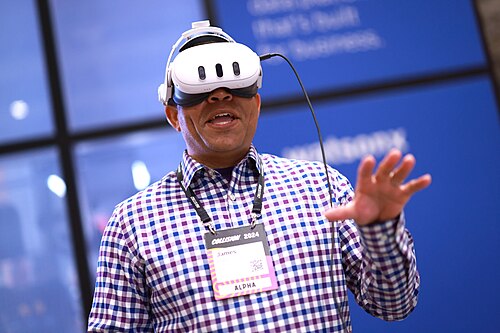
Scientists and explorers also look closely at Virtual Reality (VR) & Augmented Reality (AR) (VUR-choo-uhl ree-AL-ih-tee), which means: VR uses a headset to immerse you inside a 360-degree 3D digital world, while AR (like smart glasses) overlays helpful digital labels onto the real world around you. These special traits make Mark Zuckerberg: Building Social Networks & Virtual Reality easy to spot and study.
How It Works
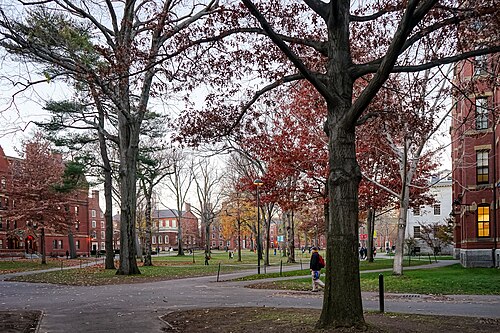
When Zuckerberg arrived at Harvard University in 2002 to study computer science and psychology, Harvard still used printed paper booklets (called "Face Books") to help students learn each other’s names and houses, with no single digital campus directory. Coding for two weeks in Kirkland House, Zuckerberg launched thefacebook.com on February 4, 2004! Within 24 hours, 1,200 Harvard students had signed up; within a month, half of Harvard was on it, followed swiftly by Stanford, Columbia, Yale, every university in North America, high schools, and the entire world!
Here is another helpful term: (OH-puhn wayt). It means: Sharing trained AI models and deep-learning code openly so university researchers, doctors, and students can run and customize AI on their own computers. Step by step, Social Graph (Social Network) and Open-Weight AI (Llama) & PyTorch work together in nature.
In Our World
To help millions of websites run faster, Facebook’s engineers open-sourced the React web framework (now used by student and professional coders everywhere) and designed energy-efficient data center hardware through the Open Compute Project. After renaming the parent company Meta Platforms in 2021, Zuckerberg invested heavily in Quest Virtual Reality (VR) headsets (used for 3D anatomy classes, virtual museum tours, and engineering training), smart glasses, and the Llama open-weight AI models—while he and his wife, pediatrician Dr. Priscilla Chan, founded the Chan Zuckerberg Initiative (CZI) to build the Biohub network for mapping every cell type in the human body to help cure or prevent diseases!
Understanding how Mark Zuckerberg: Building Social Networks & Virtual Reality works in our world also involves Virtual Reality (VR) & Augmented Reality (AR) (VUR-choo-uhl ree-AL-ih-tee): VR uses a headset to immerse you inside a 360-degree 3D digital world, while AR (like smart glasses) overlays helpful digital labels onto the real world around you. Even when surrounding conditions shift across seasons or regions, the interaction between Social Graph (Social Network), Virtual Reality (VR) & Augmented Reality (AR), and helps sustain balance and resilience in the wider environment.
Amazing Facts
Amazing Fact #1: At age 12, Mark Zuckerberg coded "ZuckNet" in Atari BASIC so the computers in his family’s house and his father’s home dental office could send instant messages to each other—years before most people used instant messaging!
Amazing Fact #2: Why is Facebook’s classic color scheme blue and white? Because Mark Zuckerberg has red-green colorblindness (deuteranopia), and as he once explained: "Blue is the richest color for me—I can see all of blue!"
Amazing Fact #3: In high school, Zuckerberg turned down buyout offers of up to $1 million from Microsoft and AOL for his AI music-recommendation program Synapse—instead releasing it for free and going off to college at Harvard!
Read & Review
Let's review what we discovered about Mark Zuckerberg: Building Social Networks & Virtual Reality! In this book, we explored how Social Graph (Social Network), Virtual Reality (VR) & Augmented Reality (AR), and connect to 💻 Tech, Business & Innovation Icons.
Key Question #1: What was "ZuckNet," the computer program Mark Zuckerberg built when he was 12 years old in Dobbs Ferry, New York? Answer: An instant-messaging network connecting the computers in his house and his father’s downstairs dental office so the receptionist could notify his dad when patients arrived. Twelve-year-old Mark coded ZuckNet so his father’s dental staff could communicate from room to room via computer screen.
Key Question #2: Why did Mark Zuckerberg originally choose blue as the primary color for Facebook when he coded it in his Harvard dorm room in 2004? Answer: Because he has red-green colorblindness, making blue the richest and clearest color he can see. Due to red-green colorblindness (deuteranopia), Zuckerberg can distinguish shades of blue far better than red or green.