Introduction
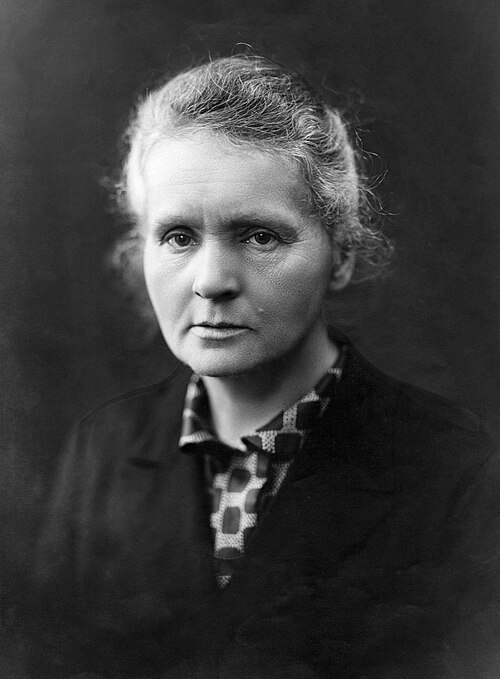
Born Maria Skłodowska in Warsaw, Poland, in 1867, Marie Curie was a pioneering physicist and chemist who discovered two new elements on the Periodic Table, coined the word "," and became the first person in history to win two Nobel Prizes—in two different sciences!
A foundational concept in this investigation is (pronounced ray-dee-oh-ak-TIV-uh-tee), which refers to: A term coined by Marie Curie for the spontaneous emission of energy and particles from the nucleus of unstable atoms. Every part of Marie Curie within Inventors & Scientists builds upon this essential concept.
In Grade 5 advanced nonfiction inquiry across Famous People (Movers & Shakers) (Inventors & Scientists), synthesizing primary evidence around , , and reveals how complex systems operate and adapt over time.
Key Features
Because universities in Russian-ruled Poland did not admit women, Maria worked as a governess and studied at Warsaw’s secret "Flying University" before moving to Paris in 1891 to earn physics and math degrees at the Sorbonne—often studying in a freezing attic room so cold she piled all her clothes on her bed.
To analyze these defining traits accurately, specialists examine (EL-uh-muhnt): A pure substance made of only one kind of atom, organized on the Periodic Table (such as Polonium and Radium). Alongside (A term coined by Marie Curie for the spontaneous emission of energy and particles from the nucleus of unstable atoms.), these specialized characteristics set Marie Curie apart within Inventors & Scientists.
Field Observation & Evidence: Researchers studying Marie Curie observe how physical form matches function in Famous People (Movers & Shakers). Each observable feature provides a clear advantage that supports stability, survival, or performance across changing conditions.
How It Works
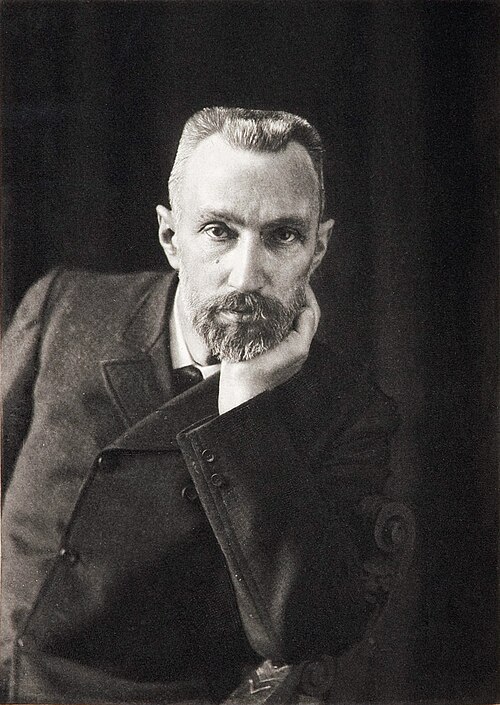
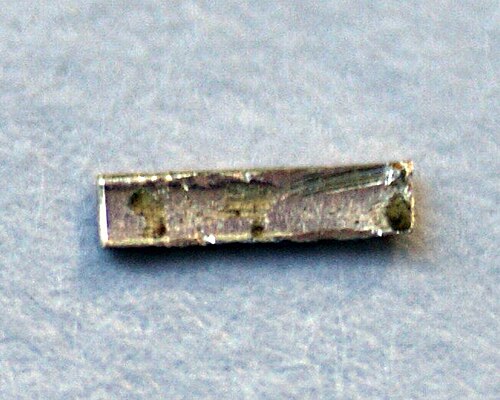
Partnering with her husband, physicist Pierre Curie, Marie investigated mysterious invisible rays emitted by uranium ore (pitchblende). Working in a leaky shed and stirring boiling cauldrons of crushed ore by hand with an iron rod, the Curies discovered two previously unknown elements in 1898: Polonium (named after Marie’s beloved homeland Poland) and Radium! Marie proved that radiation comes from inside the atoms themselves.
This step-by-step process relies on (pronounced EKS-ray), defined as: A high-energy electromagnetic wave that passes through soft skin and muscle to photograph bones inside the body. Each stage of the process prepares the way for the next phase to unfold.
Cause-and-Effect Balance: When conditions remain balanced, and interact inside the to keep the system running smoothly. If any single link in this sequence is disrupted, the entire pace of activity shifts.
In Our World
Marie Curie won the 1903 Nobel Prize in Physics (becoming the first woman ever to win a Nobel Prize) and the 1911 Nobel Prize in Chemistry! During World War I, she invented mobile vans—nicknamed "Petites Curies" ("Little Curies")—and trained 150 women to take X-rays of wounded soldiers, saving thousands of lives.
Understanding how Marie Curie functions in real environments also involves (EL-uh-muhnt): A pure substance made of only one kind of atom, organized on the Periodic Table (such as Polonium and Radium). Even when surrounding conditions shift across seasons or regions, the interaction between , Element, and helps sustain balance and resilience in the wider environment.
Global & Practical Significance: Marie and Pierre Curie isolated Polonium ( 84) and Radium (element 88) from pitchblende ore. Furthermore, Curie’s 20 mobile radiology vehicles and 200 stationary units revolutionized battlefield medicine.
Amazing Facts
1. Remarkable Scale & Numbers: Marie Curie remains the ONLY person in history to win Nobel Prizes in two different scientific fields (Physics in 1903 and Chemistry in 1911)! This discovery highlights why is central to understanding Marie Curie.
2. Extraordinary Adaptation & Design: Her daughter, Irène Joliot-Curie, followed in her footsteps and also won the Nobel Prize in Chemistry in 1935! Specialized conditions involving make these adaptations possible.
3. Surprising Scientific & Historical Record: During World War I, Marie Curie’s mobile trucks examined more than one million wounded soldiers to help surgeons locate fractures and shrapnel. Over time, processes linked to X-Ray leave a lasting mark across Inventors & Scientists.
Read & Review
Chapter Synthesis: Throughout this investigation of Marie Curie in Famous People (Movers & Shakers) (Inventors & Scientists), we examined its core foundations, defining traits, step-by-step mechanisms, and real-world connections using key terms like , , and .
Academic Vocabulary Review: • (ray-dee-oh-ak-TIV-uh-tee): A term coined by Marie Curie for the spontaneous emission of energy and particles from the nucleus of unstable atoms. • (EL-uh-muhnt): A pure substance made of only one kind of atom, organized on the Periodic Table (such as Polonium and Radium). • (EKS-ray): A high-energy electromagnetic wave that passes through soft skin and muscle to photograph bones inside the body.
Critical Thinking Check: (1) Which two new chemical elements did Marie and Pierre Curie discover in 1898? — Polonium (named for Poland) and Radium. (2) How did Marie Curie apply physics directly to save soldiers’ lives during World War I? — She outfitted mobile vans ("Little Curies") so doctors at field hospitals could see broken bones and shrapnel inside wounded soldiers.