Introduction
Imagine a coastal forest that stands right in the salty ocean tide—where trees appear to walk on stilts, fish climb out of the water onto muddy roots, and baby sharks play in sunlit underwater mazes! Welcome to the Mangrove Swamp, the extraordinary intertidal biome where tropical jungle meets the sea.
A foundational concept in this investigation is (pronounced BRAK-ish WAW-ter), which refers to: A mixture of fresh river water and salty ocean water found in coastal estuaries and mangrove swamps. Every part of Mangrove Swamps & Coastal Estuaries: Where Jungle Meets Ocean within 🌴 World Biomes: Savannas, Jungles & Rainforests builds upon this essential concept.
In Grade 3 Nature & Environment studies (🌴 World Biomes: Savannas, Jungles & Rainforests), understanding how , , and work together helps explain real-world patterns. As you read each chapter, notice how these key terms connect structure, process, and environment.
Key Features
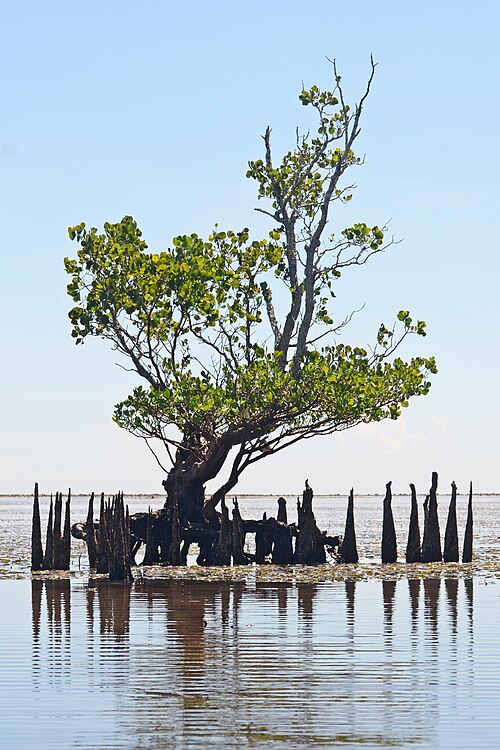
Nearly 99% of all land plants would shrivel and die if watered with salty seawater, yet around 80 species of mangrove trees thrive in coastal estuaries where freshwater rivers mix with ocean tides ()! Red mangroves prop themselves high above the waves on arching, tangled (stilt roots), while black mangroves send up thousands of snorkel-like vertical breathing tubes called pneumatophores that poke out of the oxygen-poor mud to gulp air at low tide!
To analyze these defining traits accurately, specialists examine (prop roots): Arching, stilt-like aerial roots of red mangrove trees that anchor the tree in soft tidal mud and filter out salt. Alongside (A mixture of fresh river water and salty ocean water found in coastal estuaries and mangrove swamps.), these specialized characteristics set Mangrove Swamps & Coastal Estuaries: Where Jungle Meets Ocean apart within 🌴 World Biomes: Savannas, Jungles & Rainforests.
Field Observation & Evidence: Researchers studying Mangrove Swamps & Coastal Estuaries: Where Jungle Meets Ocean observe how physical form matches function in Nature & Environment. Each observable feature provides a clear advantage that supports stability, survival, or performance across changing conditions.
How It Works
How do mangroves drink seawater without getting poisoned by salt? Different species use two genius engineering tricks! Red mangroves are "salt excluders": ultra-fine membranes in their roots act like desalination filters, blocking 90% to 97% of the salt before water travels up the trunk! Black and white mangroves are "salt excreters": they absorb salty water and pump the excess salt crystals straight out through special pores on their leaves, or store salt inside old yellowing leaves right before dropping them!
This step-by-step process relies on (pronounced noo-MAT-uh-for), defined as: A vertical, pencil-shaped root that grows upward out of anoxic mud like a snorkel so black mangrove roots can absorb oxygen from the air. Each stage of the process prepares the way for the next phase to unfold.
Cause-and-Effect Balance: When conditions remain balanced, and interact inside the to keep the system running smoothly. If any single link in this sequence is disrupted, the entire pace of activity shifts.
In Our World
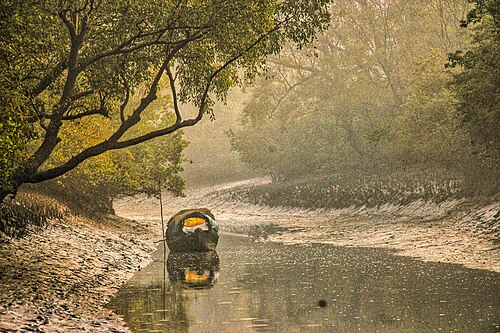
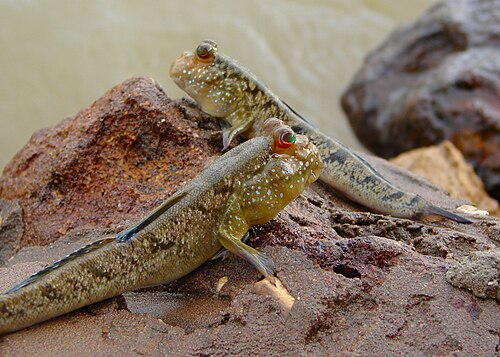
Underwater, the tangled maze of mangrove roots forms one of Earth’s most important marine nurseries—sheltering juvenile lemon sharks, seahorses, snappers, sea turtles, and manatees where big open-ocean predators cannot reach them! Above water, mangroves buffer coastlines by absorbing up to 70% to 90% of the force of hurricane waves and tsunamis. And in the Sundarbans of India and Bangladesh—the largest mangrove forest on Earth (10,000 square kilometers)—live swimming Bengal tigers, spotted deer, and amphibious mudskipper fish that walk on their pectoral fins and breathe through wet skin on land!
Understanding how Mangrove Swamps & Coastal Estuaries: Where Jungle Meets Ocean functions in real environments also involves (prop roots): Arching, stilt-like aerial roots of red mangrove trees that anchor the tree in soft tidal mud and filter out salt. Even when surrounding conditions shift across seasons or regions, the interaction between , Prop Roots, and helps sustain balance and resilience in the wider environment.
Global & Practical Significance: Root ultrafiltration and foliar salt glands allow mangroves to extract fresh water from brackish and saline tides. Furthermore, Pneumatophores contain spongy air passages (aerenchyma) and pores (lenticels) that supply oxygen to submerged underground roots.
Amazing Facts
1. Remarkable Scale & Numbers: A Mudskipper is a real amphibious fish of the mangrove mudflats that walks and leaps on land using muscular pectoral fins, breathes through moist skin and cheek chambers full of water, and blinks its bulging eyes to keep them wet! This discovery highlights why is central to understanding Mangrove Swamps & Coastal Estuaries: Where Jungle Meets Ocean.
2. Extraordinary Adaptation & Design: Mangrove trees do not drop dormant seeds into the tide where they would drown; instead, their seeds sprout WHILE still hanging on the parent tree into long, floating green "propagules" that drop like darts and can float for a year until they touch shallow mud! Specialized conditions involving make these adaptations possible.
3. Surprising Scientific & Historical Record: The Sundarbans mangrove delta between India and Bangladesh is the only mangrove forest on Earth where apex Bengal Tigers hunt—swimming across tidal channels between islands! Over time, processes linked to leave a lasting mark across 🌴 World Biomes: Savannas, Jungles & Rainforests.
Read & Review
Chapter Synthesis: Throughout this investigation of Mangrove Swamps & Coastal Estuaries: Where Jungle Meets Ocean in Nature & Environment (🌴 World Biomes: Savannas, Jungles & Rainforests), we examined its core foundations, defining traits, step-by-step mechanisms, and real-world connections using key terms like , , and .
Academic Vocabulary Review: • (BRAK-ish WAW-ter): A mixture of fresh river water and salty ocean water found in coastal estuaries and mangrove swamps. • (prop roots): Arching, stilt-like aerial roots of red mangrove trees that anchor the tree in soft tidal mud and filter out salt. • (noo-MAT-uh-for): A vertical, pencil-shaped root that grows upward out of anoxic mud like a snorkel so black mangrove roots can absorb oxygen from the air.
Critical Thinking Check: (1) How do Red Mangrove and Black Mangrove trees survive growing in salty seawater that would kill ordinary land trees? — Red mangroves filter out 90%+ of salt at their roots, while black mangroves excrete excess salt crystals through special glands on their leaves. (2) What are the pencil-like vertical tubes ("pneumatophores") sticking up by the thousands around Black Mangrove trees? — Specialized aerial snorkel roots that absorb oxygen from the air at low tide because deep mangrove mud has almost zero oxygen.