Introduction
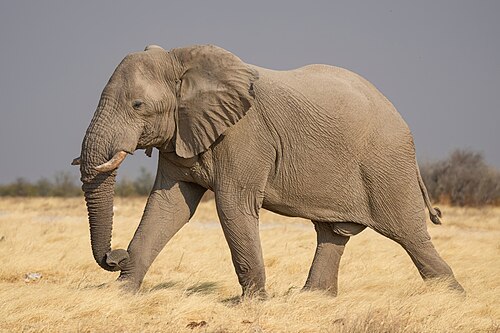
From tiny bumblebee bats weighing 2 grams to 150-ton blue whales in the ocean, all mammals share key biological traits. Mammals are warm-blooded vertebrates that have hair or fur, breathe air with lungs, and nourish their newborn babies with milk produced by mammary glands.
A foundational concept in this investigation is (pronounced EN-doh-thurm), which refers to: A warm-blooded animal that generates its own internal body heat to maintain a constant temperature. Every part of Mammals within Classification & Anatomy builds upon this essential concept.
In Grade 3 Animals studies (Classification & Anatomy), understanding how , , and work together helps explain real-world patterns. As you read each chapter, notice how these key terms connect structure, process, and environment.
Key Features
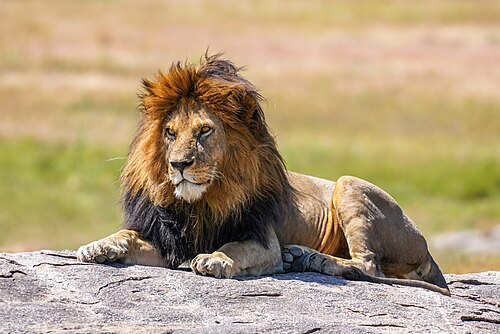
Every mammal has a backbone, a four-chambered heart, and three tiny middle-ear bones (malleus, incus, and stapes) that give mammals sharp hearing. Unlike reptiles, mammals have specialized teeth—incisors, canines, premolars, and molars—matched to their diet.
To analyze these defining traits accurately, specialists examine (VUR-tuh-bruht): An animal that has an internal skeleton with a segmented backbone (spine). Alongside (A warm-blooded animal that generates its own internal body heat to maintain a constant temperature.), these specialized characteristics set Mammals apart within Classification & Anatomy.
Field Observation & Evidence: Researchers studying Mammals observe how physical form matches function in Animals. Each observable feature provides a clear advantage that supports stability, survival, or performance across changing conditions.

How It Works
Because mammals are endotherms (warm-blooded), their metabolism generates internal heat to keep a steady body temperature whether they swim in icy oceans like whales and seals or sprint across savannas like cheetahs. Almost all mammals give birth to live young.
This step-by-step process relies on (pronounced mar-SOO-pee-uhl), defined as: A mammal such as a kangaroo or koala whose tiny newborn finishes growing inside its mother’s pouch. Each stage of the process prepares the way for the next phase to unfold.
Cause-and-Effect Balance: When conditions remain balanced, and interact inside the to keep the system running smoothly. If any single link in this sequence is disrupted, the entire pace of activity shifts.
In Our World
Scientists classify over 6,400 mammal species into three groups: placental mammals (like humans, elephants, and dogs), marsupials with pouches (like kangaroos and koalas), and egg-laying monotremes (the platypus and echidna of Australia).
Understanding how Mammals functions in real environments also involves (VUR-tuh-bruht): An animal that has an internal skeleton with a segmented backbone (spine). Even when surrounding conditions shift across seasons or regions, the interaction between , Vertebrate, and helps sustain balance and resilience in the wider environment.
Global & Practical Significance: All mammals are warm-blooded vertebrates with hair/fur at some stage of life and mammary glands for feeding young. Furthermore, Monotremes—the platypus and echidnas—lay eggs but still feed their hatched puggles milk.
Amazing Facts
1. Remarkable Scale & Numbers: The blue whale is the largest animal ever to live on Earth—its heart alone is the size of a small golf cart! This discovery highlights why is central to understanding Mammals.
2. Extraordinary Adaptation & Design: The duck-billed platypus and spiny echidna are the only mammals on Earth that lay leathery eggs instead of giving birth to live young. Specialized conditions involving make these adaptations possible.
3. Surprising Scientific & Historical Record: Bats are the only mammals capable of true powered flight, beating their webbed wings rather than just gliding. Over time, processes linked to leave a lasting mark across Classification & Anatomy.
Read & Review
Chapter Synthesis: Throughout this investigation of Mammals in Animals (Classification & Anatomy), we examined its core foundations, defining traits, step-by-step mechanisms, and real-world connections using key terms like , , and .
Academic Vocabulary Review: • (EN-doh-thurm): A warm-blooded animal that generates its own internal body heat to maintain a constant temperature. • (VUR-tuh-bruht): An animal that has an internal skeleton with a segmented backbone (spine). • (mar-SOO-pee-uhl): A mammal such as a kangaroo or koala whose tiny newborn finishes growing inside its mother’s pouch.
Critical Thinking Check: (1) Which three traits do all mammals share? — Warm-blooded, hair or fur, and mothers produce milk for their young. (2) What are the only egg-laying mammals (monotremes) in the world? — Platypus and echidna.