Introduction
While all other wild cats live solitary lives, the Lion (Panthera leo) is the only truly social big cat on Earth! Living across the golden grasslands of sub-Saharan Africa—and a single protected forest in India—lions form tight-knit family teams called prides that work together to defend territory, raise cubs, and hunt.
A foundational concept in this investigation is (pronounced pryde), which refers to: A cooperative family social group of lions made up of related lionesses, their cubs, and a small coalition of defending males. Every part of Lions: Kings & Queens of the African Pride within 🦁 Big Cats & Apex Land Predators builds upon this essential concept.
At the Grade 4 level of Animals (🦁 Big Cats & Apex Land Predators), researchers compare structure, function, and environmental context to see how , , and shape measurable outcomes.
Key Features
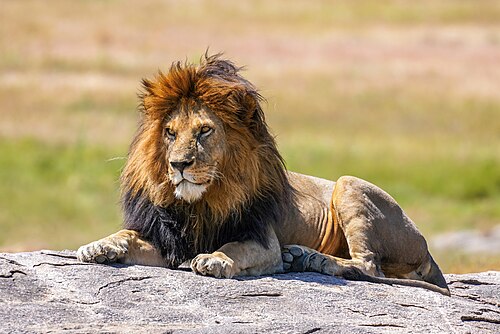
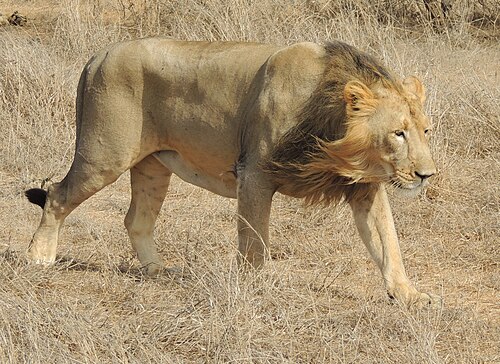
Lions display striking (visible differences between males and females). Adult males weigh up to 190–250 kilograms (420–550 pounds) and grow a thick halo of golden, brown, or black hair around their head and neck called a mane, which signals health and shields their throat during fights. Lionesses are sleeker, lighter (120–180 kg), and maneless for agility and camouflage.
To analyze these defining traits accurately, specialists examine (SEK-shoo-uhl dy-MOR-fiz-uhm): Distinct physical appearance differences between males and females of the same species, such as the male lion’s mane. Alongside (A cooperative family social group of lions made up of related lionesses, their cubs, and a small coalition of defending males.), these specialized characteristics set Lions: Kings & Queens of the African Pride apart within 🦁 Big Cats & Apex Land Predators.
Field Observation & Evidence: Researchers studying Lions: Kings & Queens of the African observe how physical form matches function in Animals. Each observable feature provides a clear advantage that supports stability, survival, or performance across changing conditions.
How It Works
A typically consists of 4 to 12 related females (sisters, mothers, cousins), their cubs, and a coalition of 1 to 4 adult males who patrol the borders. Lionesses do 85% to 90% of the pride’s hunting! Because lions have fewer stamina heart-and-lung reserves than their fast prey (zebras, wildebeest, and Cape buffalo), lionesses hunt at night using "stalk-and-ambush" teamwork—some lionesses flank wide to herd prey straight toward hidden ambushers in the tall grass.
This step-by-step process relies on (pronounced suh-VAN-uh), defined as: A tropical grassland biome with scattered acacia and baobab trees and warm wet-and-dry seasons. Each stage of the process prepares the way for the next phase to unfold.
Cause-and-Effect Balance: When conditions remain balanced, and interact inside the to keep the system running smoothly. If any single link in this sequence is disrupted, the entire pace of activity shifts.
In Our World
Both male and female lions can roar! A special square-shaped, flat vocal fold and elastic hyoid bone in their larynx allow a lion’s booming roar to reach 114 decibels and travel up to 8 kilometers (5 miles) across the African at dusk, warning rival prides to stay out of their territory and calling lost members home.
Understanding how Lions: Kings & Queens of the African functions in real environments also involves (SEK-shoo-uhl dy-MOR-fiz-uhm): Distinct physical appearance differences between males and females of the same species, such as the male lion’s mane. Even when surrounding conditions shift across seasons or regions, the interaction between Pride, Sexual Dimorphism, and helps sustain balance and resilience in the wider environment.
Global & Practical Significance: Lions are the only social felids; prides allow them to defend prime waterhole territories and hunt large prey like Cape buffalo. Furthermore, Maneless lionesses coordinate strategic flanking ambushes, especially under cover of night.
Amazing Facts
1. Remarkable Scale & Numbers: A lion’s roar reaches 114 decibels—as loud as a rock concert—and can be heard 8 kilometers (5 miles) away across the open plains! This discovery highlights why is central to understanding Lions: Kings & Queens of the African Pride.
2. Extraordinary Adaptation & Design: Lions conserve energy under the hot African sun by resting and sleeping for 16 to 20 hours every single day! Specialized conditions involving make these adaptations possible.
3. Surprising Scientific & Historical Record: Darker, fuller manes on male lions absorb more heat, signaling to rivals and females that the male has high testosterone, strong nutrition, and superior genetic fitness. Over time, processes linked to leave a lasting mark across 🦁 Big Cats & Apex Land Predators.
Read & Review
Chapter Synthesis: Throughout this investigation of Lions: Kings & Queens of the African in Animals (🦁 Big Cats & Apex Land Predators), we examined its core foundations, defining traits, step-by-step mechanisms, and real-world connections using key terms like Pride, , and .
Academic Vocabulary Review: • (pryde): A cooperative family social group of lions made up of related lionesses, their cubs, and a small coalition of defending males. • (SEK-shoo-uhl dy-MOR-fiz-uhm): Distinct physical appearance differences between males and females of the same species, such as the male lion’s mane. • (suh-VAN-uh): A tropical grassland biome with scattered acacia and baobab trees and warm wet-and-dry seasons.
Critical Thinking Check: (1) How do lions differ socially from every other big cat species in the world? — Lions live and hunt cooperatively in family groups called prides, while other big cats are solitary. (2) Which members of the lion perform 85% to 90% of the hunting, and why? — The lionesses, because they are lighter, faster, and lack heavy manes that would overheat them or give away their cover.