Introduction
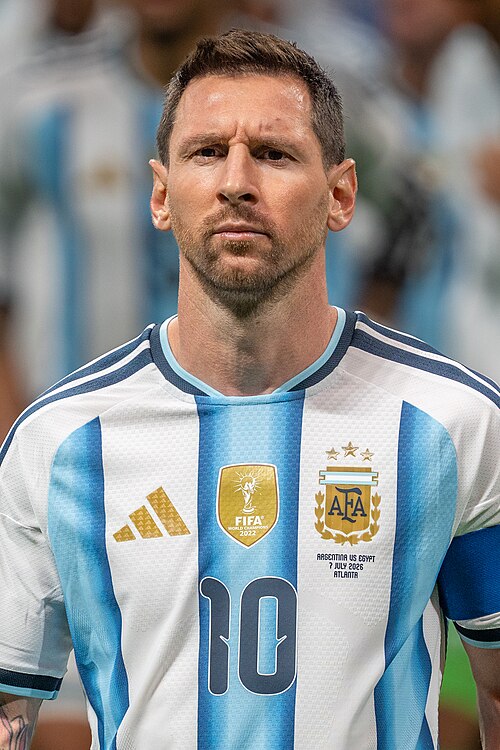
When 10-year-old Lionel Messi (born 1987) dribbled a soccer ball across the dusty youth fields of Rosario, Argentina, opposing defenders couldn’t take the ball away from his left foot—even though he was the smallest boy on the pitch! Diagnosed at age 11 with a deficiency that threatened his dream of playing professional soccer, Messi overcame every obstacle to win a record eight Ballon d’Or trophies and lead Argentina to the 2022 FIFA World Cup championship!
A foundational concept in this investigation is (pronounced SEN-ter uv GRAV-ih-tee), which refers to: The balance point of a body’s weight; in sports biomechanics, a lower center of gravity allows faster turns, tighter balance, and quicker acceleration. Every part of Lionel Messi: The Boy from Rosario Who Won the World Cup within ⚽ Global Sports Legends: Soccer, Basketball, Golf, Tennis & Track builds upon this essential concept.
In Grade 5 advanced nonfiction inquiry across Sports & Entertainment (⚽ Global Sports Legends: Soccer, Basketball, Golf, Tennis & Track), synthesizing primary evidence around , , and Ballon d’Or (Golden Ball) reveals how complex systems operate and adapt over time.
Key Features
Born on June 24, 1987, in Rosario, Argentina, young "Leo" first played for his neighborhood club Grandoli—where his grandmother Celia persuaded the coach to put four-year-old Leo on the field against older boys (which is why Messi still points both index fingers to the sky in tribute to his grandmother after every single goal he scores!). Joining the youth academy of Newell’s Old Boys, his youth team ("The Machine of ’87") went nearly four years without losing a single game!
To analyze these defining traits accurately, specialists examine (lah mah-SEE-uh): FC Barcelona’s world-famous youth training academy and school in Spain, where young players study academics alongside ball control and teamwork. Alongside (The balance point of a body’s weight; in sports biomechanics, a lower center of gravity allows faster turns, tighter balance, and quicker acceleration.), these specialized characteristics set Lionel Messi: The Boy from Rosario Who Won the World Cup apart within ⚽ Global Sports Legends: Soccer, Basketball, Golf, Tennis & Track.
Field Observation & Evidence: Researchers studying Lionel Messi: The Boy from Rosario Who Won the World Cup observe how physical form matches function in Sports & Entertainment. Each observable feature provides a clear advantage that supports stability, survival, or performance across changing conditions.
How It Works
At age 11, doctors discovered Leo had a deficiency requiring expensive daily injections that his family and local clubs in Argentina could not afford during an economic crisis. In September 2000, 13-year-old Leo flew across the Atlantic for a tryout with FC Barcelona in Spain. Barcelona technical director Carles Rexach was so stunned after watching Leo play for just a few minutes that—having no official contract paper at the table—he pulled a paper restaurant napkin from its holder and wrote down a promise to sign Leo and pay for all his medical treatments if he moved to Barcelona’s famous La Masia youth academy!
This step-by-step process relies on Ballon d’Or (Golden Ball) (pronounced bah-LON dor), defined as: The prestigious annual trophy presented since 1956 to the finest soccer player in the world, won a record eight times by Lionel Messi. Each stage of the process prepares the way for the next phase to unfold.
Cause-and-Effect Balance: When conditions remain balanced, and Ballon d’Or (Golden Ball) interact inside the to keep the system running smoothly. If any single link in this sequence is disrupted, the entire pace of activity shifts.
In Our World
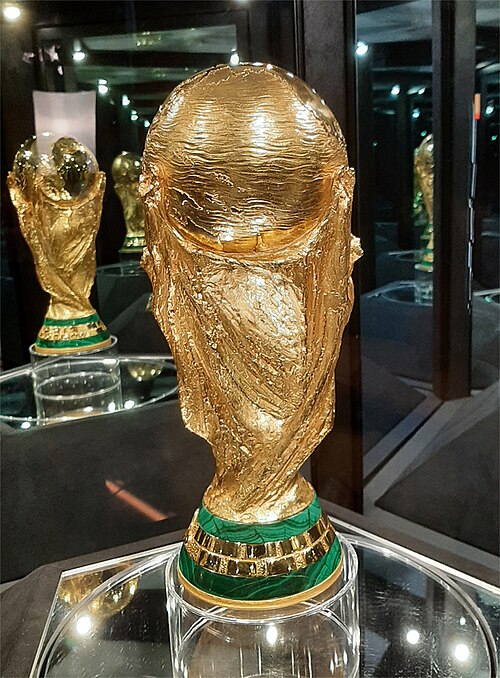
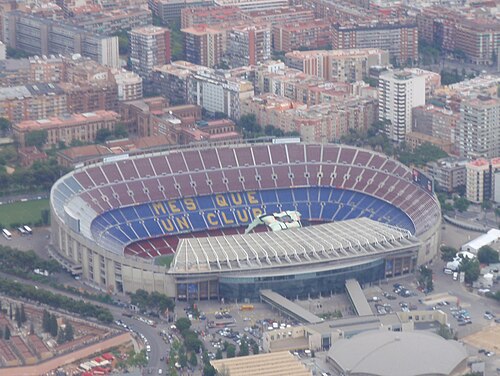
Wearing Barcelona’s iconic #10 jersey at Camp Nou, Messi scored an astonishing 672 goals for FC Barcelona (including a world-record 91 official goals in a single calendar year in 2012!), winning 10 La Liga titles and 4 UEFA Champions League titles before playing for Paris Saint-Germain and Inter Miami in Major League Soccer. With the Argentina national team, Messi won the 2008 Olympic Gold Medal, the 2021 and 2024 Copa América, and the unforgettable 2022 FIFA World Cup Final in Qatar—winning the Golden Ball as the tournament’s best player!
Understanding how Lionel Messi: The Boy from Rosario Who Won the World Cup functions in real environments also involves (lah mah-SEE-uh): FC Barcelona’s world-famous youth training academy and school in Spain, where young players study academics alongside ball control and teamwork. Even when surrounding conditions shift across seasons or regions, the interaction between , La Masia Youth Academy, and Ballon d’Or (Golden Ball) helps sustain balance and resilience in the wider environment.
Global & Practical Significance: Barcelona director Carles Rexach wrote and signed the commitment to 13-year-old Messi on a paper napkin so the club wouldn’t miss signing him. Furthermore, Barcelona covered Leo’s daily treatments while he trained and attended school at La Masia.
Amazing Facts
1. Remarkable Scale & Numbers: Why did FC Barcelona sign 13-year-old Lionel Messi on a paper napkin on December 14, 2000? Technical director Carles Rexach was eating lunch at a Barcelona tennis club and didn’t want to wait a single hour lest Leo fly back to Argentina—and that framed paper napkin is now a famous soccer artifact! This discovery highlights why is central to understanding Lionel Messi: The Boy from Rosario Who Won the World Cup.
2. Extraordinary Adaptation & Design: Every time Lionel Messi scores a goal, he looks up and points both fingers toward the sky to thank his late maternal grandmother, Celia Olivera Cuccittini, who took him to his very first soccer practices at age four! Specialized conditions involving make these adaptations possible.
3. Surprising Scientific & Historical Record: In the calendar year 2012, Messi scored 91 official goals for Barcelona and Argentina—shattering Gerd Müller’s 40-year-old world record of 85 goals in a year! Over time, processes linked to Ballon d’Or (Golden Ball) leave a lasting mark across ⚽ Global Sports Legends: Soccer, Basketball, Golf, Tennis & Track.
Read & Review
Chapter Synthesis: Throughout this investigation of Lionel Messi: The Boy from Rosario Who Won the World Cup in Sports & Entertainment (⚽ Global Sports Legends: Soccer, Basketball, Golf, Tennis & Track), we examined its core foundations, defining traits, step-by-step mechanisms, and real-world connections using key terms like , , and Ballon d’Or (Golden Ball).
Academic Vocabulary Review: • (SEN-ter uv GRAV-ih-tee): The balance point of a body’s weight; in sports biomechanics, a lower center of gravity allows faster turns, tighter balance, and quicker acceleration. • (lah mah-SEE-uh): FC Barcelona’s world-famous youth training academy and school in Spain, where young players study academics alongside ball control and teamwork. • Ballon d’Or (Golden Ball) (bah-LON dor): The prestigious annual trophy presented since 1956 to the finest soccer player in the world, won a record eight times by Lionel Messi.
Critical Thinking Check: (1) On what unusual piece of paper was 13-year-old Lionel Messi’s very first agreement with FC Barcelona written in December 2000? — On a paper restaurant napkin at a Barcelona tennis club table. (2) What medical challenge was Lionel Messi diagnosed with at age 11 in Rosario, Argentina, that FC Barcelona agreed to help treat when he joined La Masia? — A deficiency.