Introduction
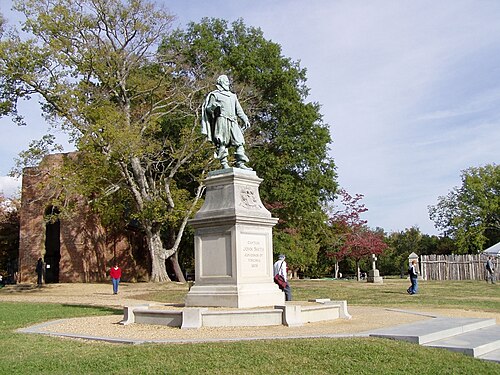
On May 14, 1607, the English colonists chose a marshy peninsula 60 miles up the James River to build James Fort—named in honor of King James I. Although the deep river channel let them tie their ships to the trees and defend against Spanish warships, survival in early Jamestown tested every colonist to the limit!
A foundational concept in this investigation is (pronounced pal-uh-SAYD), which refers to: A high defensive wall made of tall wooden tree trunks set vertically into the ground, like the triangle wall of James Fort. Every part of Life in Early Jamestown within Colonial Times & Jamestown builds upon this essential concept.
At the Grade 4 level of History (American & Virginia) (Colonial Times & Jamestown), researchers compare structure, function, and environmental context to see how , , and shape measurable outcomes.
Key Features
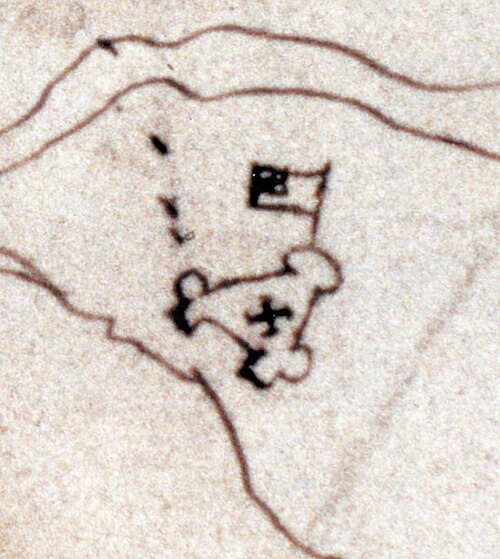
In just 19 days, the settlers built a triangular wooden fort with three circular bulwarks at the corners mounted with cannon. However, the low, swampy island had brackish (salty) river water at high tide and swarms of disease-carrying mosquitoes.
To analyze these defining traits accurately, specialists examine (BRAK-ish WAW-ter): River water where fresh water mixes with salty tidewater from the bay, making it unsafe to drink. Alongside (A high defensive wall made of tall wooden tree trunks set vertically into the ground, like the triangle wall of James Fort.), these specialized characteristics set Life in Early Jamestown apart within Colonial Times & Jamestown.
Field Observation & Evidence: Researchers studying Life in Early Jamestown observe how physical form matches function in History (American & Virginia). Each observable feature provides a clear advantage that supports stability, survival, or performance across changing conditions.
How It Works
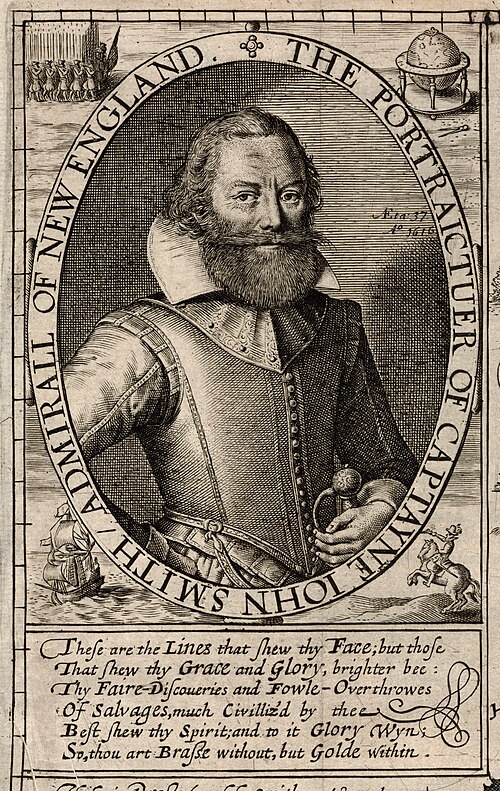
Many early colonists were "gentlemen" unaccustomed to farming or carpentry. Captain John Smith became council president in 1608, established trade with the Powhatan Confederacy for vital corn, and declared the famous rule: "He that will not work shall not eat!" After John Smith returned to England following a gunpowder injury in 1609, drought and conflict led to the terrible "Starving Time" winter of 1609–1610.
This step-by-step process relies on (pronounced hows uv BUR-juh-siz), defined as: The elected lower house of the Virginia General Assembly established at Jamestown in 1619—the first representative legislature in English America. Each stage of the process prepares the way for the next phase to unfold.
Cause-and-Effect Balance: When conditions remain balanced, and interact inside the to keep the system running smoothly. If any single link in this sequence is disrupted, the entire pace of activity shifts.
In Our World
Three major turning points saved and transformed Jamestown in the 1610s: 1) Lord De La Warr and supply ships arrived in June 1610; 2) John Rolfe introduced a sweet strain of tobacco that became Virginia’s profitable cash crop; and 3) In 1619, the General Assembly () met in the Jamestown church as the first representative legislative body in English North America, alongside the arrival of the first recorded Africans in Virginia and women to establish permanent families.
Understanding how Life in Early Jamestown functions in real environments also involves (BRAK-ish WAW-ter): River water where fresh water mixes with salty tidewater from the bay, making it unsafe to drink. Even when surrounding conditions shift across seasons or regions, the interaction between , Brackish Water, and helps sustain balance and resilience in the wider environment.
Global & Practical Significance: The deep-water defensible peninsula lacked fresh springs and suffered from and disease. Furthermore, Tobacco cultivation drove Virginia’s colonial economy and expansion.
Amazing Facts
1. Remarkable Scale & Numbers: Tree-ring studies of ancient Virginia cypress trees proved that the 1607–1612 Jamestown settlers arrived during the worst 7-year drought in 770 years! This discovery highlights why is central to understanding Life in Early Jamestown.
2. Extraordinary Adaptation & Design: For generations, historians thought the original 1607 James Fort had washed into the James River—until archaeologist Dr. William Kelso’s team unearthed the exact postholes and over 3 million artifacts starting in 1994! Specialized conditions involving make these adaptations possible.
3. Surprising Scientific & Historical Record: In July 1619, the Virginia General Assembly () met at Jamestown, planting the roots of representative self-government in America. Over time, processes linked to House of Burgesses leave a lasting mark across Colonial Times & Jamestown.
Read & Review
Chapter Synthesis: Throughout this investigation of Life in Early Jamestown in History (American & Virginia) (Colonial Times & Jamestown), we examined its core foundations, defining traits, step-by-step mechanisms, and real-world connections using key terms like , , and .
Academic Vocabulary Review: • (pal-uh-SAYD): A high defensive wall made of tall wooden tree trunks set vertically into the ground, like the triangle wall of James Fort. • (BRAK-ish WAW-ter): River water where fresh water mixes with salty tidewater from the bay, making it unsafe to drink. • (hows uv BUR-juh-siz): The elected lower house of the Virginia General Assembly established at Jamestown in 1619—the first representative legislature in English America.
Critical Thinking Check: (1) Why did the English settlers choose the Jamestown peninsula in 1607, and what hidden problem did the site have? — It was easy to defend and had deep water for ships, but it was marshy with brackish (salty) drinking water and mosquitoes. (2) What crop introduced by John Rolfe became colonial Virginia’s major cash crop? — Sweet-scented tobacco.