Introduction
From the sun-baked acacia trees of Africa to the freezing, wind-swept peaks of the Himalayas at 5,000 meters (16,400 feet) elevation, two master acrobats of stealth rule their worlds: the Leopard (Panthera pardus) and the Snow Leopard (Panthera uncia)!
A foundational concept in this investigation is (pronounced ar-BOR-ee-uhl KASH-ing), which refers to: Hauling food high up into tree branches to store it safely out of reach of ground scavengers like hyenas and lions. Every part of Leopards & Snow Leopards: Masters of Stealth & High Peaks within 🦁 Big Cats & Apex Land Predators builds upon this essential concept.
At the Grade 4 level of Animals (🦁 Big Cats & Apex Land Predators), researchers compare structure, function, and environmental context to see how , , and shape measurable outcomes.
Key Features
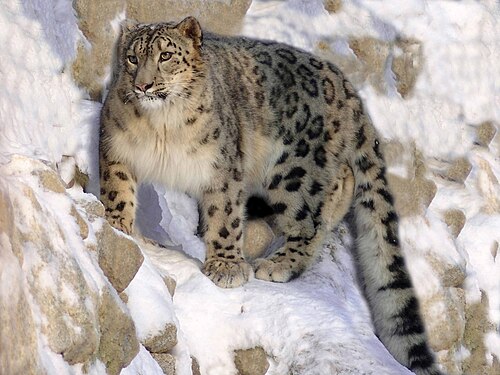
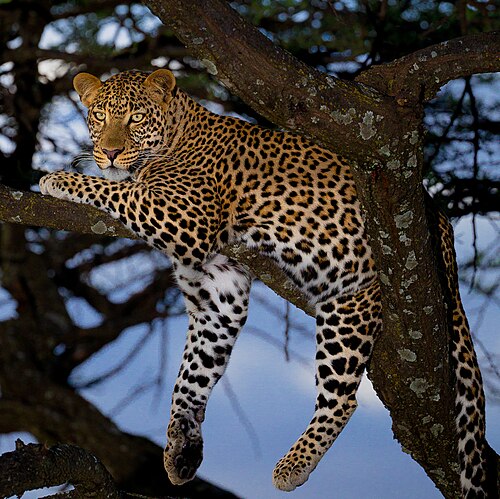
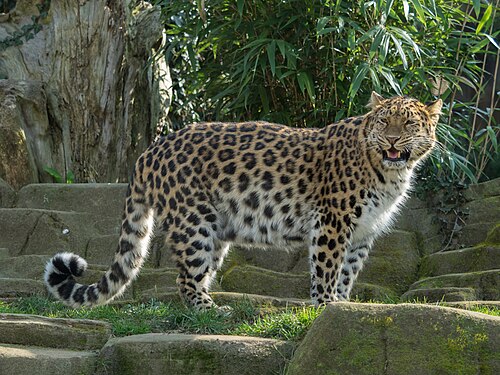
The African and Asian Leopard wears a golden coat patterned with ring-shaped black rosettes (without dots inside) and possesses extraordinary upper-body and neck strength. Its high-mountain cousin, the Snow Leopard ("Ghost of the Mountains"), wears thick smoky-gray fur up to 12 centimeters (5 inches) long on its belly, huge fur-padded paws that act like natural snowshoes, and wide nasal cavities that warm freezing mountain air before it reaches the lungs.
To analyze these defining traits accurately, specialists examine (CHUF-ing): A non-aggressive, breathy snorting greeting sound made through the nostrils by snow leopards and tigers. Alongside (Hauling food high up into tree branches to store it safely out of reach of ground scavengers like hyenas and lions.), these specialized characteristics set Leopards & Snow Leopards: Masters of Stealth & High Peaks apart within 🦁 Big Cats & Apex Land Predators.
Field Observation & Evidence: Researchers studying Leopards & Snow Leopards: Masters of Stealth & High Peaks observe how physical form matches function in Animals. Each observable feature provides a clear advantage that supports stability, survival, or performance across changing conditions.
How It Works
To keep stolen meals away from packs of ground-dwelling lions and spotted hyenas, an African leopard uses its hooked and muscular shoulders to hoist prey weighing up to twice its own body weight (such as an adult impala or young giraffe) straight up a vertical tree trunk and wedge it 9 meters (30 feet) high in the branches! Meanwhile, the Snow Leopard uses powerful hind legs and a thick, furry 1-meter-long tail for balance to leap up to 15 meters (50 feet) across rocky Himalayan chasms—and wraps that fluffy tail around its nose like a warm scarf when sleeping in blizzards!
This step-by-step process relies on (pronounced AL-pyne zohn), defined as: The cold, rocky high-mountain habitat above the altitude where trees can grow, home to the snow leopard. Each stage of the process prepares the way for the next phase to unfold.
Cause-and-Effect Balance: When conditions remain balanced, and interact inside the to keep the system running smoothly. If any single link in this sequence is disrupted, the entire pace of activity shifts.
In Our World
The leopard is the most adaptable and widespread of all big cats, thriving in African savannas, Indian forests, Arabian deserts, and Russian snows. The elusive Snow Leopard lives only in the rugged mountain ranges of 12 Central Asian countries (including the Himalayas, Tibetan Plateau, and Altai Mountains), stalking blue sheep (bharal) and ibex along razor-thin cliff ledges.
Understanding how Leopards & Snow Leopards: Masters of Stealth & High Peaks functions in real environments also involves (CHUF-ing): A non-aggressive, breathy snorting greeting sound made through the nostrils by snow leopards and tigers. Even when surrounding conditions shift across seasons or regions, the interaction between , Chuffing, and helps sustain balance and resilience in the wider environment.
Global & Practical Significance: Lions and hyenas outnumber solitary leopards on the ground, so hoisting kills into trees protects the leopard’s hard-earned meals. Furthermore, The snow leopard’s long, fat-storing furry tail provides both agile balance on sheer cliffs and thermal insulation during blizzards.
Amazing Facts
1. Remarkable Scale & Numbers: An African leopard is so pound-for-pound muscular that it can carry an antelope heavier than itself straight up a vertical tree trunk in its jaws! This discovery highlights why is central to understanding Leopards & Snow Leopards: Masters of Stealth & High Peaks.
2. Extraordinary Adaptation & Design: A snow leopard’s furry tail is nearly as long as its entire body—it works as a mid-air tightrope pole during 50-foot cliff jumps and a warm blanket wrapped over its face in subzero snowstorms! Specialized conditions involving make these adaptations possible.
3. Surprising Scientific & Historical Record: Unlike lions, tigers, jaguars, and common leopards, the Snow Leopard cannot roar—instead, it makes a friendly puffing sound called a "chuff"! Over time, processes linked to leave a lasting mark across 🦁 Big Cats & Apex Land Predators.
Read & Review
Chapter Synthesis: Throughout this investigation of Leopards & Snow Leopards: Masters of Stealth & High Peaks in Animals (🦁 Big Cats & Apex Land Predators), we examined its core foundations, defining traits, step-by-step mechanisms, and real-world connections using key terms like , , and .
Academic Vocabulary Review: • (ar-BOR-ee-uhl KASH-ing): Hauling food high up into tree branches to store it safely out of reach of ground scavengers like hyenas and lions. • (CHUF-ing): A non-aggressive, breathy snorting greeting sound made through the nostrils by snow leopards and tigers. • (AL-pyne zohn): The cold, rocky high-mountain habitat above the altitude where trees can grow, home to the snow leopard.
Critical Thinking Check: (1) Why does an African leopard haul heavy prey up into the high branches of an acacia or marula tree? — To cache (store) its food safely out of reach of ground-bound lions and packs of hyenas. (2) What two jobs does a Snow Leopard’s thick, 1-meter-long furry tail perform? — Acting as a during 50-foot cliff leaps and wrapping around its face like a warm blanket in freezing winds.