Introduction
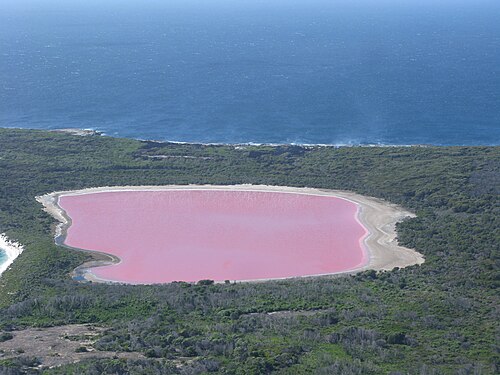
Located on Middle Island in the Recherche Archipelago off the southern coast of Western Australia, Lake Hillier looks from the air like a giant pool of melted strawberry bubblegum! Measuring about 2,000 feet (600 meters) long, the vivid pink lake is bordered by a bright white rim of crystalline salt and a dense fringe of dark green paperbark and eucalyptus trees, right next to the deep blue Southern Ocean.
A foundational concept in this investigation is (pronounced my-kroh-AL-jee), which refers to: Microscopic, single-celled algae found in freshwater and marine systems that are individually invisible to the naked eye. Every part of Lake Hillier, Australia: The Bubblegum-Pink Salt Lake within 🧭 Unsolved & Unexplained: 10 Mysterious Places on Earth builds upon this essential concept.
At the Grade 4 level of Social Sciences & Culture (🧭 Unsolved & Unexplained: 10 Mysterious Places on Earth), researchers compare structure, function, and environmental context to see how , , and shape measurable outcomes.
Key Features
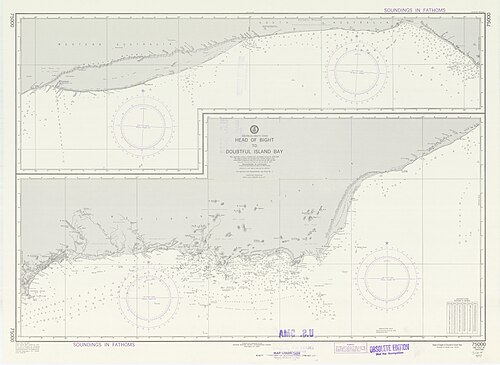
First recorded in 1802 by British navigator Matthew Flinders after he climbed Middle Island’s highest peak, Lake Hillier is separated from the crashing waves of the Southern Ocean by only a narrow strip of sand dunes covered in coastal vegetation.
To analyze these defining traits accurately, specialists examine (kuh-ROT-uh-noyd): Natural red, orange, or yellow pigments (such as beta-carotene) produced by plants, , and bacteria to absorb light and protect cells from sun damage. Alongside Microalgae (Microscopic, single-celled algae found in freshwater and marine systems that are individually invisible to the naked eye.), these specialized characteristics set Lake Hillier, Australia: The Bubblegum-Pink Salt Lake apart within 🧭 Unsolved & Unexplained: 10 Mysterious Places on Earth.
Field Observation & Evidence: Researchers studying Lake Hillier, Australia: The Bubblegum-Pink Salt Lake observe how physical form matches function in Social Sciences & Culture. Each observable feature provides a clear advantage that supports stability, survival, or performance across changing conditions.
How It Works
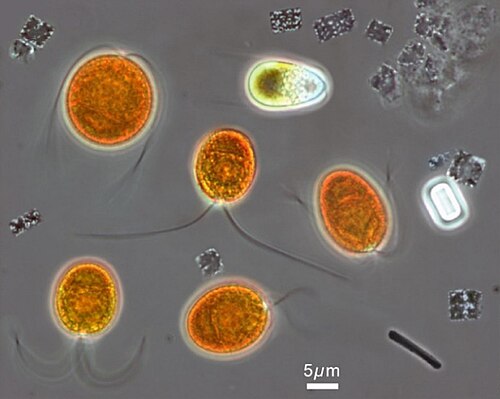
The Mystery: Unlike many other colored lakes around the world that only appear pink under certain angles of sunlight or dry-season evaporation, Lake Hillier’s water stays bright rosy pink year-round—and even stays pink when scooped into a clear glass bottle! The Science: Microbiologists and the Extreme Microbiome Project tested the water and found that Lake Hillier is nearly ten times saltier than the ocean. Only specialized salt-loving (halophilic) microorganisms can survive in this extreme brine, including Dunaliella salina—a species of —and red halophilic bacteria (Salinibacter ruber and haloarchaea) that produce reddish-orange pigments called carotenoids (like beta-carotene in carrots!) inside their cell membranes to shield themselves from intense sunlight and salt stress.
This step-by-step process relies on (pronounced HAL-uh-fyle), defined as: An organism ("salt-lover") that thrives in environments with very high salt concentrations where most other life cannot survive. Each stage of the process prepares the way for the next phase to unfold.
Cause-and-Effect Balance: When conditions remain balanced, and interact inside the to keep the system running smoothly. If any single link in this sequence is disrupted, the entire pace of activity shifts.
In Our World
Today, Middle Island is a protected nature reserve in Western Australia, largely untouched by human development. Visitors mostly view the dramatic contrast between the bubblegum-pink lake, emerald forest, and sapphire ocean from scenic flights or research vessels.
Understanding how Lake Hillier, Australia: The Bubblegum-Pink Salt Lake functions in real environments also involves (kuh-ROT-uh-noyd): Natural red, orange, or yellow pigments (such as beta-carotene) produced by plants, , and bacteria to absorb light and protect cells from sun damage. Because halophilic microalgae and salt-crust bacteria continuously manufacture beta-carotene pigments to survive extreme salinity and UV radiation, Lake Hillier maintains its natural rosy hue in every season.
Global & Practical Significance: Halophilic and bacteria manufacture beta-carotene and bacterioruberin pigments inside their cells year-round. Furthermore, Extreme salinity excludes most organisms, leaving a competition-free niche for halophilic microalgae and archaea.
Amazing Facts
1. Remarkable Scale & Numbers: Even if you scoop water from Lake Hillier into a clear glass jar, the water still looks rosy pink because of the microscopic pigment-producing organisms suspended inside it! This discovery highlights why is central to understanding Lake Hillier, Australia: The Bubblegum-Pink Salt Lake.
2. Extraordinary Adaptation & Design: Despite its neon bubblegum appearance, Lake Hillier’s hypersaline water is completely non-toxic to human skin—and so salty and dense that a swimmer would float effortlessly on top like in the Dead Sea! Specialized conditions involving make these adaptations possible.
3. Surprising Scientific & Historical Record: In 2016, DNA sequencing by the Extreme Microbiome Project revealed that alongside Dunaliella salina , purple and red salt-loving bacteria (Salinibacter ruber) help supercharge the lake’s permanent pink color. Over time, processes linked to leave a lasting mark across 🧭 Unsolved & Unexplained: 10 Mysterious Places on Earth.
Read & Review
Chapter Synthesis: Throughout this investigation of Lake Hillier, Australia: The Bubblegum-Pink Salt Lake in Social Sciences & Culture (🧭 Unsolved & Unexplained: 10 Mysterious Places on Earth), we examined its core foundations, defining traits, step-by-step mechanisms, and real-world connections using key terms like , , and .
Academic Vocabulary Review: • (my-kroh-AL-jee): Microscopic, single-celled algae found in freshwater and marine systems that are individually invisible to the naked eye. • (kuh-ROT-uh-noyd): Natural red, orange, or yellow pigments (such as beta-carotene) produced by plants, microalgae, and bacteria to absorb light and protect cells from sun damage. • (HAL-uh-fyle): An organism ("salt-lover") that thrives in environments with very high salt concentrations where most other life cannot survive.
Critical Thinking Check: (1) Why does Lake Hillier in Western Australia stay bright bubblegum-pink even when its water is scooped into a clear glass bottle? — Salt-loving (Dunaliella salina) and halophilic bacteria in the water produce reddish-orange pigments to protect themselves from intense sunlight. (2) What environmental condition in Lake Hillier prevents ordinary fish and plants from living there while allowing halophilic microbes to thrive? — The lake water is nearly ten times saltier than normal ocean water.