Introduction
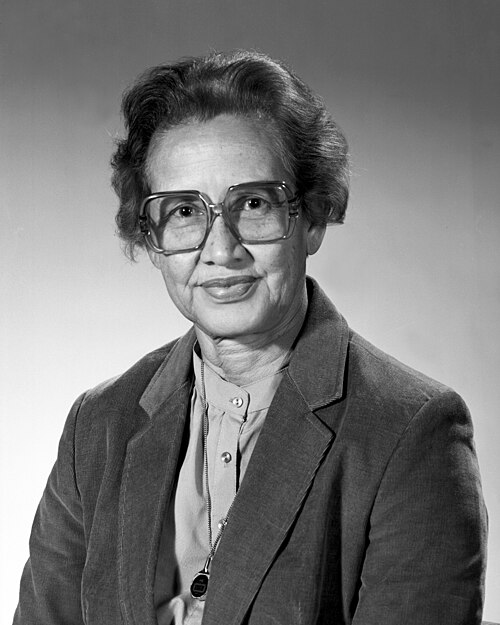
Before electronic computers could be trusted to guide astronauts safely into orbit and to the Moon, NASA relied on brilliant human mathematicians called "human computers"—and none was more legendary than Virginia’s own trailblazing physicist and mathematician Katherine Johnson (1918–2020)!
An important word to know in this book is (truh-JEK-tuh-ree). Trajectory means: The exact curved mathematical path a spacecraft follows through space under the influence of thrust and gravity. Learning about Trajectory helps us understand how Katherine Johnson: NASA Mathematician fits into Inventors & Scientists.
Key Features
Born in White Sulphur Springs, West Virginia, Katherine loved counting everything—from steps along the road to stars in the sky! She was such a math prodigy that she skipped several grades, graduated from high school at age 14, and graduated summa cum laude from West Virginia State College with degrees in mathematics and French at just age 18.
Scientists and explorers also look closely at (HYOO-muhn kuhm-PYOO-ter), which means: A professional mathematician at NACA/NASA who solved complex aerodynamic and orbital equations by hand before digital computers. These special traits make Katherine Johnson: NASA Mathematician easy to spot and study.
How It Works
In 1953, Katherine joined the National Advisory Committee for Aeronautics (NACA, which became NASA) at Langley Research Center in Hampton, Virginia, alongside fellow Black women mathematicians Dorothy Vaughan and Mary Jackson. Using analytic geometry, slide rules, and mechanical adding machines, she calculated the exact launch window and flight for Alan Shepard’s 1961 Freedom 7 flight—making him the first American in space!
Here is another helpful term: (RAHN-day-voo). It means: A precise orbital meeting and docking of two spacecraft traveling at thousands of miles per hour. Step by step, and Rendezvous work together in nature.
In Our World
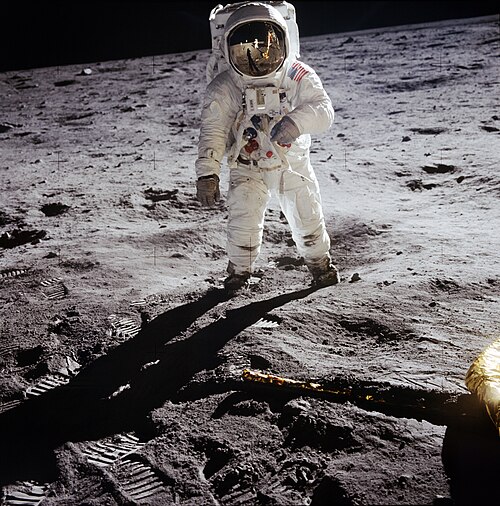
In 1962, when NASA prepared to launch John Glenn on Friendship 7 as the first American to orbit Earth, IBM electronic computers calculated the orbital equations—but Glenn famously told engineers: "Get the girl [Katherine Johnson] to check the numbers... If she says they’re good, then I’m ready to go!" She also calculated the precision lunar-orbit for Apollo 11 in 1969 and helped bring the crippled Apollo 13 crew safely home in 1970.
Understanding how Katherine Johnson: NASA Mathematician works in our world also involves (HYOO-muhn kuhm-PYOO-ter): A professional mathematician at NACA/NASA who solved complex aerodynamic and orbital equations by hand before digital computers. Even when surrounding conditions shift across seasons or regions, the interaction between , Human Computer, and helps sustain balance and resilience in the wider environment.
Amazing Facts
Amazing Fact #1: Before launching into orbit in 1962, astronaut John Glenn refused to fly until Katherine Johnson personally checked the new IBM computer’s orbital calculations by hand!
Amazing Fact #2: In 2015, at age 97, Katherine Johnson was awarded the Presidential Medal of Freedom—America’s highest civilian honor—and NASA named its Computational Research Facility in Hampton, Virginia, after her!
Amazing Fact #3: Her calculations for Apollo 11 synced the Lunar Module lifting off from the Moon with the Command Module orbiting overhead to within fractions of a second!
Read & Review
Let's review what we discovered about Katherine Johnson: NASA Mathematician! In this book, we explored how , , and connect to Inventors & Scientists.
Key Question #1: Why did astronaut John Glenn ask specifically for Katherine Johnson before his historic 1962 Friendship 7 orbital flight? Answer: He trusted her hand-calculated orbital math more than the new electronic IBM computers and wanted her to verify the numbers. Katherine Johnson verified the electronic computer’s orbital numbers to the decimal place by hand.
Key Question #2: Where in Virginia did Katherine Johnson, Dorothy Vaughan, and Mary Jackson do their groundbreaking aerospace work? Answer: NASA Langley Research Center in Hampton, Virginia. Langley Research Center in Hampton, Virginia, was the birthplace of America’s Project Mercury space program.