Introduction
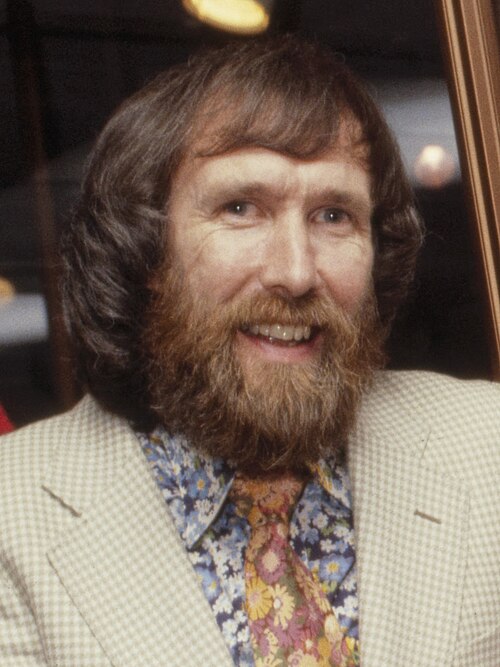
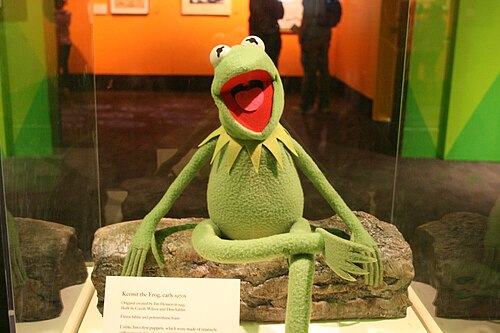
With an old green coat belonging to his mother and two halves of a ping-pong ball for eyes, , filmmaker, and inventor Jim Henson (1936–1990) created Kermit the Frog and the Muppets—bringing laughter, music, and early childhood education to hundreds of millions of kids on Sesame Street and The Muppet Show!
An important word to know in this book is (pup-uh-TEER). Puppeteer means: A performer who brings an inanimate puppet character to life through hand movements, rods, and voice acting. Learning about Puppeteer helps us understand how Jim Henson fits into Artists & Storytellers.
Key Features
Born in Mississippi and raised in Maryland, Jim Henson began performing with puppets on local Washington, D.C., television while still a high school and University of Maryland student in 1954–1955! He coined the word "Muppet" to describe his blend of traditional marionettes and soft hand puppets.
Scientists and explorers also look closely at (an-uh-muh-TRON-iks), which means: Lifelike puppets controlled by tiny radio-controlled motors, cables, and electronics inside their faces. These special traits make Jim Henson easy to spot and study.

How It Works
Before Jim Henson, most stage puppets were carved from hard wood that couldn’t change facial expressions. Henson revolutionized puppetry for television cameras! He sculpted flexible puppets out of soft foam rubber covered in fleece fabric (so the ’s hand could make Kermit scrunch his face or smile!), hid puppeteers below the bottom edge of the TV camera frame using live video monitors, and combined hand controls with thin arm rods.
Here is another helpful term: (sing-kruh-nuh-ZAY-shuhn). It means: Matching the opening and closing of a puppet’s mouth precisely to the syllables of spoken words and songs. Step by step, and Synchronization work together in nature.
In Our World
In 1969, Jim Henson teamed up with educator Joan Ganz Cooney and the Children’s Television Workshop to launch Sesame Street, creating Big Bird, Bert and Ernie, Cookie Monster, Oscar the Grouch, Grover, and Elmo to help preschoolers learn letters, numbers, and kindness! In the 1970s and 1980s, he created The Muppet Show, Fraggle Rock, and advanced through Jim Henson’s Creature Shop.
Understanding how Jim Henson works in our world also involves (an-uh-muh-TRON-iks): Lifelike puppets controlled by tiny radio-controlled motors, cables, and electronics inside their faces. Even when surrounding conditions shift across seasons or regions, the interaction between , Animatronics, and helps sustain balance and resilience in the wider environment.
Amazing Facts
Amazing Fact #1: Jim Henson built the very first Kermit in 1955 out of his mother’s discarded spring-green coat and two halves of a ping-pong ball for eyes!
Amazing Fact #2: In the 1979 movie The Muppet Movie, to film Kermit the Frog sitting on a log in a real swamp strumming a banjo and singing "Rainbow Connection," Jim Henson squeezed inside a watertight metal diving bell underwater with a rubber sleeve, air hose, and small TV monitor!
Amazing Fact #3: Big Bird on Sesame Street stands 2.49 meters (8 feet 2 inches) tall and is covered in over 4,000 dyed feathers!
Read & Review
Let's review what we discovered about Jim Henson! In this book, we explored how , , and connect to Artists & Storytellers.
Key Question #1: Why did Jim Henson build his Muppets out of soft foam rubber and fleece instead of traditional carved wood? Answer: Flexible foam and fabric allowed the ’s hand to create expressive, lifelike facial emotions for close-up television cameras. Soft foam-and-fleece construction gave characters like Kermit and Rowlf subtle, human-like expressions on TV close-ups.
Key Question #2: What did Jim Henson use to make the very first Kermit the Frog puppet in 1955? Answer: An old green coat of his mother’s and a ping-pong ball cut in half for eyes. That original 1955 Kermit puppet is preserved today in the Smithsonian Institution in Washington, D.C.!