
Introduction
In 1993, sitting in a red vinyl booth at a Denny’s roadside diner in San Jose, California, drinking bottomless cups of coffee, a 30-year-old electrical engineer named Jensen Huang (born 1963) and two friends—Chris Malachowsky and Curtis Priem—sketched out plans for a tiny microchip startup called NVIDIA. Three decades later, the GPU (Graphics Processing Unit) they invented to render 3D video games turned out to be the exact parallel-computing brain needed to power the modern Artificial Intelligence (AI) revolution!
A foundational concept in this investigation is GPU (Graphics Processing Unit) (pronounced jee-pee-YOO), which refers to: A specialized microchip invented to render 3D computer graphics that uses thousands of cores to perform millions of mathematical calculations simultaneously. Every part of Jensen Huang: NVIDIA & the AI Supercomputing Boom within 💻 Tech, Business & Innovation Icons builds upon this essential concept.
At the Grade 4 level of Famous People (Movers & Shakers) (💻 Tech, Business & Innovation Icons), researchers compare structure, function, and environmental context to see how GPU (Graphics Processing Unit), , and shape measurable outcomes.
Key Features
Born Jen-Hsun Huang on February 17, 1963, in Tainan, Taiwan, he moved to the United States with his older brother at age nine, attending Oneida Baptist Institute in Kentucky (where he cleaned the dorm bathrooms every afternoon and played on the table-tennis team!) before reuniting with his parents in Oregon. At age 15, his first summer job was washing dishes and busing tables at a local Denny’s restaurant—an experience he credits with teaching him hard work, humility, and teamwork! He earned his electrical engineering degree from Oregon State University (1984) and his master’s degree in electrical engineering from Stanford University (1992).
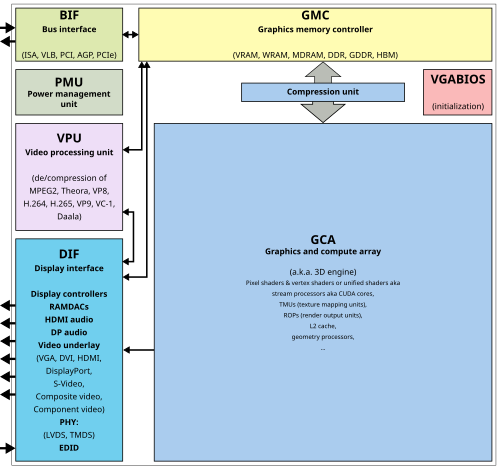
To analyze these defining traits accurately, specialists examine (PAIR-uh-lel kuhm-PYOO-ting): Breaking a massive math or AI problem into thousands of small pieces and solving all of them at the exact same millisecond across thousands of processor cores. Alongside GPU (Graphics Processing Unit) (A specialized microchip invented to render 3D computer graphics that uses thousands of cores to perform millions of mathematical calculations simultaneously.), these specialized characteristics set Jensen Huang: NVIDIA & the AI Supercomputing Boom apart within 💻 Tech, Business & Innovation Icons.
Field Observation & Evidence: Researchers studying Jensen Huang: NVIDIA & the AI Supercomputing Boom observe how physical form matches function in Famous People (Movers & Shakers). Each observable feature provides a clear advantage that supports stability, survival, or performance across changing conditions.
How It Works
In 1999, NVIDIA introduced the GeForce 256—which it marketed as "the world’s first GPU (Graphics Processing Unit)"! Why is a GPU so different from a standard computer CPU (Central Processing Unit)? While a CPU has a handful of super-fast cores that solve tasks one step after another in a single line (serial processing), a GPU has thousands of smaller cores that solve millions of math calculations all at the exact same instant (parallel processing)—originally to draw millions of 3D screen pixels at 60 frames per second!
This step-by-step process relies on (pronounced KOO-duh), defined as: Compute Unified Device Architecture; the software platform NVIDIA introduced in 2006 that lets scientists and programmers run AI and supercomputing code on GPUs. Each stage of the process prepares the way for the next phase to unfold.
Cause-and-Effect Balance: When conditions remain balanced, GPU (Graphics Processing Unit) and interact inside the to keep the system running smoothly. If any single link in this sequence is disrupted, the entire pace of activity shifts.
In Our World
In 2006, Jensen Huang made a daring bet: NVIDIA released , a software platform allowing scientists to use gaming GPUs not just for video game graphics, but for general scientific supercomputing! When researchers discovered in 2012 that deep-learning neural networks learn thousands of times faster on parallel GPUs, NVIDIA’s chips—and Huang, famous for his trademark black leather jacket and flat, 60-direct-report leadership structure—became the engine behind modern AI, from weather-forecasting supercomputers and medical protein folding to robotics and ChatGPT!
Understanding how Jensen Huang: NVIDIA & the AI Supercomputing Boom functions in real environments also involves (PAIR-uh-lel kuhm-PYOO-ting): Breaking a massive math or AI problem into thousands of small pieces and solving all of them at the exact same millisecond across thousands of processor cores. Even when surrounding conditions shift across seasons or regions, the interaction between GPU (Graphics Processing Unit), Parallel Computing, and helps sustain balance and resilience in the wider environment.
Global & Practical Significance: The three engineers met repeatedly at a San Jose Denny’s booth to design their 3D graphics chip company. Furthermore, Massive parallel processing allows GPUs to both draw 3D graphics and train large artificial intelligence models.
Amazing Facts
1. Remarkable Scale & Numbers: NVIDIA was literally born in a Denny’s restaurant booth on Berryessa Road in San Jose, California, in 1993—and over 30 years later, Denny’s installed an official metal plaque on Jensen Huang’s corner booth! This discovery highlights why GPU (Graphics Processing Unit) is central to understanding Jensen Huang: NVIDIA & the AI Supercomputing Boom.
2. Extraordinary Adaptation & Design: As a 15-year-old high school student in Oregon, Jensen Huang worked the graveyard and breakfast shifts washing dishes at Denny’s—and he later won 3rd place in the U.S. Junior Open Table Tennis Championships! Specialized conditions involving make these adaptations possible.
3. Surprising Scientific & Historical Record: In 1999, NVIDIA coined the term "GPU" (Graphics Processing Unit) with the launch of the GeForce 256 chip! Over time, processes linked to leave a lasting mark across 💻 Tech, Business & Innovation Icons.
Read & Review
Chapter Synthesis: Throughout this investigation of Jensen Huang: NVIDIA & the AI Supercomputing Boom in Famous People (Movers & Shakers) (💻 Tech, Business & Innovation Icons), we examined its core foundations, defining traits, step-by-step mechanisms, and real-world connections using key terms like GPU (Graphics Processing Unit), , and .
Academic Vocabulary Review: • GPU (Graphics Processing Unit) (jee-pee-YOO): A specialized microchip invented to render 3D computer graphics that uses thousands of cores to perform millions of mathematical calculations simultaneously. • (PAIR-uh-lel kuhm-PYOO-ting): Breaking a massive math or AI problem into thousands of small pieces and solving all of them at the exact same millisecond across thousands of processor cores. • (KOO-duh): Compute Unified Device Architecture; the software platform NVIDIA introduced in 2006 that lets scientists and programmers run AI and supercomputing code on GPUs.
Critical Thinking Check: (1) Where did 30-year-old electrical engineer Jensen Huang and his two co-founders Chris Malachowsky and Curtis Priem plan the founding of NVIDIA in 1993? — In a booth at a Denny’s roadside diner in San Jose, California (where Huang had once worked as a teenage dishwasher). (2) What is the main difference between a traditional computer CPU and the GPU (Graphics Processing Unit) pioneered by NVIDIA? — A CPU solves tasks one step after another with a few powerful cores (serial), while a GPU uses thousands of cores to solve millions of math calculations all at once (parallel).