Introduction
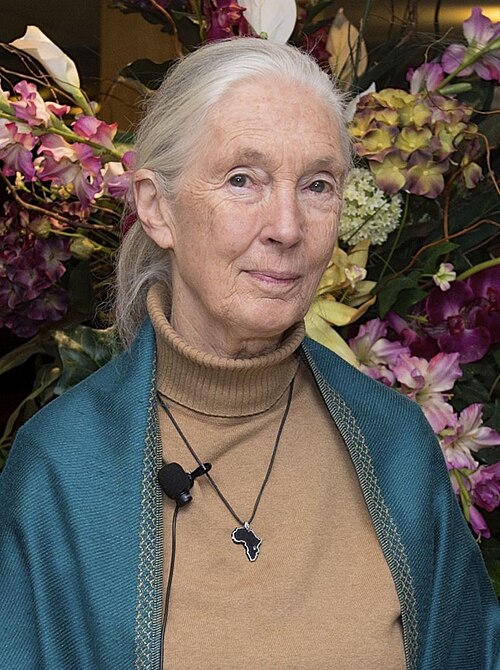
When 26-year-old British wildlife researcher Jane Goodall (born 1934) stepped off a small boat onto the pebbled shore of along Lake Tanganyika in Tanzania on July 14, 1960, she carried only a notebook, a pair of secondhand binoculars, and boundless patience! Within months, she made a discovery that rewrote science textbooks around the world: observing a wild chimpanzee she named David Greybeard strip the leaves off a twig and use it as a tool to fish for termites—proving that humans are not the only animals on Earth who make and use tools!
A foundational concept in this investigation is (pronounced pry-muh-TOL-uh-jee / ee-THOL-uh-jee), which refers to: Primatology is the scientific study of primates (apes, monkeys, and lemurs), while ethology is the study of animal behavior in their natural wild habitats. Every part of Jane Goodall: Living Among the Wild Chimpanzees within 🔬 Modern Science, Nature & Public Intellectuals builds upon this essential concept.
In Grade 5 advanced nonfiction inquiry across Famous People (Movers & Shakers) (🔬 Modern Science, Nature & Public Intellectuals), synthesizing primary evidence around , , and reveals how complex systems operate and adapt over time.
Key Features
Born on April 3, 1934, in London, England, young Valerie Jane Morris-Goodall fell in love with animals at age one when her father gave her a lifelike stuffed toy chimpanzee named Jubilee (which still sits on her dresser more than 85 years later!). At age four, curious about where eggs come from, she hid silently inside a dark henhouse for four hours until she watched a hen lay an egg—while her worried family even called the police thinking she was lost! Instead of scolding her, her mother Vanne sat down and listened eagerly to four-year-old Jane’s scientific observation!
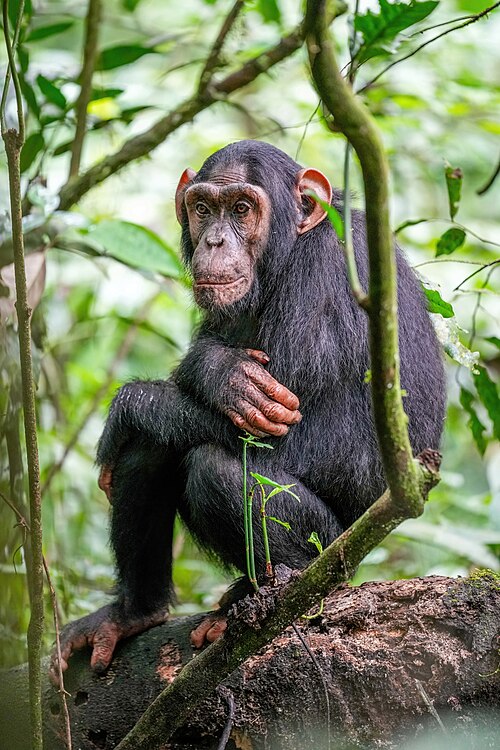
To analyze these defining traits accurately, specialists examine (tool mod-uh-fih-KAY-shuhn): Deliberately shaping or altering a natural object (such as stripping leaves off a twig) to perform a specific task—first observed in wild chimpanzees by Jane Goodall in 1960. Alongside (Primatology is the scientific study of primates (apes, monkeys, and lemurs), while ethology is the study of animal behavior in their natural wild habitats.), these specialized characteristics set Jane Goodall: Living Among the Wild Chimpanzees apart within 🔬 Modern Science, Nature & Public Intellectuals.
& Evidence: Researchers studying Jane Goodall: Living Among the Wild Chimpanzees observe how physical form matches function in Famous People (Movers & Shakers). Each observable feature provides a clear advantage that supports stability, survival, or performance across changing conditions.
How It Works
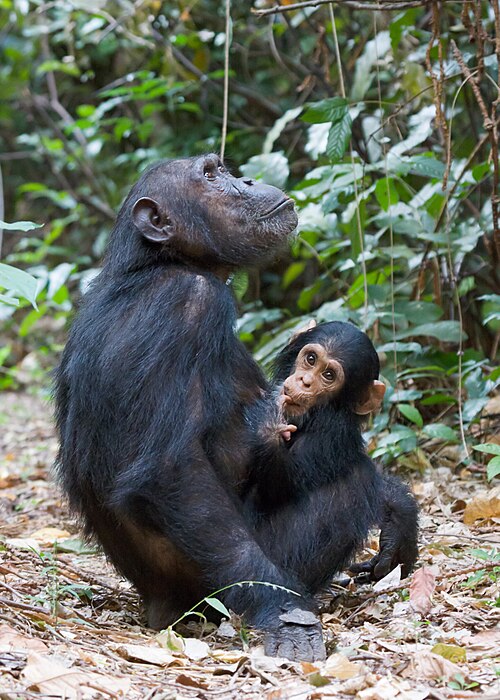
Unable to afford university tuition after high school, Jane worked as a waitress and saved up every penny for a steamship ticket to Kenya in 1957, where she met famed paleontologist Dr. Louis Leakey. Impressed by her keen eye and patience, Leakey chose Jane to study wild chimpanzees in Gombe, Tanzania (accompanied at first by her mother Vanne, since park officials wouldn’t allow a young woman in the jungle alone!). Unlike earlier scientists who gave animals cold numbers (#1, #2, #3), Jane recognized that every chimpanzee had a unique individual personality and emotional life—naming them David Greybeard, Flo, Fifi, Frodo, and Goliath!
This step-by-step process relies on (pronounced GOM-bay streem), defined as: The forested national park along the eastern shore of Lake Tanganyika in Tanzania where Jane Goodall began her landmark chimpanzee research in July 1960. Each stage of the process prepares the way for the next phase to unfold.
Cause-and-Effect Balance: When conditions remain balanced, and interact inside the to keep the system running smoothly. If any single link in this sequence is disrupted, the entire pace of activity shifts.
In Our World
When Jane telegraphed Dr. Leakey in November 1960 that David Greybeard was modifying twigs to make termite-fishing tools (and that chimpanzees also hunt, hug, tickle, grieve, and comfort one another), Leakey famously wired back: "Now we must redefine ’tool,’ redefine ’man,’ or accept chimpanzees as humans!" Because of her discoveries, the University of Cambridge made Jane one of only a handful of people in history allowed to earn a PhD (1966) without first having an undergraduate degree! Today, as a UN Messenger of Peace, Dr. Goodall leads the Jane Goodall Institute and —empowering children in over 65 countries to plant trees and protect animals!
Understanding how Jane Goodall: Living Among the Wild Chimpanzees functions in real environments also involves (tool mod-uh-fih-KAY-shuhn): Deliberately shaping or altering a natural object (such as stripping leaves off a twig) to perform a specific task—first observed in wild chimpanzees by Jane Goodall in 1960. Even when surrounding conditions shift across seasons or regions, the interaction between , Tool Modification, and helps sustain balance and resilience in the wider environment.
Global & Practical Significance: Observing David Greybeard make and use tools overturned the old textbook claim that only humans craft tools. Furthermore, Recognizing animals’ individual personalities and emotions transformed modern ethology (animal behavior science).
Amazing Facts
1. Remarkable Scale & Numbers: Before Jane Goodall’s 1960 discovery in Gombe, science textbooks defined human beings as "Man the Toolmaker"—believing no other animal on Earth ever crafted tools! This discovery highlights why is central to understanding Jane Goodall: Living Among the Wild Chimpanzees.
2. Extraordinary Adaptation & Design: How did Jane finally win the trust of wild chimpanzees after months of them running away whenever she got within 500 yards? A gentle, silver-chinned male she named David Greybeard visited her camp to eat ripe red palm nuts and eventually took a banana right from her hand! Specialized conditions involving make these adaptations possible.
3. Surprising Scientific & Historical Record: Jane Goodall became only the 8th person in the 750-year history of the University of Cambridge to be admitted to earn a PhD (in ethology, 1966) without having an undergraduate college degree first! Over time, processes linked to leave a lasting mark across 🔬 Modern Science, Nature & Public Intellectuals.
Read & Review
Chapter Synthesis: Throughout this investigation of Jane Goodall: Living Among the Wild Chimpanzees in Famous People (Movers & Shakers) (🔬 Modern Science, Nature & Public Intellectuals), we examined its core foundations, defining traits, step-by-step mechanisms, and real-world connections using key terms like , , and .
Academic Vocabulary Review: • (pry-muh-TOL-uh-jee / ee-THOL-uh-jee): Primatology is the scientific study of primates (apes, monkeys, and lemurs), while ethology is the study of animal behavior in their natural wild habitats. • (tool mod-uh-fih-KAY-shuhn): Deliberately shaping or altering a natural object (such as stripping leaves off a twig) to perform a specific task—first observed in wild chimpanzees by Jane Goodall in 1960. • (GOM-bay streem): The forested national park along the eastern shore of Lake Tanganyika in Tanzania where Jane Goodall began her landmark chimpanzee research in July 1960.
Critical Thinking Check: (1) What groundbreaking discovery did 26-year-old Jane Goodall make in November 1960 while watching a wild chimpanzee she named "David Greybeard" in Gombe, Tanzania? — She watched him strip leaves off a twig to craft and use a tool for fishing termites out of a mound—proving humans are not the only toolmakers. (2) How did Jane Goodall’s method of recording chimpanzee behavior differ from the traditional academic rules of the 1960s? — Instead of assigning the chimpanzees cold numbers, she gave them names (like David Greybeard, Flo, and Fifi) and documented their distinct personalities, family bonds, and emotions.