Introduction
Right next to Historic Jamestowne Island sits Jamestown Settlement—a vibrant, hands-on living history museum operated by the Commonwealth of Virginia where students and families can climb aboard full-size 1607 sailing ships, walk inside a recreated Paspahegh Powhatan village, and test colonial armor inside a palisaded fort!
An important word to know in this book is (SOO-zuhn KON-stuhnt). Susan Constant means: The 120-ton flagship commanded by Captain Christopher Newport that led the 1606–1607 voyage to Jamestown, accompanied by the Godspeed and Discovery. Learning about Susan Constant helps us understand how Jamestown Settlement: Ships, Fort & Powhatan Life fits into ⚓ Virginia's Colonial Birthplace & Coastal Landmarks.
Key Features
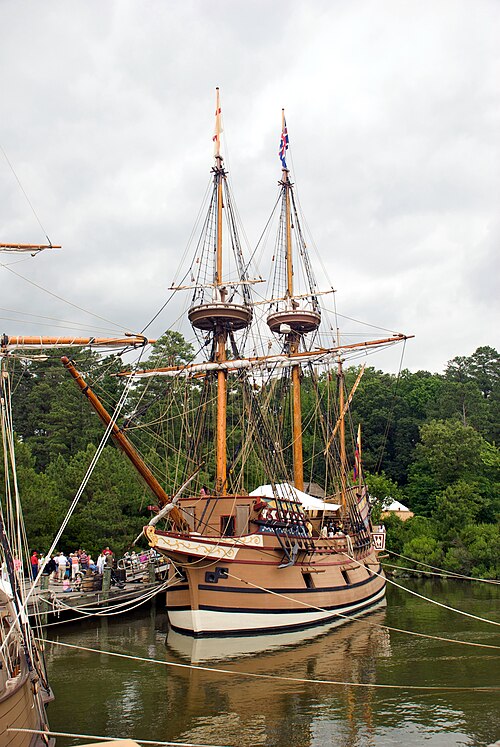
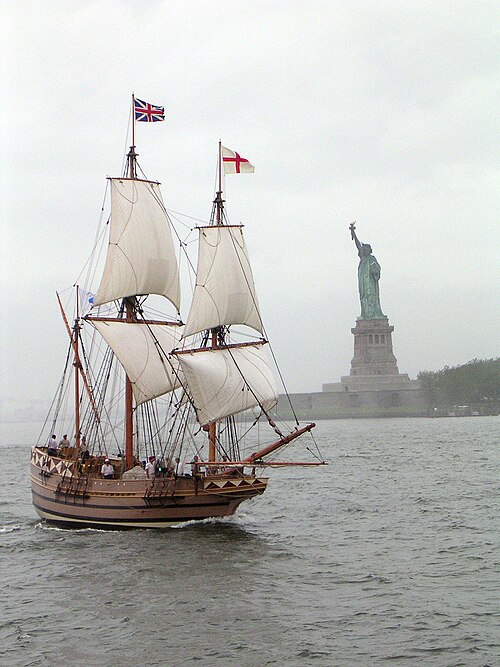
At the Jamestown Settlement pier along the James River float full-scale, seaworthy recreations of the three ships that carried the 104 English colonists from London to Virginia in a 144-day ocean voyage (December 1606 to April 1607): the flagship (116 feet long), the Godspeed (68 feet long), and the tiny Discovery (50 feet long)!
Scientists and explorers also look closely at (PIN-is), which means: A small, nimble two-masted sailing vessel (like the 20-ton Discovery) able to sail in shallow rivers or be rowed with oars. These special traits make Jamestown Settlement: Ships, Fort & Powhatan Life easy to spot and study.
How It Works
When you climb down onto the ’s tween-deck—where 54 passengers lived for nearly five months with only 5 feet of headroom—you can see how cramped Atlantic crossings were! Ashore in the recreated Paspahegh Town, historical interpreters demonstrate how Virginia’s Algonquian-speaking Powhatan people bent saplings to frame weather-tight yehakin houses covered in woven cattail mats, hollowed out massive cypress logs using controlled fire and clamshells to build dugout canoes, and wove fishing nets from milkweed fibers.
Here is another helpful term: (WOT-uhl und dawb). It means: A 17th-century building method using woven wooden sticks ("wattle") plastered with a mixture of clay, sand, and straw ("daub"). Step by step, and Wattle and Daub work together in nature.
In Our World
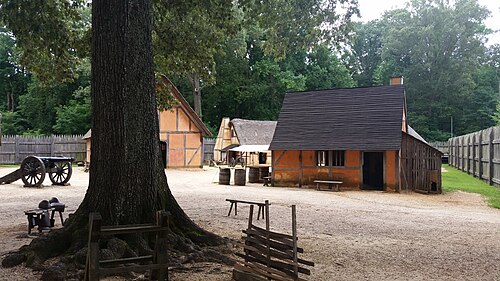
Inside the museum’s recreated 1610–1614 Colonial Fort, costumed interpreters fire matchlock muskets, forge iron nails at the blacksmith shop, and show how English thatched-roof, timber-framed houses were plastered with "daub" (clay mixed with straw). Inside the expansive indoor galleries, immersive films and rare artifacts compare the three cultures that converged at Jamestown: the Powhatan Chiefdom, English Europeans, and West Central Africans (Ndongo/Angola).
Understanding how Jamestown Settlement: Ships, Fort & Powhatan Life works in our world also involves (PIN-is): A small, nimble two-masted sailing vessel (like the 20-ton Discovery) able to sail in shallow rivers or be rowed with oars. Even when surrounding conditions shift across seasons or regions, the interaction between , Pinnace, and helps sustain balance and resilience in the wider environment.
Amazing Facts
Amazing Fact #1: The smallest of the three 1607 Jamestown ships, the Discovery, was only 50 feet long—smaller than a modern school bus—yet carried 21 people across the stormy Atlantic Ocean!
Amazing Fact #2: When the colonists’ captain Christopher Newport sailed the and Godspeed back to England for supplies in June 1607, he left the tiny Discovery behind so colonists could explore the Chesapeake Bay and James River.
Amazing Fact #3: Powhatan women were the master builders and farmers of their communities—constructing the yehakin houses AND cultivating the fields of corn, beans, squash, and sunflowers!
Read & Review
Let's review what we discovered about Jamestown Settlement: Ships, Fort & Powhatan Life! In this book, we explored how , , and connect to ⚓ Virginia's Colonial Birthplace & Coastal Landmarks.
Key Question #1: What were the names of the three ships that brought the 1607 English colonists to Jamestown, from largest to smallest? Answer: 1. (largest flagship), 2. Godspeed (middle), and 3. Discovery (smallest ). Captain Christopher Newport commanded the Susan Constant, Captain Bartholomew Gosnold commanded the Godspeed, and Captain John Ratcliffe commanded the Discovery.
Key Question #2: How did Powhatan builders hollow out giant tree trunks into dugout canoes before metal tools were available? Answer: By burning the center of the log with controlled embers and scraping away the charred wood with sharp clamshells and stone adzes. Fire-and-shell hollowing produced durable, watertight cypress dugout canoes able to carry up to 40 paddlers.