Introduction
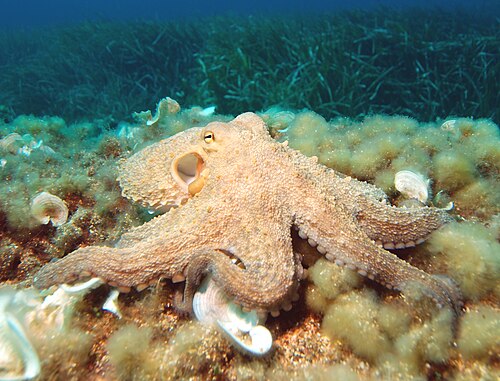
Roughly 97% of all animal species on Earth do not have a backbone! These animals are called invertebrates, and they range from microscopic tardigrades and garden earthworms to insects, spiders, crabs, starfish, and giant squid.
A foundational concept in this investigation is (pronounced in-VUR-tuh-bruht), which refers to: An animal that lacks a vertebral column (backbone), representing 97% of all animal species. Every part of Invertebrates within Classification & Anatomy builds upon this essential concept.
In Grade 3 Animals studies (Classification & Anatomy), understanding how , , and work together helps explain real-world patterns. As you read each chapter, notice how these key terms connect structure, process, and environment.
Key Features
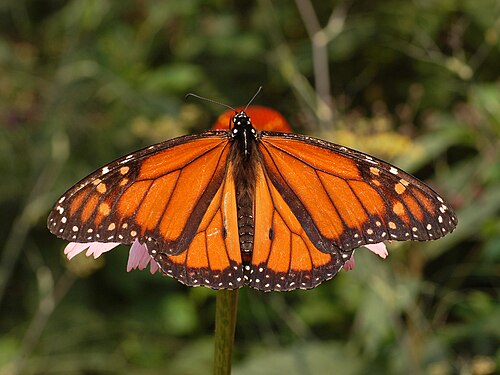
Without an internal spine, invertebrates support and protect their bodies in ingenious ways. Arthropods (insects, spiders, lobsters) wear a jointed outer suit of armor called an made of chitin, while snails and clams build hard calcium carbonate shells.
To analyze these defining traits accurately, specialists examine (ek-soh-SKEL-uh-tuhn): A hard outer covering made of chitin that supports and protects arthropods like insects and crabs. Alongside (An animal that lacks a vertebral column (backbone), representing 97% of all animal species.), these specialized characteristics set Invertebrates apart within Classification & Anatomy.
Field Observation & Evidence: Researchers studying Invertebrates observe how physical form matches function in Animals. Each observable feature provides a clear advantage that supports stability, survival, or performance across changing conditions.
How It Works
Soft-bodied invertebrates like octopuses, jellyfish, and earthworms use a hydrostatic skeleton—fluid held under pressure inside muscle-lined compartments. An octopus has three hearts, blue copper-based blood, and eight flexible arms lined with hundreds of taste-sensing suction cups.
This step-by-step process relies on (pronounced SEF-uh-luh-pod), defined as: An advanced marine such as an octopus, squid, or cuttlefish with tentacles and high intelligence. Each stage of the process prepares the way for the next phase to unfold.
Cause-and-Effect Balance: When conditions remain balanced, and interact inside the to keep the system running smoothly. If any single link in this sequence is disrupted, the entire pace of activity shifts.
In Our World
Invertebrates keep every ecosystem running: bees and butterflies pollinate 80% of flowering plants, earthworms aerate farmland soil, and coral polyps build massive limestone reef cities in tropical seas.
Understanding how Invertebrates functions in real environments also involves (ek-soh-SKEL-uh-tuhn): A hard outer covering made of chitin that supports and protects arthropods like insects and crabs. Even when surrounding conditions shift across seasons or regions, the interaction between , Exoskeleton, and helps sustain balance and resilience in the wider environment.
Global & Practical Significance: Nearly 97% of all known animal species lack a backbone. Furthermore, Arthropods wear a protective external and molt as they grow.
Amazing Facts
1. Remarkable Scale & Numbers: An octopus has three hearts: two pump blood to its gills, and the third pumps oxygenated blue blood to the rest of its body! This discovery highlights why is central to understanding Invertebrates.
2. Extraordinary Adaptation & Design: Because an octopus has no bones at all, any octopus can squeeze through a hole as small as its own eyeball and hard beak. Specialized conditions involving make these adaptations possible.
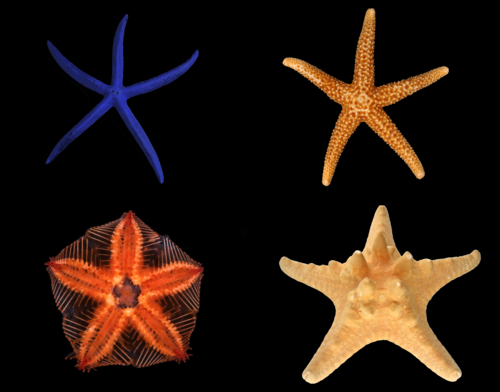
3. Surprising Scientific & Historical Record: Sea stars (starfish) pump seawater instead of blood through a hydraulic tube-foot system to pry open clam shells. Over time, processes linked to leave a lasting mark across Classification & Anatomy.
Read & Review
Chapter Synthesis: Throughout this investigation of Invertebrates in Animals (Classification & Anatomy), we examined its core foundations, defining traits, step-by-step mechanisms, and real-world connections using key terms like , , and .
Academic Vocabulary Review: • (in-VUR-tuh-bruht): An animal that lacks a vertebral column (backbone), representing 97% of all animal species. • (ek-soh-SKEL-uh-tuhn): A hard outer covering made of chitin that supports and protects arthropods like insects and crabs. • (SEF-uh-luh-pod): An advanced marine invertebrate such as an octopus, squid, or cuttlefish with tentacles and high intelligence.
Critical Thinking Check: (1) About what percentage of all animal species on Earth are invertebrates? — About 97%. (2) What protects the body of an arthropod such as a beetle or lobster? — A jointed outer made of chitin.