Introduction
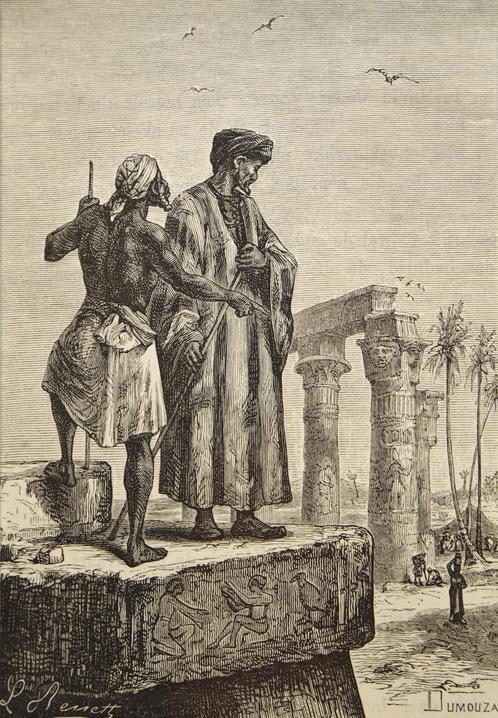
Imagine setting out from home at age 21 and not returning for nearly 30 years—traveling 117,000 kilometers (73,000 miles) across 40 modern countries by camel , donkey, horse, and wooden sailing ship! Moroccan scholar and explorer Ibn Battuta (1304–1368/1369) traveled nearly three times farther than Marco Polo, making him the greatest world traveler of the pre-modern era!
An important word to know in this book is (RIH-luh). Rihla means: An Arabic word meaning both a journey in search of knowledge and the written travel book recording those adventures. Learning about Rihla helps us understand how Ibn Battuta fits into Pathfinders & Explorers.
Key Features
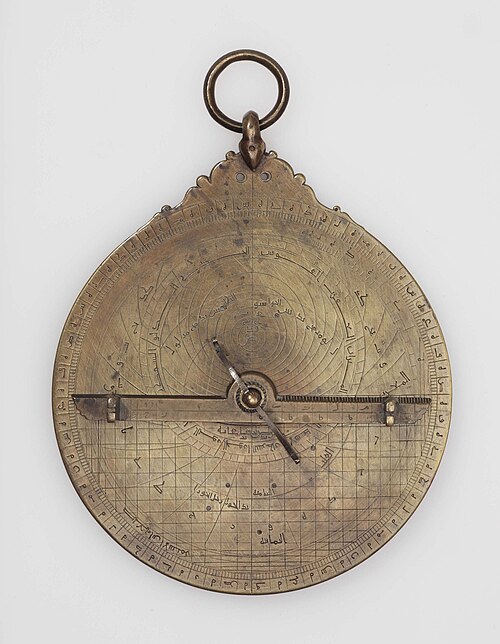
Born into a family of Islamic legal scholars (qadis) in Tangier, Morocco, in 1304, Ibn Battuta set out in June 1325 on a pilgrimage (Hajj) to Mecca. Along the way, he developed a lifelong passion for exploring new lands, vowed "never to travel any road a second time" if he could help it, and used his training as a judge to find work and hospitality wherever he went.
Scientists and explorers also look closely at (KAIR-uh-van), which means: A large group of merchants, pilgrims, and pack camels traveling together for safety across deserts and trade routes. These special traits make Ibn Battuta easy to spot and study.
How It Works
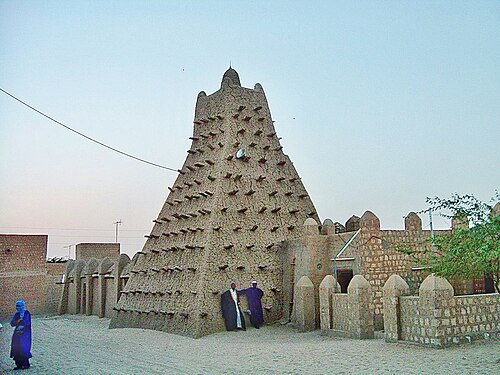
Over 29 years, Ibn Battuta crossed North Africa, Egypt, Syria, the Arabian Peninsula, Persia, East Africa (Kilwa and Mombasa), the Byzantine Empire, the Golden Horde steppes, India (where he served as a judge in Delhi for years), the Maldives, Southeast Asia, China, Spain, and across the Sahara Desert to Timbuktu and the Mali Empire in West Africa!
Here is another helpful term: (dow). It means: A traditional wooden sailing vessel with triangular lateen sails used across the Red Sea and Indian Ocean monsoon routes. Step by step, and Dhow work together in nature.
In Our World
When Ibn Battuta finally returned to Morocco in 1354, the Sultan of Morocco asked him to dictate his adventures to a young scribe named Ibn Juzayy. The resulting book, the ("The Journey"), gives historians an eyewitness window into the 14th-century world—describing everything from coconuts, paper money in China, and monsoon navigation to the libraries and gold trade of Mali!
Understanding how Ibn Battuta works in our world also involves (KAIR-uh-van): A large group of merchants, pilgrims, and pack camels traveling together for safety across deserts and trade routes. Even when surrounding conditions shift across seasons or regions, the interaction between , Caravan, and helps sustain balance and resilience in the wider environment.
Amazing Facts
Amazing Fact #1: Ibn Battuta logged roughly 73,000 miles (117,000 km) in the 1300s—more than three times the distance traveled by Venetian merchant Marco Polo (24,000 miles)!
Amazing Fact #2: Because of his incredible journeys, a crater on the Moon (Ibn Battuta Crater) and a giant themed shopping mall in Dubai are named in his honor.
Amazing Fact #3: Crossing the Sahara Desert to the Mali Empire in 1352, Ibn Battuta traveled with a camel that carried blocks of rock salt used as currency to trade for West African gold!
Read & Review
Let's review what we discovered about Ibn Battuta! In this book, we explored how , , and connect to Pathfinders & Explorers.
Key Question #1: Approximately how far did Moroccan explorer Ibn Battuta travel over 29 years in the 14th century compared to Marco Polo? Answer: About 73,000 miles (117,000 km)—roughly three times farther than Marco Polo. Ibn Battuta’s 73,000-mile itinerary spanned North and West Africa, the Middle East, Central Asia, India, Southeast Asia, and China.
Key Question #2: How do historians today know so many vivid details about Ibn Battuta’s 14th-century travels? Answer: Upon returning to Morocco in 1354, he dictated his eyewitness travel book, the ("The Journey"), to scholar Ibn Juzayy. The Rihla is one of the richest primary sources on 14th-century global trade, culture, and geography.