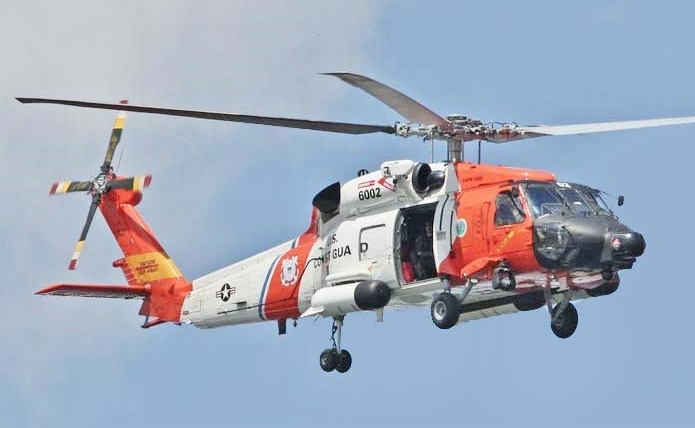
Introduction
Across all 50 states and U.S. territories, the U.S. Coast Guard, the Army and Air , and Active-Duty Northern Command units form America's frontline domestic disaster-rescue shield during hurricanes, floods, wildfires, and winter blizzards.
A foundational concept in this investigation is (pronounced NASH-uh-nul gard), which refers to: State-based Army and Air Force reserve forces that can be called up by a state's Governor for natural disasters or by the President for national defense. Every part of Heroes at Home: Coast Guard & National Guard Domestic Disaster Rescue within 🎖️ Service Members in Uniform & Hearts of Service Humanitarian Missions builds upon this essential concept.
In Grade 5 advanced nonfiction inquiry across United States Armed Forces (🎖️ Service Members in Uniform & Hearts of Service Humanitarian Missions), synthesizing primary evidence around , , and reveals how complex systems operate and adapt over time.
Key Features
Following Hurricane Katrina in August–September 2005, U.S. Coast Guard MH-60 Jayhawk and MH-65 Dolphin helicopters and shallow-water boat crews rescued an extraordinary 33,545 people from flooded rooftops and neighborhoods alongside 50,000 Soldiers and Airmen.
To analyze these defining traits accurately, specialists examine (RES-kyoo hoyst): A motorized steel cable and rescue basket mounted on Coast Guard and helicopters to lift people from flooded rooftops or ships. Alongside National Guard (State-based Army and Air Force reserve forces that can be called up by a state's Governor for natural disasters or by the President for national defense.), these specialized characteristics set Heroes at Home: Coast Guard & National Guard Domestic Disaster Rescue apart within 🎖️ Service Members in Uniform & Hearts of Service Humanitarian Missions.
Field Observation & Evidence: Researchers studying Heroes at Home: Coast Guard & Domestic Disaster Rescue observe how physical form matches function in United States Armed Forces. Each observable feature provides a clear advantage that supports stability, survival, or performance across changing conditions.
How It Works
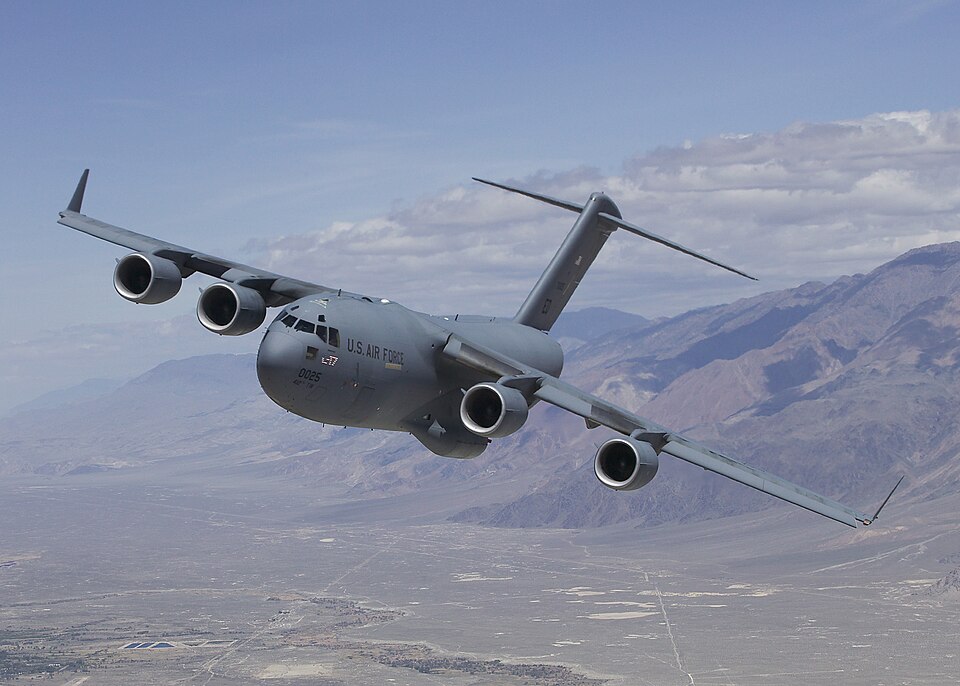
In September–October 2024, after Hurricane Helene caused historic flooding across the Appalachian Mountains of North Carolina, Tennessee, and Southwest Virginia (including Damascus and Grayson County, VA), and active-duty UH-60 Black Hawk and CH-47 Chinook helicopters hoisted hundreds of stranded residents to safety and airlifted millions of pounds of water, generators, and medical supplies. During wildfire seasons, Air National Guard C-130s equipped with the Modular Airborne FireFighting System () discharge 3,000 gallons of fire-retardant line in five seconds.
This step-by-step process relies on (pronounced mafs), defined as: Modular Airborne FireFighting System—a 3,000-gallon pressurized tank loaded into military C-130 cargo planes to fight forest wildfires from the air. Each stage of the process prepares the way for the next phase to unfold.
Cause-and-Effect Balance: When conditions remain balanced, and interact inside the to keep the system running smoothly. If any single link in this sequence is disrupted, the entire pace of activity shifts.
In Our World
The Virginia —headquartered at Fort Barfoot and Richmond, and tracing its continuous lineage to the 1607 Jamestown militia—works hand-in-hand with the Virginia Department of Emergency Management and USCG District 5 in Portsmouth to protect Virginia communities.
Understanding how Heroes at Home: Coast Guard & Domestic Disaster Rescue functions in real environments also involves (RES-kyoo hoyst): A motorized steel cable and rescue basket mounted on Coast Guard and National Guard helicopters to lift people from flooded rooftops or ships. Even when surrounding conditions shift across seasons or regions, the interaction between National Guard, Rescue Hoist, and helps sustain balance and resilience in the wider environment.
Global & Practical Significance: Heroes at Home: U.S. Coast Guard & Domestic Disaster Rescue highlights U.S. Coast Guard, National Guard & Active-Duty Domestic Emergency Response (Hurricane Rooftop Hoists, Flood Boats, Aerial Wildfire Firefighting & Storm Relief). Furthermore, Key highlight: 33,500+ Saved in Katrina • Hurricane Helene Airlifts • C-130 Wildfire Planes.
Amazing Facts
1. Remarkable Scale & Numbers: During Hurricane Katrina in 2005, the U.S. Coast Guard rescued 33,545 people—more than seven times the average number of lives the Coast Guard saves in an entire normal year! This discovery highlights why is central to understanding Heroes at Home: Coast Guard & National Guard Domestic Disaster Rescue.
2. Extraordinary Adaptation & Design: An Air C-130 equipped with the firefighting tank can drop 3,000 gallons (27,000 pounds) of fire retardant across a quarter-mile ridge in under 5 seconds! Specialized conditions involving make these adaptations possible.
3. Surprising Scientific & Historical Record: Founded in 1607 at Jamestown, the Virginia Army 's 116th Infantry Regiment ("Stonewall Brigade") is one of the oldest military units in North America. Over time, processes linked to leave a lasting mark across 🎖️ Service Members in Uniform & Hearts of Service Humanitarian Missions.
Read & Review
Chapter Synthesis: Throughout this investigation of Heroes at Home: Coast Guard & Domestic Disaster Rescue in United States Armed Forces (🎖️ Service Members in Uniform & Hearts of Service Humanitarian Missions), we examined its core foundations, defining traits, step-by-step mechanisms, and real-world connections using key terms like National Guard, , and .
Academic Vocabulary Review: • (NASH-uh-nul gard): State-based Army and Air Force reserve forces that can be called up by a state's Governor for natural disasters or by the President for national defense. • (RES-kyoo hoyst): A motorized steel cable and rescue basket mounted on Coast Guard and National Guard helicopters to lift people from flooded rooftops or ships. • (mafs): Modular Airborne FireFighting System—a 3,000-gallon pressurized tank loaded into military C-130 cargo planes to fight forest wildfires from the air.
Critical Thinking Check: (1) What is the central focus of Heroes at Home: U.S. Coast Guard & Domestic Disaster Rescue? — U.S. Coast Guard, National Guard & Active-Duty Domestic Emergency Response — Hurricane Rooftop Hoists, Flood Boats, Aerial Wildfire Firefighting & Storm Relief. (2) Which key detail or operational highlight belongs to Heroes at Home: U.S. Coast Guard & National Guard Domestic Disaster Rescue? — 33,500+ Saved in Katrina • Hurricane Helene Airlifts • C-130 Wildfire Planes.