Introduction
Every time you press the jump button in a video game and your character leaps over an obstacle, your computer is executing thousands of lines of step-by-step instructions written by programmers! Coding (computer programming) combines logic, math, art, and physics to bring virtual worlds to life.
An important word to know in this book is (AL-guh-rith-uhm). Algorithm means: A clear, step-by-step set of instructions or rules that a computer follows to solve a problem or run a game task. Learning about Algorithm helps us understand how How Video Games Are Coded fits into Inventions & Tech.
Key Features
At the deepest level, computer chips only understand binary code—patterns of 1s and 0s (ON and OFF electrical switches). To write games faster, developers use human-readable programming languages like Scratch, Python, C#, and C++, along with game engines like Unity, Unreal Engine, and Godot.
Scientists and explorers also look closely at (gaym loop), which means: The core cycle in a video game that reads player input, updates physics and positions, and draws each frame 60 times per second. These special traits make How Video Games Are Coded easy to spot and study.
How It Works
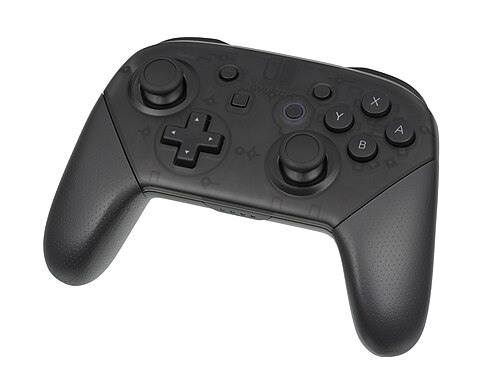
Every video game runs inside a continuous heartbeat called the , repeating 60 times every second (60 frames per second, or 60 FPS): 1) Process Input (did the player press the right arrow key or tap the screen?), 2) Update Game State (move the character’s X/Y coordinates, apply simulated gravity, and check for collisions using hitboxes), and 3) Render (draw the updated 2D sprites or 3D polygons onto the screen)!
Here is another helpful term: (HIT-boks). It means: An invisible geometric box around a game character used by the code to detect when two objects collide. Step by step, and Hitbox work together in nature.
In Our World
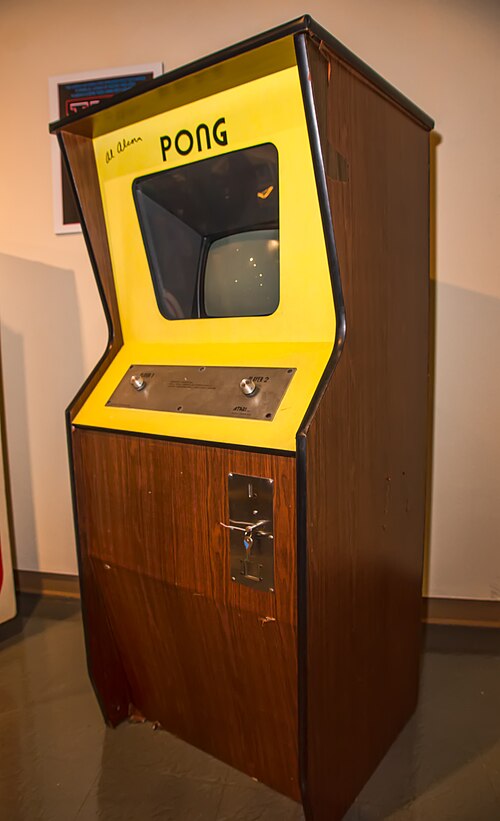
Programmers use conditional statements ("IF the player touches a gold coin, THEN add 10 to the score and play a chime sound") and variables (boxes in memory that store health, score, and speed). From 1972’s two-paddle arcade game Pong to modern 3D worlds, every game is powered by math and logic!
Understanding how How Video Games Are Coded works in our world also involves (gaym loop): The core cycle in a video game that reads player input, updates physics and positions, and draws each frame 60 times per second. Even when surrounding conditions shift across seasons or regions, the interaction between , Game Loop, and helps sustain balance and resilience in the wider environment.
Amazing Facts
Amazing Fact #1: At 60 frames per second (60 FPS), a video game’s code has just 16.6 milliseconds to check your controller buttons, calculate physics, and draw a brand-new picture on the screen!
Amazing Fact #2: The word "bug" for a computer glitch became famous in 1947 when computer pioneer Grace Hopper’s team found a real moth stuck inside a relay switch of the Harvard Mark II computer!
Amazing Fact #3: Every 3D character in a video game is actually built out of thousands of flat geometric triangles (polygons) wrapped in painted image textures.
Read & Review
Let's review what we discovered about How Video Games Are Coded! In this book, we explored how , , and connect to Inventions & Tech.
Key Question #1: What three steps happen 60 times every second inside a video game’s ""? Answer: 1) Read player input, 2) Update positions/physics/collisions, and 3) Render (draw) the frame on screen. Input -> Update -> Render is the universal heartbeat of interactive video games.
Key Question #2: How did a mistake in computer code come to be called a "bug"? Answer: Engineers on Grace Hopper’s 1947 Harvard Mark II team taped a real moth into their logbook after it jammed a computer relay. The 1947 Mark II moth is preserved in the Smithsonian’s National Museum of American History!