Introduction
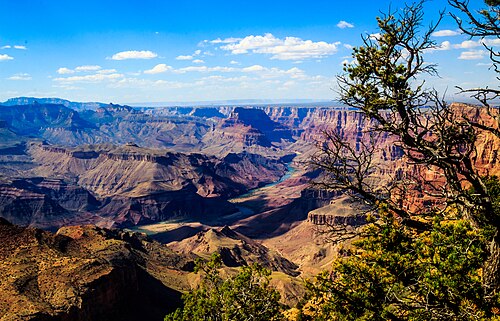
Carved into the red-and-gold plateau of northern Arizona, the Grand Canyon stretches 446 kilometers (277 miles) long, up to 29 kilometers (18 miles) wide, and more than 1.6 kilometers (1 mile) deep! This colossal chasm is a natural geological time machine carved by the Colorado River.
A foundational concept in this investigation is (pronounced ih-ROH-zhuhn), which refers to: The gradual wearing away and transport of rock and soil by flowing water, wind, or ice. Every part of How the Grand Canyon Was Formed within Earth's Wonders builds upon this essential concept.
In Grade 5 advanced nonfiction inquiry across Nature & Environment (Earth's Wonders), synthesizing primary evidence around , , and reveals how complex systems operate and adapt over time.
Key Features
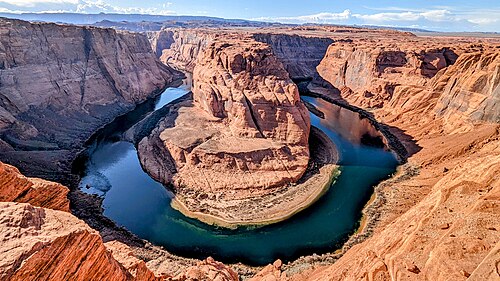
The canyon walls look like a giant layer cake of sedimentary, metamorphic, and igneous rock. At the very bottom lies the dark Vishnu Basement Rocks, which are nearly 1.8 billion years old, while the Kaibab Limestone at the top rim formed under a warm shallow sea 270 million years ago.
To analyze these defining traits accurately, specialists examine (sed-uh-MEN-tuh-ree rok): Rock formed over millions of years from compressed layers of sand, mud, or sea shells, such as sandstone and limestone. Alongside (The gradual wearing away and transport of rock and soil by flowing water, wind, or ice.), these specialized characteristics set How the Grand Canyon Was Formed apart within Earth's Wonders.
Field Observation & Evidence: Researchers studying How the Grand Canyon Was Formed observe how physical form matches function in Nature & Environment. Each observable feature provides a clear advantage that supports stability, survival, or performance across changing conditions.
How It Works
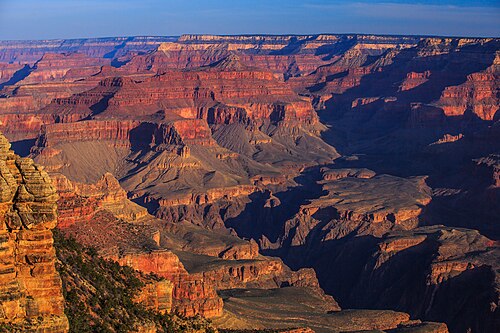
Two powerful forces teamed up to create the Grand Canyon: tectonic uplift and . Starting about 50 to 70 million years ago, tectonic plates pushed the flat Colorado Plateau nearly 2 kilometers higher into the sky. About 5 to 6 million years ago, the steepened Colorado River began slicing downward through the rock layers like a sandpaper saw, while rain, frost wedging, and side streams widened the canyon.
This step-by-step process relies on (pronounced law uv soo-per-puh-ZISH-uhn), defined as: The geological principle that in undisturbed rock layers, the oldest layers are at the bottom and the youngest are at the top. Each stage of the process prepares the way for the next phase to unfold.
Cause-and-Effect Balance: When conditions remain balanced, and interact inside the to keep the system running smoothly. If any single link in this sequence is disrupted, the entire pace of activity shifts.
In Our World
Because older rock layers sit at the bottom and younger layers sit at the top (the ), geologists can hike down the Grand Canyon trails to read almost two billion years of Earth’s history—including ancient sea shells, desert sand dunes, and fern fossils!
Understanding how How the Grand Canyon Was Formed functions in real environments also involves (sed-uh-MEN-tuh-ree rok): Rock formed over millions of years from compressed layers of sand, mud, or sea shells, such as sandstone and limestone. Even when surrounding conditions shift across seasons or regions, the interaction between , Sedimentary Rock, and helps sustain balance and resilience in the wider environment.
Global & Practical Significance: The Colorado River cut downward through the uplifted Colorado Plateau to carve the Grand Canyon. Furthermore, Older rock layers were deposited first at the bottom, with younger layers stacked above them.
Amazing Facts
1. Remarkable Scale & Numbers: Even though Arizona is a dry desert today, the top rim of the Grand Canyon is packed with fossilized sea sponges, corals, and shark teeth from an ancient ocean! This discovery highlights why is central to understanding How the Grand Canyon Was Formed.
2. Extraordinary Adaptation & Design: When winter water seeps into cracks in the canyon walls and freezes into ice, it expands by 9% and wedges giant boulders loose ("frost wedging"). Specialized conditions involving make these adaptations possible.
3. Surprising Scientific & Historical Record: The Grand Canyon is so deep that the weather at the bottom by the river can be 15°C (25°F) hotter than on the snowy North Rim! Over time, processes linked to leave a lasting mark across Earth's Wonders.
Read & Review
Chapter Synthesis: Throughout this investigation of How the Grand Canyon Was Formed in Nature & Environment (Earth's Wonders), we examined its core foundations, defining traits, step-by-step mechanisms, and real-world connections using key terms like , , and .
Academic Vocabulary Review: • (ih-ROH-zhuhn): The gradual wearing away and transport of rock and soil by flowing water, wind, or ice. • (sed-uh-MEN-tuh-ree rok): Rock formed over millions of years from compressed layers of sand, mud, or sea shells, such as sandstone and limestone. • (law uv soo-per-puh-ZISH-uhn): The geological principle that in undisturbed rock layers, the oldest layers are at the bottom and the youngest are at the top.
Critical Thinking Check: (1) Which river carved the Grand Canyon over the last 5 to 6 million years? — The Colorado River. (2) According to the , where are the oldest 1.8-billion-year-old rocks located in the Grand Canyon? — At the very bottom of the canyon along the river.