Introduction
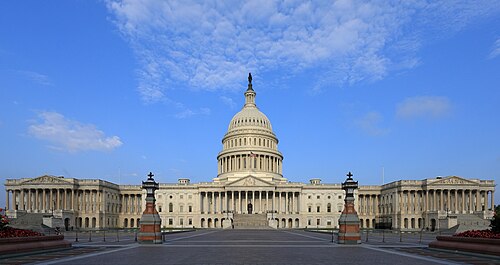
Every national law in the United States starts as a simple idea—often suggested by ordinary citizens or students—and must travel through a careful constitutional journey inside the US Capitol before becoming the law of the land! Before it is signed into law, a proposed law is called a "."
A foundational concept in this investigation is (pronounced bil), which refers to: A written draft of a proposed law presented to a legislature (such as Congress) for debate and voting. Every part of How Laws Are Made within Civics & Community builds upon this essential concept.
In Grade 3 Social Sciences & Culture studies (Civics & Community), understanding how , , and work together helps explain real-world patterns. As you read each chapter, notice how these key terms connect structure, process, and environment.
Key Features
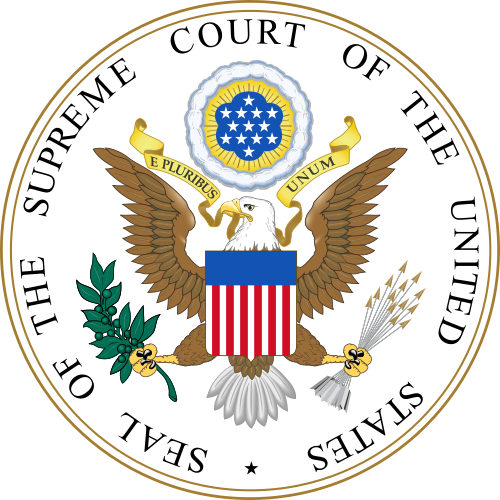
The US Constitution divides the federal government into three branches to create "checks and balances": 1) The Legislative Branch (Congress, which makes laws), 2) The Executive Branch (the President, who carries out laws), and 3) The Judicial Branch (the Supreme Court, which interprets laws). Congress itself has two chambers (): the House of Representatives (435 members based on state population) and the Senate (100 senators—2 per state).
To analyze these defining traits accurately, specialists examine (by-KAM-er-uhl): Having two legislative chambers—like the US Congress, which consists of the Senate and the House of Representatives. Alongside (A written draft of a proposed law presented to a legislature (such as Congress) for debate and voting.), these specialized characteristics set How Laws Are Made apart within Civics & Community.
Field Observation & Evidence: Researchers studying How Laws Are Made observe how physical form matches function in Social Sciences & Culture. Each observable feature provides a clear advantage that supports stability, survival, or performance across changing conditions.
How It Works
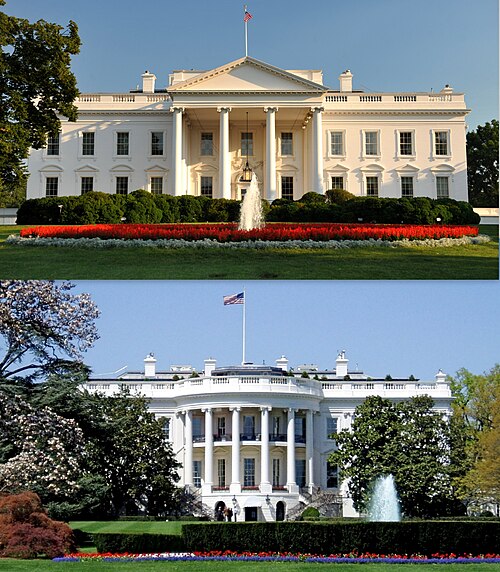
Here is how a becomes a law: 1) A Representative or Senator introduces the written bill in Congress; 2) A specialized Committee studies, holds public hearings on, and edits the bill; 3) The full House and the full Senate debate and vote on the bill—and BOTH chambers must pass the exact same version by a majority vote! 4) The bill goes to the President’s desk at the White House.
This step-by-step process relies on (pronounced VEE-toh), defined as: The constitutional power of the President (or a Governor) to reject a passed by the legislature. Each stage of the process prepares the way for the next phase to unfold.
Cause-and-Effect Balance: When conditions remain balanced, and interact inside the to keep the system running smoothly. If any single link in this sequence is disrupted, the entire pace of activity shifts.
In Our World
At the White House, the President has two main choices: sign the (making it an official federal law!) or refuse to sign and send it back to Congress with objections—called a ! Even after a presidential veto, Congress can still pass the law if two-thirds (2/3) of both the House and Senate vote to override the veto.
Understanding how How Laws Are Made functions in real environments also involves (by-KAM-er-uhl): Having two legislative chambers—like the US Congress, which consists of the Senate and the House of Representatives. Even when surrounding conditions shift across seasons or regions, the interaction between , Bicameral, and helps sustain balance and resilience in the wider environment.
Global & Practical Significance: Both chambers of the US Congress must approve identical text before presenting a to the President. Furthermore, A two-thirds supermajority in both chambers of Congress overrides a presidential .
Amazing Facts
1. Remarkable Scale & Numbers: Out of roughly 10,000 bills introduced during each two-year term of the US Congress, only about 3% to 5% pass every step to become federal laws! This discovery highlights why is central to understanding How Laws Are Made.
2. Extraordinary Adaptation & Design: In 2016, classes of 4th-grade students across America lobbied Congress and helped pass the National Bison Legacy Act, officially making the American bison the US National Mammal! Specialized conditions involving make these adaptations possible.
3. Surprising Scientific & Historical Record: The word "" comes from the Latin word meaning "I forbid!" Over time, processes linked to Veto leave a lasting mark across Civics & Community.
Read & Review
Chapter Synthesis: Throughout this investigation of How Laws Are Made in Social Sciences & Culture (Civics & Community), we examined its core foundations, defining traits, step-by-step mechanisms, and real-world connections using key terms like , , and .
Academic Vocabulary Review: • (bil): A written draft of a proposed law presented to a legislature (such as Congress) for debate and voting. • (by-KAM-er-uhl): Having two legislative chambers—like the US Congress, which consists of the Senate and the House of Representatives. • (VEE-toh): The constitutional power of the President (or a Governor) to reject a bill passed by the legislature.
Critical Thinking Check: (1) Before a can be sent to the President’s desk to be signed into a federal law, what must happen in Congress? — Both the House of Representatives and the Senate must pass the exact same version of the bill by a majority vote. (2) If the President vetoes (rejects) a bill, how can Congress still make it a law under the system of checks and balances? — By overriding the with a two-thirds (2/3) vote in both the House and the Senate.