Introduction
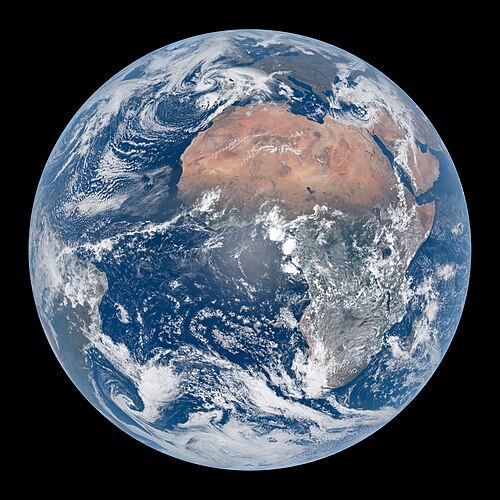
Jump as high as you can into the air—within a second, you land right back on the ground! What keeps people, oceans, and even the air we breathe anchored to a spinning globe hurtling through space? The invisible pulling force called :800;padding:0 0.28rem;border-radius:4px;cursor:pointer;font-family:inherit;font-size:inherit;">gravity!
A foundational concept in this investigation is :800;padding:0 0.28rem;border-radius:4px;cursor:pointer;font-family:inherit;font-size:inherit;">Gravity (pronounced GRAV-uh-tee), which refers to: The universal force of attraction that pulls any two objects with toward each other. Every part of How Gravity Holds Us Down within Everyday Physics & Chemistry builds upon this essential concept.
At the Grade 4 level of Science & Technology (Everyday Physics & Chemistry), researchers compare structure, function, and environmental context to see how :800;padding:0 0.28rem;border-radius:4px;cursor:pointer;font-family:inherit;font-size:inherit;">Gravity, , and Weight shape measurable outcomes.
Key Features
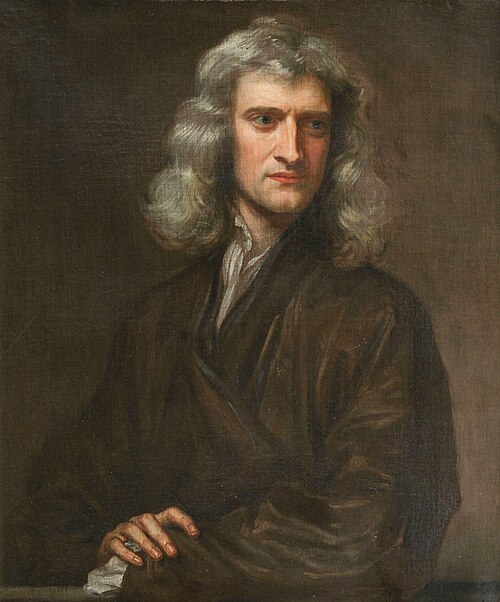
:800;padding:0 0.28rem;border-radius:4px;cursor:pointer;font-family:inherit;font-size:inherit;">Gravity is an attractive force that acts between any two objects that have . In 1687, English physicist Sir Isaac Newton realized that the exact same force that pulls a falling apple from a tree to the ground also holds the Moon in orbit around Earth and holds Earth in orbit around the Sun!
To analyze these defining traits accurately, specialists examine :800;padding:0 0.28rem;border-radius:4px;cursor:pointer;font-family:inherit;font-size:inherit;">Mass (mas): The total amount of matter inside an object, which stays constant no matter what planet you visit. Alongside (The universal force of attraction that pulls any two objects with mass toward each other.), these specialized characteristics set How Gravity Holds Us Down apart within Everyday Physics & Chemistry.
Field Observation & Evidence: Researchers studying How :800;padding:0 0.28rem;border-radius:4px;cursor:pointer;font-family:inherit;font-size:inherit;">Gravity Holds Us Down observe how physical form matches function in Science & Technology. Each observable feature provides a clear advantage that supports stability, survival, or performance across changing conditions.
How It Works
The strength of :800;padding:0 0.28rem;border-radius:4px;cursor:pointer;font-family:inherit;font-size:inherit;">gravity depends on two things: and distance. First, the more mass (matter) an object has, the stronger its gravitational pull. Because Earth is gigantic ($6 \times 10^{24}$ kilograms), its gravity pulls strongly on everything near it. Second, the closer two objects are, the stronger gravity pulls between them. Notice the difference between mass and weight: your mass is how much matter you are made of (which never changes), while your weight is how hard a planet’s gravity pulls on your mass!
This step-by-step process relies on (pronounced wayt), defined as: The measure of how strongly pulls on an object’s (which changes on the Moon or Mars). Each stage of the process prepares the way for the next phase to unfold.
Cause-and-Effect Balance: When conditions remain balanced, :800;padding:0 0.28rem;border-radius:4px;cursor:pointer;font-family:inherit;font-size:inherit;">Gravity and Weight interact inside the to keep the system running smoothly. If any single link in this sequence is disrupted, the entire pace of activity shifts.
In Our World
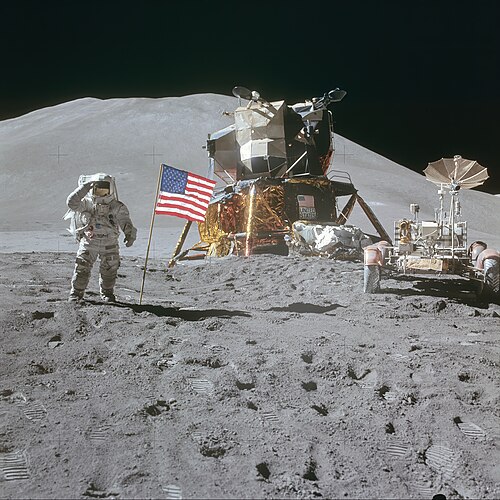
In a vacuum with no air resistance, :800;padding:0 0.28rem;border-radius:4px;cursor:pointer;font-family:inherit;font-size:inherit;">gravity accelerates all falling objects—whether a heavy bowling ball or a tiny feather—at the exact same rate! In 1971, Apollo 15 astronaut David Scott proved Galileo’s famous prediction on the airless Moon by dropping a geological hammer and a falcon feather at the same time: both hit the lunar dirt at the exact same instant!
Understanding how How :800;padding:0 0.28rem;border-radius:4px;cursor:pointer;font-family:inherit;font-size:inherit;">Gravity Holds Us Down functions in real environments also involves (mas): The total amount of matter inside an object, which stays constant no matter what planet you visit. Even when surrounding conditions shift across seasons or regions, the interaction between Gravity, Mass, and Weight helps sustain balance and resilience in the wider environment.
Global & Practical Significance: :800;padding:0 0.28rem;border-radius:4px;cursor:pointer;font-family:inherit;font-size:inherit;">Mass is the amount of matter in your body (constant), whereas weight is the pull of local . Furthermore, Without air resistance, gravity accelerates all objects equally regardless of mass.
Amazing Facts
1. Remarkable Scale & Numbers: Apollo 15 astronaut David Scott dropped a heavy hammer and a light falcon feather on the airless Moon—and both hit the ground at the exact same moment! This discovery highlights why :800;padding:0 0.28rem;border-radius:4px;cursor:pointer;font-family:inherit;font-size:inherit;">Gravity is central to understanding How Gravity Holds Us Down.
2. Extraordinary Adaptation & Design: Your :800;padding:0 0.28rem;border-radius:4px;cursor:pointer;font-family:inherit;font-size:inherit;">mass stays the same everywhere in the Universe, but because Jupiter is so massive, a 100-pound person on Earth would weigh about 240 pounds on Jupiter! Specialized conditions involving Mass make these adaptations possible.
3. Surprising Scientific & Historical Record: Albert Einstein showed in 1915 that massive objects like the Sun actually curve the fabric of space and time around them like a bowling ball resting on a trampoline. Over time, processes linked to leave a lasting mark across Everyday Physics & Chemistry.
Read & Review
Chapter Synthesis: Throughout this investigation of How :800;padding:0 0.28rem;border-radius:4px;cursor:pointer;font-family:inherit;font-size:inherit;">Gravity Holds Us Down in Science & Technology (Everyday Physics & Chemistry), we examined its core foundations, defining traits, step-by-step mechanisms, and real-world connections using key terms like Gravity, , and Weight.
Academic Vocabulary Review: • :800;padding:0 0.28rem;border-radius:4px;cursor:pointer;font-family:inherit;font-size:inherit;">Gravity (GRAV-uh-tee): The universal force of attraction that pulls any two objects with toward each other. • Mass (mas): The total amount of matter inside an object, which stays constant no matter what planet you visit. • Weight (wayt): The measure of how strongly gravity pulls on an object’s mass (which changes on the Moon or Mars).
Critical Thinking Check: (1) If you travel from Earth to the Moon, what happens to your :800;padding:0 0.28rem;border-radius:4px;cursor:pointer;font-family:inherit;font-size:inherit;">mass and your weight? — Your mass stays the exact same, but your weight drops to one-sixth because the Moon has less . (2) What happened when astronaut David Scott dropped a hammer and a feather at the same time on the airless Moon? — They fell at the exact same rate and hit the Moon’s surface together.