Introduction
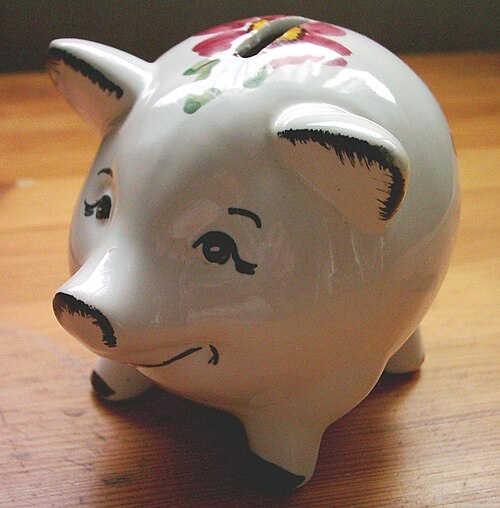
When you deposit your birthday or allowance money into a savings account at a bank, do the bankers put your exact dollar bills into a tiny box with your name on it and leave them sitting on a shelf? No! A bank is a financial engine that keeps your money safe, pays you extra money called , and lends money to help families and businesses grow.
A foundational concept in this investigation is (pronounced IN-trist), which refers to: Extra money a bank pays you for keeping your savings deposited there (or the fee a borrower pays for taking out a loan). Every part of How Banks Work within Economics for Kids builds upon this essential concept.
In Grade 5 advanced nonfiction inquiry across Social Sciences & Culture (Economics for Kids), synthesizing primary evidence around , , and reveals how complex systems operate and adapt over time.
Key Features
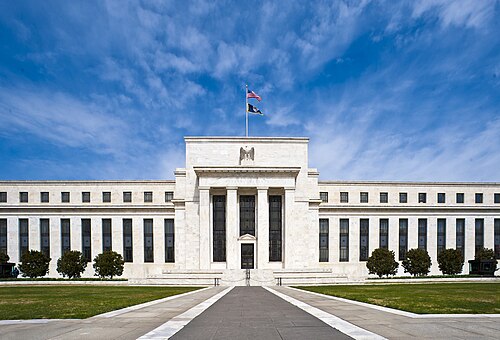
Why is a bank safer than hiding cash under your mattress? First, banks have high-security vaults and encrypted computer ledgers. Second, in the United States, deposits at member banks are insured by the FDIC (Federal Deposit Insurance Corporation) up to $250,000 per depositor—so your savings are protected by law!
To analyze these defining traits accurately, specialists examine Compound (KOM-pownd IN-trist): Earning interest both on your original savings deposit (principal) AND on the previous interest you have already accumulated. Alongside Interest (Extra money a bank pays you for keeping your savings deposited there (or the fee a borrower pays for taking out a loan).), these specialized characteristics set How Banks Work apart within Economics for Kids.
Field Observation & Evidence: Researchers studying How Banks Work observe how physical form matches function in Social Sciences & Culture. Each observable feature provides a clear advantage that supports stability, survival, or performance across changing conditions.
How It Works
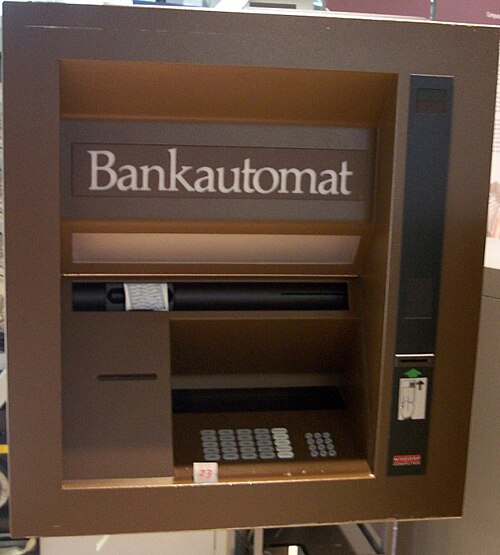
How does a bank pay you just for keeping your savings there? When thousands of people deposit money in a bank, the bank keeps a safe reserve on hand for daily withdrawals (and ATMs) and lends the rest out as loans—such as a mortgage loan for a family buying a house, or a business loan for a baker buying a new oven! Borrowers pay the bank a slightly higher interest rate (say, 6%) on their loans, and the bank shares part of that earnings back with you as savings interest (say, 3% or 4%)!
This step-by-step process relies on (pronounced dih-POZ-it / with-DRAW-uhl), defined as: A deposit is putting money into your bank account; a withdrawal is taking money out of your bank account. Each stage of the process prepares the way for the next phase to unfold.
Cause-and-Effect Balance: When conditions remain balanced, and interact inside the to keep the system running smoothly. If any single link in this sequence is disrupted, the entire pace of activity shifts.
In Our World
Albert Einstein reportedly called compound the most powerful force in math! With , you earn interest not only on the original money you deposited (the principal), but also interest on top of the interest you already earned—making your savings snowball bigger and bigger over time!
Understanding how How Banks Work functions in real environments also involves Compound (KOM-pownd IN-trist): Earning interest both on your original savings deposit (principal) AND on the previous interest you have already accumulated. Even when surrounding conditions shift across seasons or regions, the interaction between Interest, , and helps sustain balance and resilience in the wider environment.
Global & Practical Significance: Banks connect savers with borrowers, charging on loans and paying interest to depositors. Furthermore, Debit draws directly from your existing checking balance; credit is a short-term loan.
Amazing Facts
1. Remarkable Scale & Numbers: The word "bank" comes from the Italian word banco (meaning "bench"), because Renaissance Italian bankers in Florence conducted business sitting at green-cloth wooden benches in the town square! This discovery highlights why is central to understanding How Banks Work.
2. Extraordinary Adaptation & Design: Notice the difference between two plastic bank cards: a Debit Card spends money you ALREADY have in your own checking account, while a Credit Card borrows money as a short-term loan that must be paid back! Specialized conditions involving Compound make these adaptations possible.
3. Surprising Scientific & Historical Record: With compound , if you save money early and leave it untouched, the interest you earn each year starts earning its own interest the next year—like a snowball rolling downhill! Over time, processes linked to leave a lasting mark across Economics for Kids.
Read & Review
Chapter Synthesis: Throughout this investigation of How Banks Work in Social Sciences & Culture (Economics for Kids), we examined its core foundations, defining traits, step-by-step mechanisms, and real-world connections using key terms like , , and .
Academic Vocabulary Review: • (IN-trist): Extra money a bank pays you for keeping your savings deposited there (or the fee a borrower pays for taking out a loan). • (KOM-pownd IN-trist): Earning interest both on your original savings deposit (principal) AND on the previous interest you have already accumulated. • (dih-POZ-it / with-DRAW-uhl): A deposit is putting money into your bank account; a withdrawal is taking money out of your bank account.
Critical Thinking Check: (1) Where does a bank get the money to pay you on your savings account? — The bank lends a portion of pooled deposits to people buying homes or starting businesses, who pay back their loans with interest. (2) What is the difference between a Debit Card and a Credit Card? — A debit card uses money already in your own bank account, whereas a credit card borrows money that you must pay back later.