Introduction
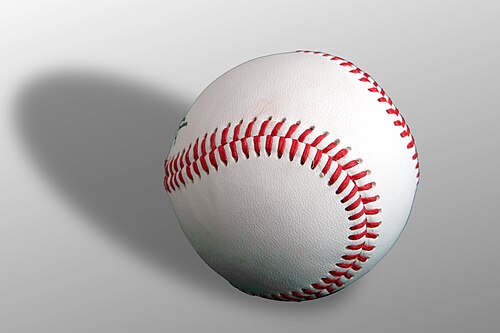
Stand in the batter’s box as a baseball pitcher hurls the ball at 130 km/h (80 mph): the ball looks like it is heading straight down the middle of home plate—and then suddenly dives downward and sideways past your swinging bat! Is a curveball an optical illusion? No! High-speed cameras prove a curveball really curves up to 45 centimeters (18 inches) thanks to aerodynamic physics!
A foundational concept in this investigation is (pronounced MAG-nuhs ih-FEKT), which refers to: The aerodynamic force that makes a spinning ball curve in flight because spinning creates unequal air pressure on opposite sides of the ball. Every part of How a Curveball Curves within The Science of Sports builds upon this essential concept.
In Grade 3 Sports & Entertainment studies (The Science of Sports), understanding how , , and work together helps explain real-world patterns. As you read each chapter, notice how these key terms connect structure, process, and environment.
Key Features
An official baseball weighs 142 grams (5 ounces) and is stitched together with 108 raised red cotton double-stitches. Those raised red stitches are not just hold-together thread—they act like tiny aerodynamic paddles that grip the air as the ball spins!
To analyze these defining traits accurately, specialists examine (TOP-spin): Forward rotation in which the top of a ball spins in the same direction the ball is traveling, causing a curveball to dive downward. Alongside (The aerodynamic force that makes a spinning ball curve in flight because spinning creates unequal air pressure on opposite sides of the ball.), these specialized characteristics set How a Curveball Curves apart within The Science of Sports.
Field Observation & Evidence: Researchers studying How a Curveball Curves observe how physical form matches function in Sports & Entertainment. Each observable feature provides a clear advantage that supports stability, survival, or performance across changing conditions.
How It Works
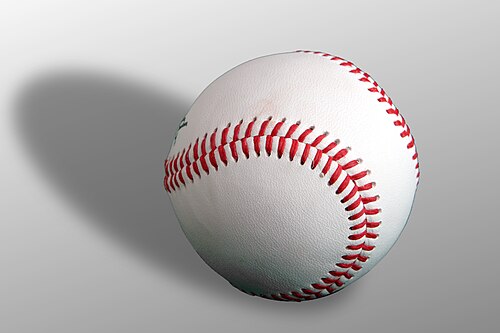
When a pitcher snaps their wrist downward on release, they put rapid on the baseball—making it spin up to 2,800 revolutions per minute (RPM) as it flies forward! This triggers a physics law called the : the raised stitches on the top of the spinning ball push against the oncoming air (creating higher air pressure on top), while the stitches on the bottom spin in the same direction as the airflow (creating lower pressure underneath). That pressure difference pushes the baseball sharply downward and sideways!
This step-by-step process relies on (pronounced air-oh-dy-NAM-iks), defined as: The science of how air flows around moving objects like baseballs, airplanes, and race cars. Each stage of the process prepares the way for the next phase to unfold.
Cause-and-Effect Balance: When conditions remain balanced, and interact inside the to keep the system running smoothly. If any single link in this sequence is disrupted, the entire pace of activity shifts.
In Our World
Every pitch in baseball uses the differently! A four-seam fastball is thrown with fierce backspin, creating upward lift that fights gravity so the ball drops much less than normal. A slider uses sideways spin to dart across the plate, while a knuckleball is thrown with almost zero spin so turbulent air vortices make it flutter unpredictably like a butterfly!
Understanding how How a Curveball Curves functions in real environments also involves (TOP-spin): Forward rotation in which the top of a ball spins in the same direction the ball is traveling, causing a curveball to dive downward. Even when surrounding conditions shift across seasons or regions, the interaction between , Topspin, and helps sustain balance and resilience in the wider environment.
Global & Practical Significance: combined with the baseball’s 108 raised stitches creates a downward Magnus force. Furthermore, Without air molecules, spin creates no aerodynamic pressure difference.
Amazing Facts
1. Remarkable Scale & Numbers: A Major League curveball spins at roughly 2,500 to 3,000 revolutions per minute (RPM)—that is 45 full spins in the 0.45 seconds it takes to reach home plate! This discovery highlights why is central to understanding How a Curveball Curves.
2. Extraordinary Adaptation & Design: If you tried to throw a curveball on the Moon (where there is no air), it wouldn’t curve at all because the requires air molecules for the stitches to push against! Specialized conditions involving make these adaptations possible.
3. Surprising Scientific & Historical Record: Soccer players use the exact same physics when they kick a spinning ball to "bend" a free kick around a wall of defenders into the goal! Over time, processes linked to leave a lasting mark across The Science of Sports.
Read & Review
Chapter Synthesis: Throughout this investigation of How a Curveball Curves in Sports & Entertainment (The Science of Sports), we examined its core foundations, defining traits, step-by-step mechanisms, and real-world connections using key terms like , , and .
Academic Vocabulary Review: • (MAG-nuhs ih-FEKT): The aerodynamic force that makes a spinning ball curve in flight because spinning creates unequal air pressure on opposite sides of the ball. • (TOP-spin): Forward rotation in which the top of a ball spins in the same direction the ball is traveling, causing a curveball to dive downward. • (air-oh-dy-NAM-iks): The science of how air flows around moving objects like baseballs, airplanes, and race cars.
Critical Thinking Check: (1) What physics principle explains why a spinning baseball curves in midair? — The —where the spinning raised stitches create higher air pressure on one side of the ball and lower pressure on the other. (2) What would happen if an astronaut pitcher threw a high-spin curveball on the airless Moon? — It would NOT curve sideways at all, because there is no air on the Moon to create the Magnus Effect.