Introduction
Dogs were the very first animals domesticated by humans over 15,000 years ago! Today, highly trained service dogs—and even gentle miniature guide horses—partner with people who have disabilities to provide independence, safety, and companionship.
A foundational concept in this investigation is (pronounced duh-mes-tuh-KAY-shuhn), which refers to: The process over generations by which wild animals are bred to live and work alongside humans. Every part of History of Dogs as Helpers & Seeing-Eye Horses within Animal Behavior & Working Animals builds upon this essential concept.
In Grade 5 advanced nonfiction inquiry across Animals (Animal Behavior & Working Animals), synthesizing primary evidence around , , and reveals how complex systems operate and adapt over time.
Key Features
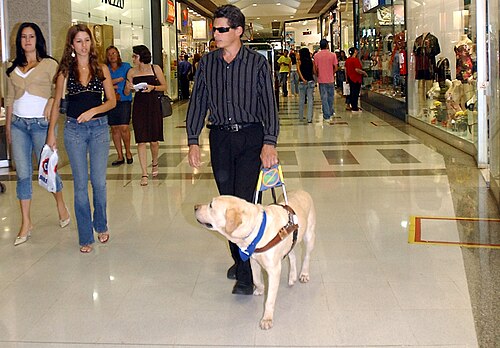
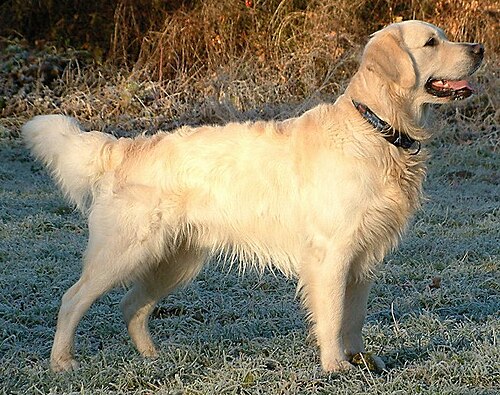
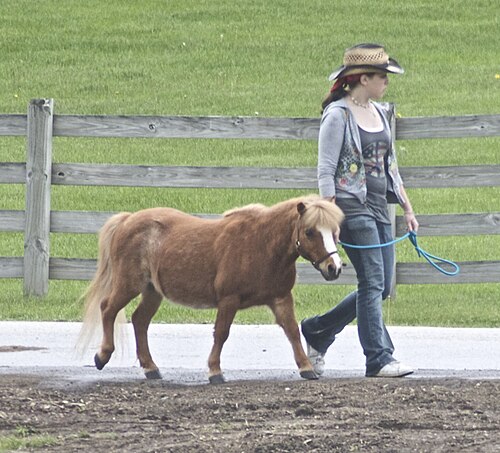
Guide dogs (often Labrador Retrievers, Golden Retrievers, and German Shepherds) wear a special U-shaped harness handle. Miniature guide horses stand only 60 to 85 centimeters (24 to 34 inches) tall at the shoulder—about the size of a large dog—and have nearly 350-degree vision!
To analyze these defining traits accurately, specialists examine (in-TEL-uh-juhnt dis-oh-BEE-dee-uhns): When a trained guide animal intentionally disobeys a handler’s command because following it would be dangerous. Alongside (The process over generations by which wild animals are bred to live and work alongside humans.), these specialized characteristics set History of Dogs as Helpers & Seeing-Eye Horses apart within Animal Behavior & Working Animals.
Field Observation & Evidence: Researchers studying History of Dogs as Helpers & Seeing-Eye Horses observe how physical form matches function in Animals. Each observable feature provides a clear advantage that supports stability, survival, or performance across changing conditions.
How It Works
A guide animal is trained in "." If its handler gives the command "Forward," but the guide dog or miniature horse sees an approaching electric car or an open construction trench, the animal is trained to refuse the unsafe command and stop at the curb.
This step-by-step process relies on (pronounced SUR-vis AN-uh-muhl), defined as: A dog or miniature horse individually trained to perform specific tasks for a person with a disability. Each stage of the process prepares the way for the next phase to unfold.
Cause-and-Effect Balance: When conditions remain balanced, and interact inside the to keep the system running smoothly. If any single link in this sequence is disrupted, the entire pace of activity shifts.
In Our World
Modern service dogs perform specialized medical jobs too: hearing dogs alert deaf owners to smoke alarms, mobility dogs open doors and retrieve dropped keys, and medical-alert dogs can smell tiny chemical changes in a person’s breath before a seizure or low blood sugar episode.
Understanding how History of Dogs as Helpers & Seeing-Eye Horses functions in real environments also involves (in-TEL-uh-juhnt dis-oh-BEE-dee-uhns): When a trained guide animal intentionally disobeys a handler’s command because following it would be dangerous. Even when surrounding conditions shift across seasons or regions, the interaction between , Intelligent Disobedience, and helps sustain balance and resilience in the wider environment.
Global & Practical Significance: Guide animals are trained to prioritize their handler’s safety over a command if danger is present. Furthermore, Miniature horses have long working lifespans, calm temperaments, and wide-angle vision.
Amazing Facts
1. Remarkable Scale & Numbers: Miniature guide horses can live and work for 30 to 40 years—nearly four times longer than the average lifespan of a guide dog! This discovery highlights why is central to understanding History of Dogs as Helpers & Seeing-Eye Horses.
2. Extraordinary Adaptation & Design: When a miniature horse works indoors as a guide animal, it often wears tiny custom-fitted rubber sneakers for traction on tile floors. Specialized conditions involving make these adaptations possible.
3. Surprising Scientific & Historical Record: The first modern guide dog school in the United States, "The Seeing Eye," was co-founded in 1929 by Morris Frank and his dog Buddy. Over time, processes linked to leave a lasting mark across Animal Behavior & Working Animals.
Read & Review
Chapter Synthesis: Throughout this investigation of History of Dogs as Helpers & Seeing-Eye Horses in Animals (Animal Behavior & Working Animals), we examined its core foundations, defining traits, step-by-step mechanisms, and real-world connections using key terms like , , and .
Academic Vocabulary Review: • (duh-mes-tuh-KAY-shuhn): The process over generations by which wild animals are bred to live and work alongside humans. • (in-TEL-uh-juhnt dis-oh-BEE-dee-uhns): When a trained guide animal intentionally disobeys a handler’s command because following it would be dangerous. • (SUR-vis AN-uh-muhl): A dog or miniature horse individually trained to perform specific tasks for a person with a disability.
Critical Thinking Check: (1) What is "" in a trained guide dog or seeing-eye horse? — Refusing a command to walk forward when the animal sees a hidden danger like an oncoming car. (2) Why do some blind handlers choose a trained miniature horse instead of a guide dog? — Miniature horses live 30–40 years and help people who have dog allergies.