Introduction
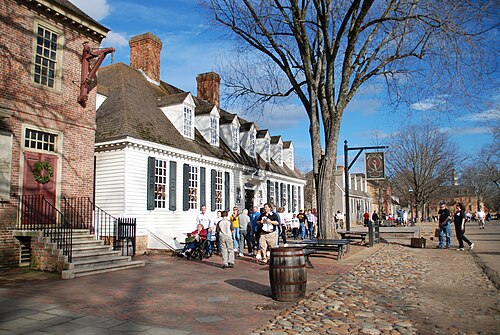
After the statehouse at Jamestown burned down in 1698, Virginia leaders moved the colonial 8 miles inland to higher, healthier ground at Middle Plantation—renaming the town Williamsburg in honor of King William III! From 1699 to 1780, Williamsburg was the political, educational, and cultural heart of Virginia.
A foundational concept in this investigation is (pronounced KAP-uh-tuhl), which refers to: The city where a state or colony’s seat of government and legislature meet (Jamestown -> Williamsburg -> Richmond). Every part of Historic Williamsburg within Colonial Times & Jamestown builds upon this essential concept.
In Grade 5 advanced nonfiction inquiry across History (American & Virginia) (Colonial Times & Jamestown), synthesizing primary evidence around , , and reveals how complex systems operate and adapt over time.
Key Features
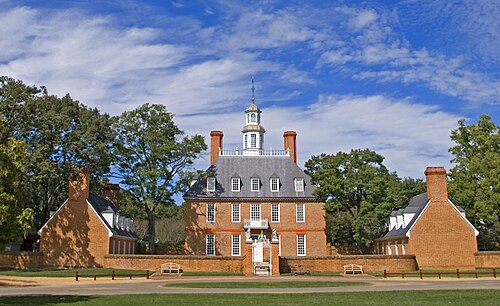
Williamsburg was one of the first planned cities in America! Anchored by the 1693 College of William & Mary at one end and the brick building at the other, a grand avenue 30 meters (99 feet) wide and nearly 1 mile long—Duke of Gloucester Street—ran down the center, intersected by the Palace Green leading to the Royal Governor’s Palace.
To analyze these defining traits accurately, specialists examine (KAP-uh-tuhl): The specific building (spelled with an O) in which lawmakers meet to debate and pass laws. Alongside (The city where a state or colony’s seat of government and legislature meet (Jamestown -> Williamsburg -> Richmond).), these specialized characteristics set Historic Williamsburg apart within Colonial Times & Jamestown.
Field Observation & Evidence: Researchers studying Historic Williamsburg observe how physical form matches function in History (American & Virginia). Each observable feature provides a clear advantage that supports stability, survival, or performance across changing conditions.
How It Works
During the 1760s and 1770s, Williamsburg became a powerhouse of the American Revolution! Inside the and Raleigh Tavern, Patrick Henry thundered against the Stamp Act in 1765, George Washington, Thomas Jefferson, and George Mason debated colonial rights, and in May 1776 Virginia’s delegates passed the Virginia Declaration of Rights and instructed delegates to propose American independence!
This step-by-step process relies on (pronounced LIV-ing HIS-tuh-ree), defined as: A museum like Colonial Williamsburg where historians and tradespeople recreate historic life in authentic buildings. Each stage of the process prepares the way for the next phase to unfold.
Cause-and-Effect Balance: When conditions remain balanced, and interact inside the to keep the system running smoothly. If any single link in this sequence is disrupted, the entire pace of activity shifts.
In Our World
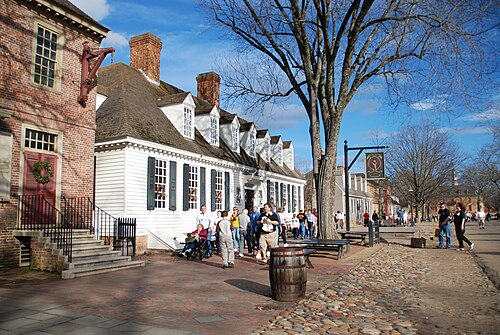
In 1780, Governor Thomas Jefferson moved Virginia’s west to Richmond so it would be safer from British warships. Today, Colonial Williamsburg is the world’s largest living-history museum, with 88 original 18th-century buildings where historic tradespeople and interpreters bring the 1770s to life!
Understanding how Historic Williamsburg functions in real environments also involves (KAP-uh-tuhl): The specific building (spelled with an O) in which lawmakers meet to debate and pass laws. Even when surrounding conditions shift across seasons or regions, the interaction between , Capitol, and helps sustain balance and resilience in the wider environment.
Global & Practical Significance: Virginia’s moved from marshy Jamestown to Williamsburg in 1699, and to Richmond in 1780. Furthermore, Chartered in 1693, the College of William & Mary educated Thomas Jefferson, James Monroe, and John Tyler.
Amazing Facts
1. Remarkable Scale & Numbers: The Wren Building at the College of William & Mary in Williamsburg (begun in 1695) is the oldest college classroom building still standing in the United States! This discovery highlights why is central to understanding Historic Williamsburg.
2. Extraordinary Adaptation & Design: When British President Franklin D. Roosevelt visited Williamsburg in 1934, he called Duke of Gloucester Street "the most historic avenue in all America." Specialized conditions involving make these adaptations possible.
3. Surprising Scientific & Historical Record: In June 1776 in Williamsburg, George Mason wrote the Virginia Declaration of Rights—the direct model for both the Declaration of Independence and the US Bill of Rights! Over time, processes linked to leave a lasting mark across Colonial Times & Jamestown.
Read & Review
Chapter Synthesis: Throughout this investigation of Historic Williamsburg in History (American & Virginia) (Colonial Times & Jamestown), we examined its core foundations, defining traits, step-by-step mechanisms, and real-world connections using key terms like , , and .
Academic Vocabulary Review: • (KAP-uh-tuhl): The city where a state or colony’s seat of government and legislature meet (Jamestown -> Williamsburg -> Richmond). • (KAP-uh-tuhl): The specific building (spelled with an O) in which lawmakers meet to debate and pass laws. • (LIV-ing HIS-tuh-ree): A museum like Colonial Williamsburg where historians and tradespeople recreate historic life in authentic buildings.
Critical Thinking Check: (1) In what order did Virginia’s three cities serve from 1607 to today? — 1) Jamestown (1607), 2) Williamsburg (1699), 3) Richmond (1780–present). (2) Which historic 1693 university stands at the western end of Duke of Gloucester Street in Williamsburg? — The College of William & Mary.