Introduction
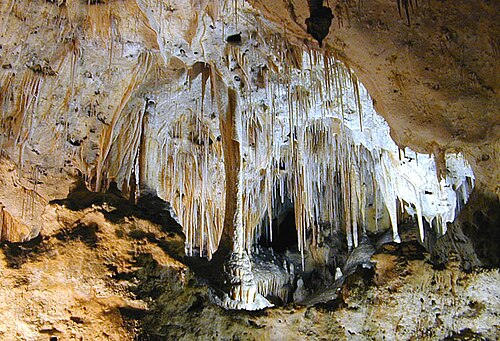
Beneath rolling hills and mountains—including Virginia’s Shenandoah Valley and Kentucky’s Mammoth Cave—lies a hidden underworld of limestone caverns decorated with stone icicles, underground rivers, and blind cave animals!
A foundational concept in this investigation is (pronounced stuh-LAK-tyte), which refers to: An icicle-shaped mineral formation hanging down from the ceiling of a limestone cave. Every part of Hidden Caves within Earth's Wonders builds upon this essential concept.
At the Grade 4 level of Nature & Environment (Earth's Wonders), researchers compare structure, function, and environmental context to see how , , and shape measurable outcomes.
Key Features
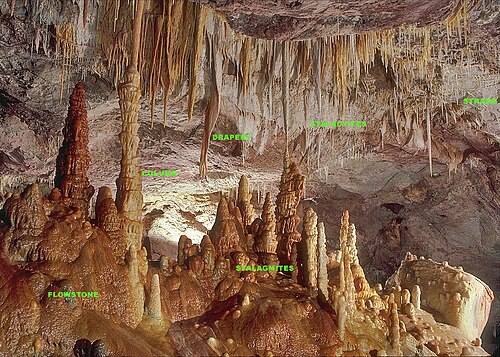
Most large cave systems form in landscapes made of soluble rock like limestone or dolomite. Inside, mineral-rich water drips from the ceiling for thousands of years to build stone formations called speleothems: stalactites hang from the ceiling, and stalagmites rise from the floor.
To analyze these defining traits accurately, specialists examine (stuh-LAG-myte): A mound or cone of calcium carbonate rising up from the floor of a cave where mineral water drips. Alongside (An icicle-shaped mineral formation hanging down from the ceiling of a limestone cave.), these specialized characteristics set Hidden Caves apart within Earth's Wonders.
Field Observation & Evidence: Researchers studying Hidden Caves observe how physical form matches function in Nature & Environment. Each observable feature provides a clear advantage that supports stability, survival, or performance across changing conditions.
How It Works
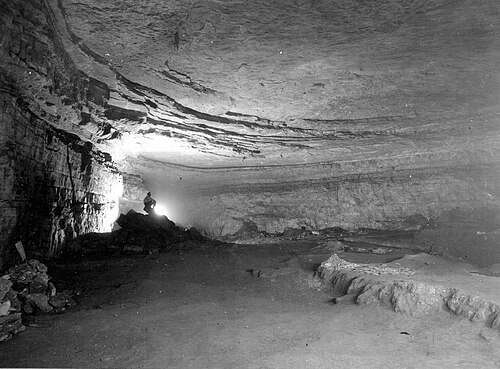
How does gentle rainwater hollow out solid rock? As rainwater falls through the air and seeps through decaying forest soil, it absorbs carbon dioxide gas, turning into weak carbonic acid. Over hundreds of thousands of years, this slightly acidic groundwater dissolves cracks in underground limestone into huge cathedral-sized rooms.
This step-by-step process relies on (pronounced karst), defined as: A landscape underlain by limestone rock that has been dissolved by groundwater to form caves, sinkholes, and springs. Each stage of the process prepares the way for the next phase to unfold.
Cause-and-Effect Balance: When conditions remain balanced, and interact inside the to keep the system running smoothly. If any single link in this sequence is disrupted, the entire pace of activity shifts.
In Our World
When a hanging and a rising meet in the middle, they fuse into a stone pillar called a column! Deep inside pitch-black caves live troglobites—creatures like the Texas blind salamander and cave crayfish that have lost their skin pigment and eyes completely because no light ever reaches their world.
Understanding how Hidden Caves functions in real environments also involves (stuh-LAG-myte): A mound or cone of calcium carbonate rising up from the floor of a cave where mineral water drips. Even when surrounding conditions shift across seasons or regions, the interaction between , Stalagmite, and helps sustain balance and resilience in the wider environment.
Global & Practical Significance: Stalactites hang from the ceiling (C) and stalagmites rise from the ground (G). Furthermore, Weak carbonic acid in groundwater chemically dissolves calcium carbonate in limestone rock.
Amazing Facts
1. Remarkable Scale & Numbers: An easy trick to tell cave formations apart: StalacTites hold "Tight" to the ceiling (with a C for Ceiling), while StalagMites "Might" reach the ceiling from the ground (with a G for Ground)! This discovery highlights why is central to understanding Hidden Caves.
2. Extraordinary Adaptation & Design: Mammoth Cave in Kentucky is the longest cave system on Earth, with more than 685 kilometers (426 miles) of mapped underground passageways! Specialized conditions involving make these adaptations possible.
3. Surprising Scientific & Historical Record: Virginia’s Luray Caverns features the "Great Stalacpipe Organ," which makes musical notes by gently tapping real limestone stalactites of different sizes. Over time, processes linked to leave a lasting mark across Earth's Wonders.
Read & Review
Chapter Synthesis: Throughout this investigation of Hidden Caves in Nature & Environment (Earth's Wonders), we examined its core foundations, defining traits, step-by-step mechanisms, and real-world connections using key terms like , , and .
Academic Vocabulary Review: • (stuh-LAK-tyte): An icicle-shaped mineral formation hanging down from the ceiling of a limestone cave. • (stuh-LAG-myte): A mound or cone of calcium carbonate rising up from the floor of a cave where mineral water drips. • (karst): A landscape underlain by limestone rock that has been dissolved by groundwater to form caves, sinkholes, and springs.
Critical Thinking Check: (1) What is the difference between a and a ? — Stalactites hang down from the cave ceiling, while stalagmites grow upward from the cave floor. (2) How are most limestone caves hollowed out over thousands of years? — Rainwater absorbs carbon dioxide from soil to form weak carbonic acid that slowly dissolves limestone.