Introduction
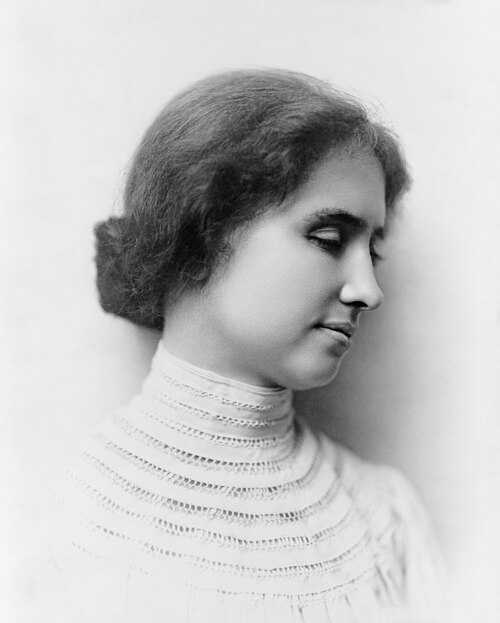
When Helen Keller (1880–1968) was just 19 months old in Tuscumbia, Alabama, a severe fever left her completely deaf and blind. Cut off from both sights and sounds, young Helen felt trapped in a silent, dark world—until an extraordinary 20-year-old teacher named Anne Sullivan arrived and unlocked the power of language in her hands!
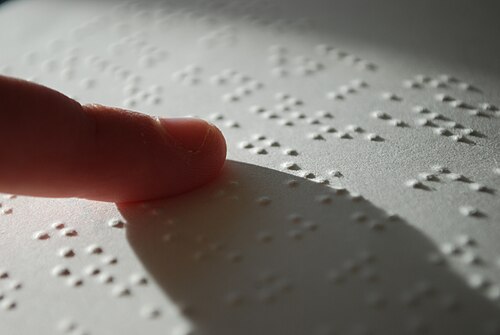
A foundational concept in this investigation is (pronounced brayl), which refers to: A tactile system of raised dots invented by Louis Braille that allows blind and deafblind people to read and write with their fingertips. Every part of Helen Keller within Changemakers & Activists builds upon this essential concept.
In Grade 5 advanced nonfiction inquiry across Famous People (Movers & Shakers) (Changemakers & Activists), synthesizing primary evidence around , , and reveals how complex systems operate and adapt over time.
Key Features
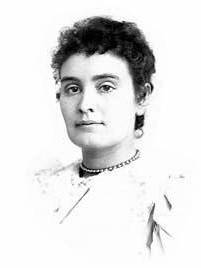
Before Anne Sullivan arrived in March 1887 (a day Helen later called "my soul’s birthday"), 6-year-old Helen had no way to know that objects had names, leading to frequent frustration. Anne, who was partially blind herself and had graduated from the Perkins School for the Blind, began spelling words into Helen’s palm using the manual sign alphabet.
To analyze these defining traits accurately, specialists examine (MAN-yoo-uhl AL-fuh-bet): Finger-spelling letters of the alphabet directly into a deafblind person’s palm so they can feel words and sentences. Alongside (A tactile system of raised dots invented by Louis Braille that allows blind and deafblind people to read and write with their fingertips.), these specialized characteristics set Helen Keller apart within Changemakers & Activists.
Field Observation & Evidence: Researchers studying Helen Keller observe how physical form matches function in Famous People (Movers & Shakers). Each observable feature provides a clear advantage that supports stability, survival, or performance across changing conditions.
How It Works
On April 5, 1887, at the outdoor water pump behind the Keller family cottage, Anne held one of Helen’s hands under the cool gushing water while spelling W-A-T-E-R over and over into Helen’s other palm! Suddenly, Helen’s face lit up: she realized that the finger movements spelled the name of the cool liquid flowing over her hand! By nightfall that very day, Helen had learned 30 new words, including Mother, Father, and Teacher!
This step-by-step process relies on (pronounced AD-vuh-kit), defined as: A person who speaks up publicly to support and win better rights, schools, and opportunities for others. Each stage of the process prepares the way for the next phase to unfold.
Cause-and-Effect Balance: When conditions remain balanced, and interact inside the to keep the system running smoothly. If any single link in this sequence is disrupted, the entire pace of activity shifts.
In Our World
Helen Keller learned to read and write in English, French, German, Greek, and Latin, learned to "hear" people speak by placing her fingers gently on their lips and throat to feel vibrations (the Tadoma method), and in 1904 graduated cum laude from Radcliffe College—becoming the first deafblind person in history to earn a bachelor of arts degree! She wrote 14 books and traveled to 35 countries advocating for people with disabilities.
Understanding how Helen Keller functions in real environments also involves (MAN-yoo-uhl AL-fuh-bet): Finger-spelling letters of the alphabet directly into a deafblind person’s palm so they can feel words and sentences. Even when surrounding conditions shift across seasons or regions, the interaction between , Manual Alphabet, and helps sustain balance and resilience in the wider environment.
Global & Practical Significance: Connecting the tactile sensation of cool water with the finger-spelled letters W-A-T-E-R unlocked language for Helen Keller. Furthermore, With Anne Sullivan spelling lectures into her hand and textbooks, Keller graduated cum laude from Radcliffe in 1904.
Amazing Facts
1. Remarkable Scale & Numbers: Once Helen Keller understood the word "W-A-T-E-R" at the outdoor water pump on April 5, 1887, she touched the ground, the pump, and her teacher, learning 30 words before bedtime that same day! This discovery highlights why is central to understanding Helen Keller.
2. Extraordinary Adaptation & Design: Helen Keller became the first deafblind person in history to graduate from college when she earned her Bachelor of Arts degree from Radcliffe College in 1904. Specialized conditions involving make these adaptations possible.
3. Surprising Scientific & Historical Record: Helen Keller loved dogs and brought the very first Akita dog from Japan to the United States in 1937—a puppy named Kamikaze-go! Over time, processes linked to leave a lasting mark across Changemakers & Activists.
Read & Review
Chapter Synthesis: Throughout this investigation of Helen Keller in Famous People (Movers & Shakers) (Changemakers & Activists), we examined its core foundations, defining traits, step-by-step mechanisms, and real-world connections using key terms like , , and .
Academic Vocabulary Review: • (brayl): A tactile system of raised dots invented by Louis Braille that allows blind and deafblind people to read and write with their fingertips. • (MAN-yoo-uhl AL-fuh-bet): Finger-spelling letters of the alphabet directly into a deafblind person’s palm so they can feel words and sentences. • (AD-vuh-kit): A person who speaks up publicly to support and win better rights, schools, and opportunities for others.
Critical Thinking Check: (1) How did teacher Anne Sullivan help 6-year-old Helen Keller understand that everything in the world has a name? — By holding one of Helen’s hands under cool water at the outdoor pump while finger-spelling W-A-T-E-R into her other palm. (2) What historic educational milestone did Helen Keller achieve in 1904 at Radcliffe College? — She became the first deafblind person in history to earn a college bachelor’s degree.