Introduction
Why can a coordinated team accomplish feats that no single superstar could ever achieve alone? Whether it is an eight-oared Olympic rowing shell gliding across the water, a flock of migrating geese flying in a V-formation, or NASA engineers saving Apollo 13, great teamwork multiplies everyone’s strength through !
An important word to know in this book is (SIN-er-jee). Synergy means: When a coordinated team working together produces a combined result greater than the sum of what each person could do alone. Learning about Synergy helps us understand how Great Teamwork Stories fits into Sportsmanship & Resilience.
Key Features
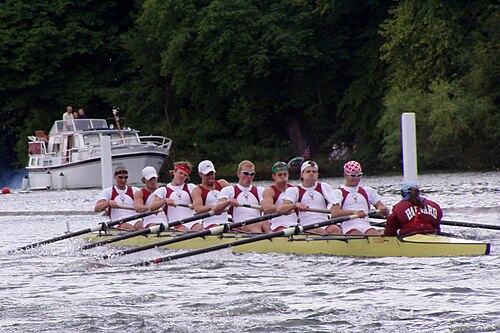
At the 1936 Berlin Olympics, the University of Washington eight-man rowing crew—working-class sons of loggers, fishermen, and carpenters made famous in the book The Boys in the Boat—showed the secret of "swing." In an eight-oared racing shell, if eight super-strong rowers pull their oars even a tenth of a second out of sync, the boat jerks and slows down; when all eight rowers and their lock into perfect rhythm as one heartbeat, the boat lifts and flies across the water to Olympic gold!
Scientists and explorers also look closely at (KOK-suhn), which means: The team member in a racing rowing boat who steers the rudder and calls the stroke rhythm and race strategy for the rowers. These special traits make Great Teamwork Stories easy to spot and study.
How It Works
Nature invented teamwork long before humans! When Canada geese migrate thousands of miles in a V-formation, each bird’s flapping wingtips create an upward swirl of air () that lifts the bird flying right behind it—saving the flock up to 20% to 30% of their flying energy! And whenever the lead goose at the point of the V gets tired (since the front spot has no updraft), it drops back into the V and another goose rotates to the front!
Here is another helpful term: (UP-wosh VOR-teks). It means: The rising current of air behind a bird’s wingtip that reduces wind resistance for the next bird flying in a V-formation. Step by step, and Upwash Vortex work together in nature.
In Our World
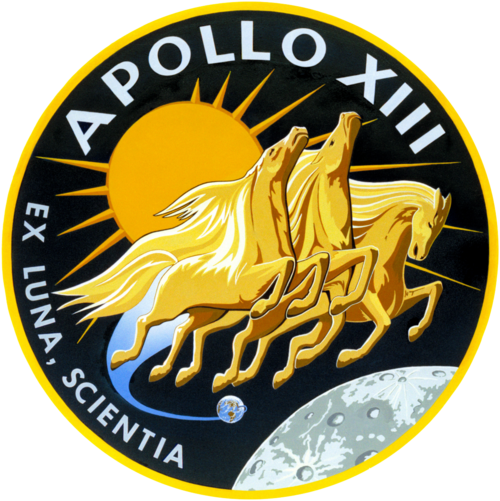
In April 1970, when an oxygen tank exploded aboard the Apollo 13 spacecraft 320,000 kilometers from Earth, the three astronauts inside the freezing cabin and hundreds of Mission Control engineers in Houston had to build a carbon-dioxide air scrubber out of plastic bags, cardboard, a sock, and duct tape! Because every engineer and astronaut listened, shared roles, and trusted one another, Apollo 13 splashed down safely in the Pacific—the ultimate triumph of teamwork!
Understanding how Great Teamwork Stories works in our world also involves (KOK-suhn): The team member in a racing rowing boat who steers the rudder and calls the stroke rhythm and race strategy for the rowers. Even when surrounding conditions shift across seasons or regions, the interaction between , Coxswain, and helps sustain balance and resilience in the wider environment.
Amazing Facts
Amazing Fact #1: Geese flying together in a V-formation can fly roughly 70% farther as a team than a single goose flying alone, because each bird rides the upward air current created by the bird in front of it!
Amazing Fact #2: In 1880s physics experiments, French engineer Max Ringelmann discovered that good teams avoid "social loafing" when every single member has a clear, valued role and encourages their teammates.
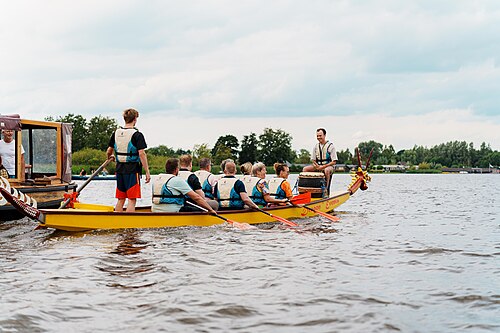
Amazing Fact #3: In an eight-person rowing boat (or a 20-paddler Dragon Boat), the (or drummer) doesn’t pull an oar—their job is steering and calling the exact rhythm so all paddles hit the water at the exact same millisecond!
Read & Review
Let's review what we discovered about Great Teamwork Stories! In this book, we explored how , , and connect to Sportsmanship & Resilience.
Key Question #1: Why do migrating geese fly in a V-formation and take turns flying at the front point of the V? Answer: Each bird’s wings create an upward air current (upwash) that saves the birds behind it 20–30% energy, and they rotate the tiring front spot. Aerodynamic drafting and shared leadership allow the entire flock to fly much farther together.
Key Question #2: In an eight-person Olympic rowing boat (or a Dragon Boat), why is synchronization even more important than raw individual muscle strength? Answer: When all oars enter and pull through the water at the exact same split-second ("swing"), the boat glides smoothly without rocking or dragging. Unified timing prevents wasted energy and hull drag, creating maximum forward propulsion.