Introduction
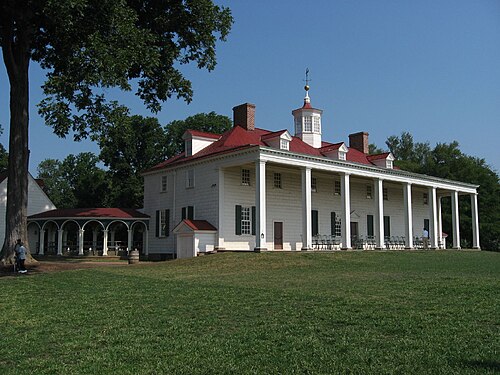
High on a grassy bluff overlooking a sweeping bend of the Potomac River in Fairfax County, Virginia, stands Mount Vernon—the beloved home of George Washington (Commander-in-Chief of the Continental Army and 1st President of the United States) and Martha Washington for more than 45 years!
A foundational concept in this investigation is (pronounced rus-tuh-KAY-shuhn), which refers to: An 18th-century architectural technique at Mount Vernon where wooden boards were beveled, painted, and sanded to look like cut stone blocks. Every part of George Washington’s Mount Vernon within 🏛️ Virginia's Founding Fathers & Presidential Estates builds upon this essential concept.
In Grade 3 History (American & Virginia) studies (🏛️ Virginia's Founding Fathers & Presidential Estates), understanding how , , and work together helps explain real-world patterns. As you read each chapter, notice how these key terms connect structure, process, and environment.
Key Features
Mount Vernon’s 21-room Mansion looks like it is carved out of gleaming white stone—but look closely! Its exterior walls are actually made of beveled yellow pine boards painted and blasted with fine sand while the paint was still wet, creating a clever 18th-century illusion called ! Facing the Potomac River stretches Washington’s famous two-story (porch) supported by eight tall square columns, while atop the roof sits an octagonal that pulls cool river breezes up through the house like natural air conditioning—crowned by a golden copper Dove of Peace weathervane commissioned by Washington in 1787!
To analyze these defining traits accurately, specialists examine (KYOO-puh-luh): The octagonal domed turret atop Mount Vernon’s roof that vents rising warm air to cool the Mansion in summer. Alongside (An 18th-century architectural technique at Mount Vernon where wooden boards were beveled, painted, and sanded to look like cut stone blocks.), these specialized characteristics set George Washington’s Mount Vernon apart within 🏛️ Virginia's Founding Fathers & Presidential Estates.
Field Observation & Evidence: Researchers studying George Washington’s Mount Vernon observe how physical form matches function in History (American & Virginia). Each observable feature provides a clear advantage that supports stability, survival, or performance across changing conditions.
How It Works
George Washington was one of America’s most innovative scientific farmers! Realizing that tobacco exhausted Virginia’s soil, he switched Mount Vernon’s 8,000 acres (divided into five farms) to growing wheat and practicing a seven-year using clover, buckwheat, and natural fertilizers to restore soil nutrients. He even designed a remarkable 16-sided Treading Barn where horses trotted in a dry indoor circle on the upper floor so wheat grains fell cleanly through wooden floorboards into the granary below!
This step-by-step process relies on (pronounced krop roh-TAY-shuhn), defined as: Planting a planned sequence of different crops (such as wheat, corn, and nitrogen-fixing clover) on the same field over 7 years to keep soil fertile. Each stage of the process prepares the way for the next phase to unfold.
Cause-and-Effect Balance: When conditions remain balanced, and interact inside the to keep the system running smoothly. If any single link in this sequence is disrupted, the entire pace of activity shifts.
In Our World
Who built the Mansion, plowed the five farms, and ran the blacksmith shop, spinning house, fishery, and gristmill? More than 300 enslaved men, women, and children lived and worked at Mount Vernon by 1799—including Washington’s trusted valet William "Billy" Lee, skilled chef Hercules Posey, and Martha Washington’s personal maid Ona Judge (who courageously escaped to freedom in New Hampshire in 1796). In his 1799 will, George Washington became the only slaveholding Founding Father to order the emancipation of all the enslaved people he personally owned.
Understanding how George Washington’s Mount Vernon functions in real environments also involves (KYOO-puh-luh): The octagonal domed turret atop Mount Vernon’s roof that vents rising warm air to cool the Mansion in summer. Even when surrounding conditions shift across seasons or regions, the interaction between , Cupola, and helps sustain balance and resilience in the wider environment.
Global & Practical Significance: Sand-casting wet paint over beveled pine boards gave Mount Vernon the stately look of cut stone blocks. Furthermore, Washington studied agricultural science and used 7-year plus a 16-sided treading barn to modernize farming.
Amazing Facts
1. Remarkable Scale & Numbers: Mount Vernon’s white "stone" exterior walls are actually wooden pine boards coated with wet paint and thrown sand ("") to look like carved stone blocks! This discovery highlights why Rustication is central to understanding George Washington’s Mount Vernon.
2. Extraordinary Adaptation & Design: Hanging inside Mount Vernon’s central hall is the real heavy iron Key to the Bastille—sent to George Washington in 1790 by his friend the Marquis de Lafayette during the French Revolution as a "tribute of Freedom"! Specialized conditions involving make these adaptations possible.
3. Surprising Scientific & Historical Record: George Washington’s 16-sided wooden Treading Barn allowed horses to thresh wheat indoors even during rainstorms, with gaps between the floorboards sifting the clean grain to the level below! Over time, processes linked to leave a lasting mark across 🏛️ Virginia's Founding Fathers & Presidential Estates.
Read & Review
Chapter Synthesis: Throughout this investigation of George Washington’s Mount Vernon in History (American & Virginia) (🏛️ Virginia's Founding Fathers & Presidential Estates), we examined its core foundations, defining traits, step-by-step mechanisms, and real-world connections using key terms like , , and .
Academic Vocabulary Review: • (rus-tuh-KAY-shuhn): An 18th-century architectural technique at Mount Vernon where wooden boards were beveled, painted, and sanded to look like cut stone blocks. • (KYOO-puh-luh): The octagonal domed turret atop Mount Vernon’s roof that vents rising warm air to cool the Mansion in summer. • (krop roh-TAY-shuhn): Planting a planned sequence of different crops (such as wheat, corn, and nitrogen-fixing clover) on the same field over 7 years to keep soil fertile.
Critical Thinking Check: (1) What surprising material are the white "stone-looking" exterior walls of George Washington’s Mount Vernon Mansion actually made of? — Beveled yellow pine wooden boards covered with wet paint and fine sand (""). (2) Why did George Washington stop growing tobacco as his main cash crop at Mount Vernon and switch to wheat and a 7-year ? — Tobacco drained nutrients from the soil and caused erosion, while wheat and rotating clover crops kept the soil fertile and profitable.