Introduction
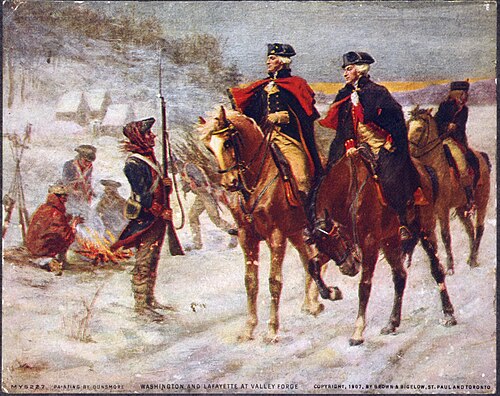
No battle was fought at Valley Forge, Pennsylvania—yet the freezing winter of 1777–1778 at Valley Forge was one of the greatest turning points of the American Revolutionary War! There, General George Washington held the battered together and transformed it into a disciplined fighting force.
A foundational concept in this investigation is (pronounced kon-tuh-NEN-tuhl AR-mee), which refers to: The unified American army formed by the Second Continental Congress in 1775 and commanded by General George Washington. Every part of George Washington at Valley Forge within The Road to Freedom & Revolution builds upon this essential concept.
At the Grade 4 level of History (American & Virginia) (The Road to Freedom & Revolution), researchers compare structure, function, and environmental context to see how , , and shape measurable outcomes.
Key Features
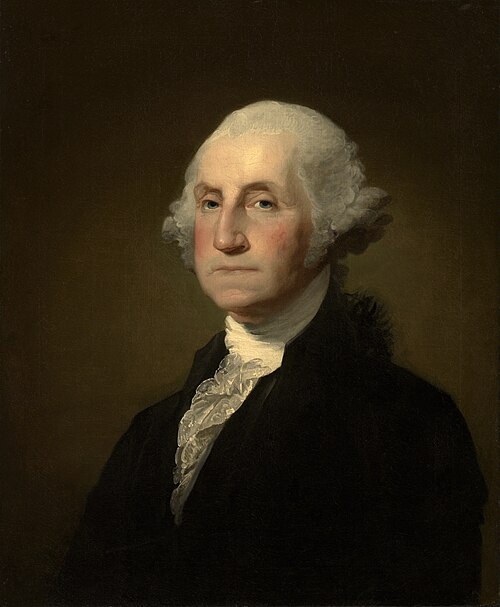
In December 1777, after British troops captured Philadelphia, General Washington marched 12,000 exhausted, poorly supplied Continental soldiers into winter quarters at Valley Forge, 20 miles northwest of Philadelphia. One in three soldiers lacked shoes or warm blankets, leaving bloody footprints in the snow.
To analyze these defining traits accurately, specialists examine (ih-nok-yuh-LAY-shuhn): Giving a protective dose against an infectious disease like smallpox so the body builds immunity. Alongside (The unified American army formed by the Second Continental Congress in 1775 and commanded by General George Washington.), these specialized characteristics set George Washington at Valley Forge apart within The Road to Freedom & Revolution.
Field Observation & Evidence: Researchers studying George Washington at Valley Forge observe how physical form matches function in History (American & Virginia). Each observable feature provides a clear advantage that supports stability, survival, or performance across changing conditions.
How It Works
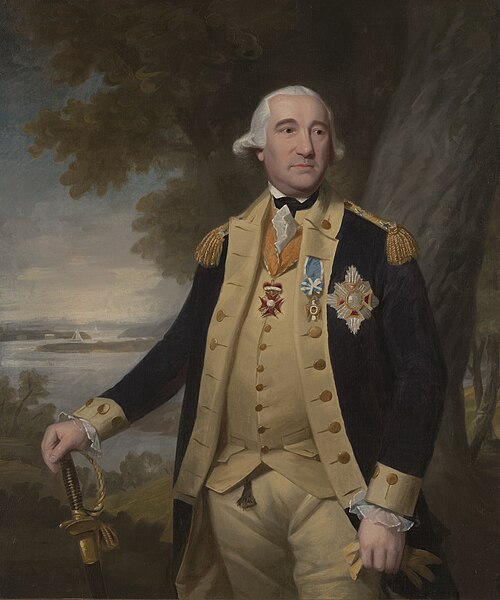
Instead of living in fancy headquarters, Washington stayed in a canvas marquee tent until his soldiers finished building 2,000 drafty log huts (14 by 16 feet, housing 12 soldiers each). To stop a deadly smallpox outbreak in camp, Washington ordered a bold medical step: mass variolation (early ) of the troops! Then, in February 1778, Prussian military officer Baron Friedrich von Steuben arrived and drilled the soldiers day after day with a unified manual of arms and bayonet tactics.
This step-by-step process relies on (pronounced pur-suh-VEER-uhns), defined as: Steadfast determination to keep going despite severe hardship, cold, and obstacles. Each stage of the process prepares the way for the next phase to unfold.
Cause-and-Effect Balance: When conditions remain balanced, and interact inside the to keep the system running smoothly. If any single link in this sequence is disrupted, the entire pace of activity shifts.
In Our World
By spring 1778—boosted by new supply management under Quartermaster General Nathanael Greene and the news that France had joined the war as America’s ally—a confident, unified marched out of Valley Forge and proved its strength against the British at the Battle of Monmouth!
Understanding how George Washington at Valley Forge functions in real environments also involves (ih-nok-yuh-LAY-shuhn): Giving a protective dose against an infectious disease like smallpox so the body builds immunity. Even when surrounding conditions shift across seasons or regions, the interaction between , Inoculation, and helps sustain balance and resilience in the wider environment.
Global & Practical Significance: Enduring the winter hardships and mastering professional military drills prepared the for victory. Furthermore, Von Steuben’s "Blue Book" became the official training manual of the US Army for decades.
Amazing Facts
1. Remarkable Scale & Numbers: General George Washington refused to move into a warm stone farmhouse at Valley Forge until his soldiers had built their own wooden winter huts first! This discovery highlights why is central to understanding George Washington at Valley Forge.
2. Extraordinary Adaptation & Design: George Washington’s decision to inoculate the against smallpox during the Revolutionary War was one of the first large-scale public health campaigns in American history. Specialized conditions involving make these adaptations possible.
3. Surprising Scientific & Historical Record: Baron von Steuben didn’t speak English when he arrived at Valley Forge—he wrote his drill instructions in French each night, which Washington’s aides Alexander Hamilton and John Laurens translated for the troops! Over time, processes linked to leave a lasting mark across The Road to Freedom & Revolution.
Read & Review
Chapter Synthesis: Throughout this investigation of George Washington at Valley Forge in History (American & Virginia) (The Road to Freedom & Revolution), we examined its core foundations, defining traits, step-by-step mechanisms, and real-world connections using key terms like , , and .
Academic Vocabulary Review: • (kon-tuh-NEN-tuhl AR-mee): The unified American army formed by the Second Continental Congress in 1775 and commanded by General George Washington. • (ih-nok-yuh-LAY-shuhn): Giving a protective dose against an infectious disease like smallpox so the body builds immunity. • (pur-suh-VEER-uhns): Steadfast determination to keep going despite severe hardship, cold, and obstacles.
Critical Thinking Check: (1) Why is the winter of 1777–1778 at Valley Forge remembered as a major turning point of the American Revolution, even though no battle occurred there? — General Washington’s leadership and Baron von Steuben’s training transformed the struggling into a disciplined, unified force. (2) Who was the Prussian officer who trained the Continental Army in unified drills and bayonet tactics at Valley Forge? — Baron Friedrich von Steuben.