Introduction
With more than 34,000 known species, fish make up the largest and oldest group of vertebrates on Earth! Fish are aquatic vertebrates that breathe dissolved oxygen underwater using feathery and steer through rivers and oceans using specialized fins.
An important word to know in this book is (gilz). Gills means: Feathery respiratory organs that extract dissolved oxygen from water as it flows across blood vessels. Learning about Gills helps us understand how Fish fits into Classification & Anatomy.
Key Features
Most fish have streamlined bodies covered in overlapping scales coated with protective slime that reduces drag in the water. Pectoral and pelvic fins steer and brake, dorsal and anal fins keep the fish upright, and the muscular caudal (tail) fin provides forward thrust.
Scientists and explorers also look closely at (swim BLAD-er), which means: An internal gas-filled sac that helps bony fish control their buoyancy without sinking or floating up. These special traits make Fish easy to spot and study.
How It Works
To breathe, a fish gulps water through its mouth and pumps it over feathery red gill filaments rich with blood capillaries, absorbing dissolved oxygen and releasing carbon dioxide. Bony fish also have an internal gas-filled to hover effortlessly at any depth.
Here is another helpful term: (LAT-er-uhl lyne). It means: A row of tiny sensory pores along a fish’s sides that detects vibrations and water movement nearby. Step by step, and Lateral Line work together in nature.
In Our World
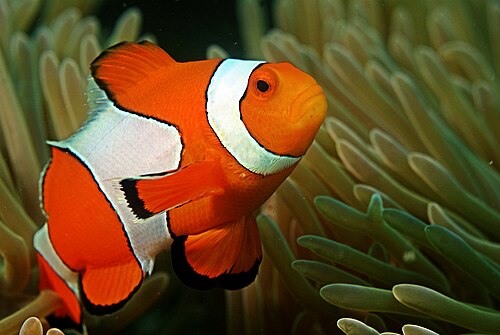
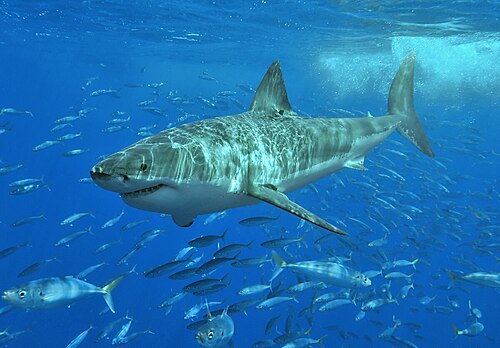
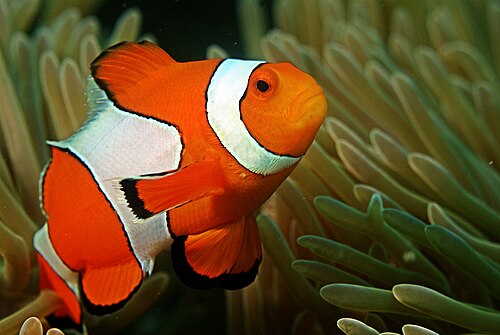
Fish are divided into three main classes: bony fish (like clownfish, salmon, and tuna), cartilaginous fish whose skeletons are made of flexible cartilage (sharks, rays, and skates), and jawless fish (lampreys and hagfish).
Understanding how Fish works in our world also involves (swim BLAD-er): An internal gas-filled sac that helps bony fish control their buoyancy without sinking or floating up. Even when surrounding conditions shift across seasons or regions, the interaction between , Swim Bladder, and helps sustain balance and resilience in the wider environment.
Amazing Facts
Amazing Fact #1: A sailfish is the fastest swimmer in the ocean, slicing through the water at up to 110 km/h (68 mph)!
Amazing Fact #2: Sharks do not have a single bone in their bodies—their entire skeleton is made of tough, flexible cartilage like the tip of your nose.
Amazing Fact #3: Clownfish live safely among stinging sea anemone tentacles because a special mucus coat on their scales keeps the anemone from stinging them.
Read & Review
Let's review what we discovered about Fish! In this book, we explored how , , and connect to Classification & Anatomy.
Key Question #1: How does a bony fish hover at a steady depth without sinking? Answer: By adjusting the gas inside its internal . The swim bladder acts like a built-in buoyancy vest, inflating or deflating with gas.
Key Question #2: What is a shark’s skeleton made of instead of hard bone? Answer: Flexible cartilage. Sharks and rays are cartilaginous fish (Chondrichthyes).