
Introduction
Every Olympic Games produces unforgettable moments where human speed, courage, and unite the entire planet! From Jesse Owens in 1936 to Wilma Rudolph, Nadia Comăneci, Michael Phelps, and the 2021 high-jump gold-medal share, Olympic history proves that limits are meant to be broken.
An important word to know in this book is (wurld REK-erd). World Record means: The fastest time, highest jump, or highest score ever officially achieved by a human being in a sporting event. Learning about World Record helps us understand how Famous Olympic Moments fits into The Olympic Games.
Key Features
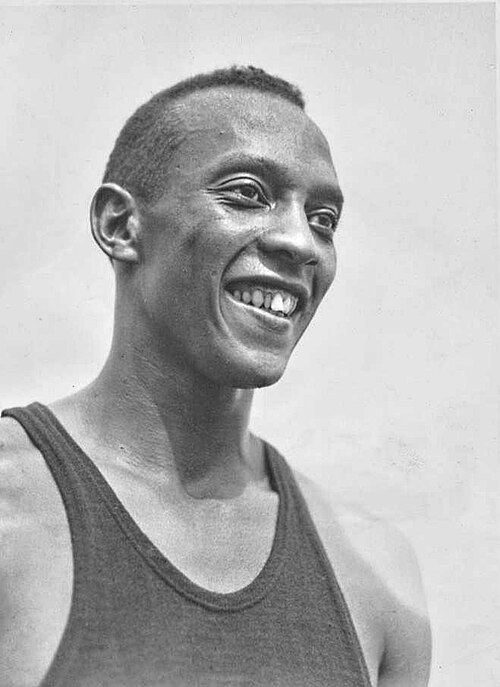
At the 1936 Berlin Olympics, African American track-and-field star Jesse Owens stunned the world by winning 4 gold medals (100m, 200m, $4\times100$m relay, and long jump)! Even more moving, during the long jump, German competitor Luz Long walked over and advised Owens on where to place his takeoff mark—and when Owens won the gold medal, Long was the first to embrace him and walk arm-in-arm around the stadium in a timeless display of friendship!
Scientists and explorers also look closely at (SPORTS-muhn-ship), which means: Treating competitors, officials, and fans with fairness, respect, generosity, and grace whether winning or losing. These special traits make Famous Olympic Moments easy to spot and study.
How It Works
At the 1960 Rome Olympics, Tennessee sprinter Wilma Rudolph—who had worn a metal leg brace until age 12 after surviving childhood polio—became the fastest woman in the world, winning 3 gold medals on a single ankle! In 1976 in Montreal, 14-year-old Romanian gymnast Nadia Comăneci performed an uneven bars routine so flawless that the electronic scoreboard (which only had three digits up to `9.95`) flashed `1.00` to represent the first Perfect 10.0 in Olympic gymnastics history!
Here is another helpful term: (REE-lay rays). It means: A team race in which four runners or swimmers each complete one leg of the distance, passing a baton or touching the wall in turn. Step by step, and Relay Race work together in nature.
In Our World
In the pool, American swimmer Michael Phelps became the most decorated Olympian of all time with 28 Olympic medals (including 23 gold medals, winning 8 golds at Beijing 2008 alone!). And at the 2020 Tokyo Olympics, after high jumpers Mutaz Essa Barshim (Qatar) and Gianmarco Tamberi (Italy) tied jump for jump, Barshim asked the official, "Can we have two golds?" When the official nodded, the two friends celebrated together around the world!
Understanding how Famous Olympic Moments works in our world also involves (SPORTS-muhn-ship): Treating competitors, officials, and fans with fairness, respect, generosity, and grace whether winning or losing. Even when surrounding conditions shift across seasons or regions, the interaction between , Sportsmanship, and helps sustain balance and resilience in the wider environment.
Amazing Facts
Amazing Fact #1: When 14-year-old gymnast Nadia Comăneci scored the first Perfect 10.0 in Olympic history in 1976, the Omega scoreboard wasn’t programmed to show four digits (`10.00`), so it displayed `1.00` instead!
Amazing Fact #2: Wilma Rudolph was told by doctors as a young child with polio that she might never walk normally—yet after years of physical therapy, she won three sprinting gold medals at the 1960 Rome Olympics!
Amazing Fact #3: Michael Phelps won 23 Olympic gold medals—more gold medals than over 130 entire countries have won in their history!
Read & Review
Let's review what we discovered about Famous Olympic Moments! In this book, we explored how , , and connect to The Olympic Games.
Key Question #1: What inspiring childhood obstacle did 1960 Olympic three-time gold-medal sprinter Wilma Rudolph overcome? Answer: Childhood polio that required her to wear a metal leg brace until she was 12 years old. With family support and determination, Wilma Rudolph overcame polio to become the fastest woman in the world at Rome 1960.
Key Question #2: Why did the electronic scoreboard flash "1.00" during 14-year-old Nadia Comăneci’s uneven bars routine at the 1976 Olympics? Answer: She earned the first Perfect 10.0 in Olympic gymnastics history, and the 3-digit scoreboard couldn’t display "10.00". Scoreboard makers had assumed a perfect 10.00 was impossible and only built three digits (`9.99`).