
Introduction
In sports—just as in school and life—the scoreboard is never final until the last whistle blows! History’s greatest sports comebacks teach athletes and fans the power of grit, , and focusing on one play at a time when the odds look impossible.
A foundational concept in this investigation is Resilience (Grit) (pronounced rih-ZIL-yuhns), which refers to: The mental toughness and optimism to bounce back quickly from a mistake, fall, or big scoreboard deficit. Every part of Famous Comebacks in Sports within Sportsmanship & Resilience builds upon this essential concept.
In Grade 3 Sports & Entertainment studies (Sportsmanship & Resilience), understanding how Resilience (Grit), , and work together helps explain real-world patterns. As you read each chapter, notice how these key terms connect structure, process, and environment.
Key Features
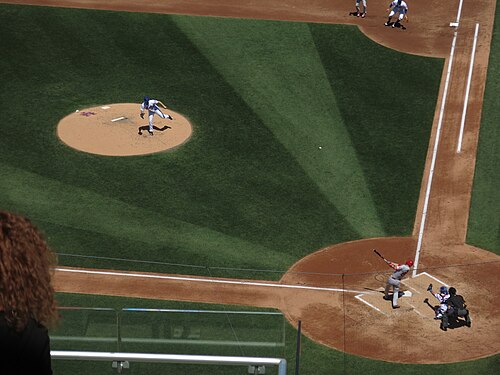
Consider three legendary comebacks across different sports: 1) In 2004 Baseball, the Boston Red Sox trailed the New York Yankees 3 games to 0 in the best-of-seven American League Championship Series (ALCS)—a deficit no team in Major League Baseball history had ever overcome! Taking the motto "one pitch at a time," Boston rallied in the 9th inning of Game 4, won four straight games, and went on to win their first World Series in 86 years!
To analyze these defining traits accurately, specialists examine (grohth MYND-set): Believing that abilities and outcomes can improve through effort, smart adjustments, and persistence rather than giving up. Alongside Resilience (Grit) (The mental toughness and optimism to bounce back quickly from a mistake, fall, or big scoreboard deficit.), these specialized characteristics set Famous Comebacks in Sports apart within Sportsmanship & Resilience.
Field Observation & Evidence: Researchers studying Famous Comebacks in Sports observe how physical form matches function in Sports & Entertainment. Each observable feature provides a clear advantage that supports stability, survival, or performance across changing conditions.
How It Works
2) In Football’s Super Bowl LI (2017), the New England Patriots trailed the Atlanta Falcons 28–3 late in the third quarter! Instead of panicking or trying to score 25 points on a single play, the team executed steady defense and short, disciplined drives to tie the game 28–28 at the final gun and win 34–28 in the first overtime in Super Bowl history! 3) In the 2013 America’s Cup yacht racing championship on San Francisco Bay, Oracle Team USA trailed Emirates Team New Zealand 8 races to 1 (with New Zealand needing just ONE more win!), tuned their hydrofoiling catamaran overnight, and won 8 consecutive races in a row to capture the cup 9–8!
This step-by-step process relies on (pronounced moh-MEN-tuhm), defined as: In sports, a surge of confidence and energy built by stringing together small positive plays one after another. Each stage of the process prepares the way for the next phase to unfold.
Cause-and-Effect Balance: When conditions remain balanced, Resilience (Grit) and interact inside the to keep the system running smoothly. If any single link in this sequence is disrupted, the entire pace of activity shifts.
In Our World
Sports psychologists have studied how athletes pull off giant comebacks: when a player stares at a huge deficit on the scoreboard, stress hormones trigger panic and tight muscles. When a team shifts focus from the outcome ("we are down by 20!") to the immediate process ("win this single pass, this single pitch, this single lap"), confidence snowballs and flips!
Understanding how Famous Comebacks in Sports functions in real environments also involves (grohth MYND-set): Believing that abilities and outcomes can improve through effort, smart adjustments, and persistence rather than giving up. Even when surrounding conditions shift across seasons or regions, the interaction between Resilience (Grit), Growth Mindset, and helps sustain balance and resilience in the wider environment.
Global & Practical Significance: Breaking a big challenge into small, immediate steps keeps focus sharp and builds steady . Furthermore, Virén’s instant recovery and world-record victory in Munich 1972 is one of Olympic history’s greatest individual comebacks.
Amazing Facts
1. Remarkable Scale & Numbers: In the 2013 America’s Cup sailing finals, Oracle Team USA was losing 8–1 in a first-to-9 series—and came back to win 8 races in a row for a 9–8 victory! This discovery highlights why Resilience (Grit) is central to understanding Famous Comebacks in Sports.
2. Extraordinary Adaptation & Design: The 2004 Boston Red Sox remain the ONLY team in Major League Baseball history to trail a best-of-seven postseason series 3 games to 0 and come back to win 4–3! Specialized conditions involving make these adaptations possible.
3. Surprising Scientific & Historical Record: At the 1972 Munich Olympics, Finnish runner Lasse Virén tripped and fell flat on the track halfway through the 10,000-meter final—got right back up, chased down the pack, and won the gold medal in a new World Record time! Over time, processes linked to leave a lasting mark across Sportsmanship & Resilience.
Read & Review
Chapter Synthesis: Throughout this investigation of Famous Comebacks in Sports in Sports & Entertainment (Sportsmanship & Resilience), we examined its core foundations, defining traits, step-by-step mechanisms, and real-world connections using key terms like Resilience (Grit), , and .
Academic Vocabulary Review: • Resilience (Grit) (rih-ZIL-yuhns): The mental toughness and optimism to bounce back quickly from a mistake, fall, or big scoreboard deficit. • (grohth MYND-set): Believing that abilities and outcomes can improve through effort, smart adjustments, and persistence rather than giving up. • (moh-MEN-tuhm): In sports, a surge of confidence and energy built by stringing together small positive plays one after another.
Critical Thinking Check: (1) According to sports psychologists, what mental strategy helps athletes overcome a huge scoreboard deficit without panicking? — Focusing on one small controllable step at a time ("the process"—this next pitch, pass, or lap) rather than staring at the final score. (2) What did Finnish runner Lasse Virén do after tripping and falling onto the track halfway through the 1972 Olympic 10,000-meter final? — He jumped right back up, caught the leaders, and won the Olympic gold medal in World Record time.