Introduction
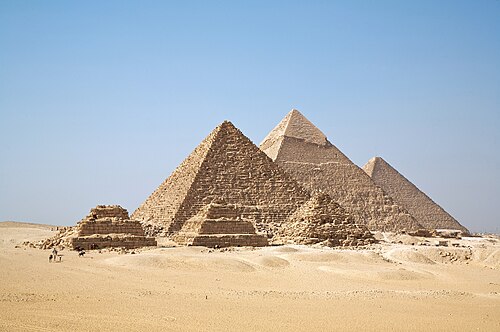
More than 4,500 years ago along the narrow green banks of the Nile River in northeastern Africa, Ancient Egypt flourished as one of the longest-lasting civilizations in world history! Greek historian Herodotus called Egypt "the Gift of the Nile" because every farm, city, and pyramid depended on the river’s annual flood.
An important word to know in this book is (hy-er-uh-GLIF-iks). Hieroglyphics means: The ancient Egyptian writing system that used more than 700 carved or painted picture symbols for sounds and words. Learning about Hieroglyphics helps us understand how Everyday Life in Ancient Egypt: Mummies & Pyramids fits into Ancient Civilizations.
Key Features
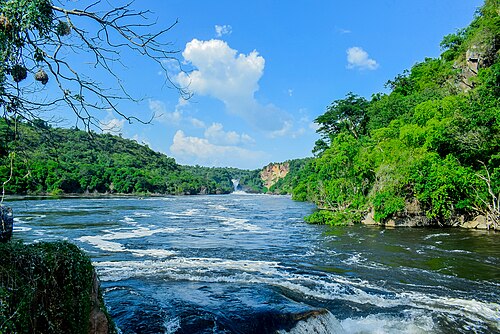
Every summer, heavy rains in central Africa caused the Nile River to overflow its banks across the dry Sahara Desert. When the floodwaters retreated each autumn, they left behind a strip of rich, dark, fertile silt that Egyptians called Kemet ("the Black Land"), where farmers grew wheat, barley, flax (for linen clothes), and tall reeds (sliced and pressed into the world’s first paper-like scrolls!).
Scientists and explorers also look closely at (puh-PY-ruhs), which means: A tall marsh reed growing along the Nile River whose pith was sliced, pressed, and dried into ancient writing sheets. These special traits make Everyday Life in Ancient Egypt: Mummies & Pyramids easy to spot and study.
How It Works
During the Old Kingdom (around 2560 BCE), thousands of skilled paid Egyptian stonemasons, engineers, and seasonal farmers built the Great Pyramid of Giza as a monumental tomb for Pharaoh Khufu! Standing 146 meters (481 feet) tall, it was built from 2.3 million limestone and granite blocks averaging 2.5 tons each—hauled up mud-lubricated ramps on wooden sleds without cranes or iron wheels! Because Egyptians believed the spirit needed its body in the afterlife, embalmers preserved royal bodies as mummies using a natural desert salt called natron and linen wrappings.
Here is another helpful term: (mum-uh-fuh-KAY-shuhn). It means: The ancient Egyptian process of preserving a body for the afterlife by drying it with natron salt and wrapping it in linen. Step by step, and Mummification work together in nature.
In Our World
How can we read the carved picture symbols——on Egyptian temple walls today? For over 1,400 years nobody could read them—until soldiers in 1799 found the Rosetta Stone, which had the exact same royal decree carved in both Greek and Egyptian hieroglyphs, allowing scholar Jean-François Champollion to crack the code in 1822!
Understanding how Everyday Life in Ancient Egypt: Mummies & Pyramids works in our world also involves (puh-PY-ruhs): A tall marsh reed growing along the Nile River whose pith was sliced, pressed, and dried into ancient writing sheets. Even when surrounding conditions shift across seasons or regions, the interaction between , Papyrus, and helps sustain balance and resilience in the wider environment.
Amazing Facts
Amazing Fact #1: The Great Pyramid of Giza (built around 2560 BCE) was the tallest human-made structure on Earth for more than 3,800 years!
Amazing Fact #2: Archaeologists discovered the bakeries, medical clinics, and worker villages at Giza—proving the pyramids were built by skilled, well-fed Egyptian crews rather than enslaved people.
Amazing Fact #3: The English word "paper" comes directly from , the river reed Ancient Egyptians wove and pressed into writing scrolls!
Read & Review
Let's review what we discovered about Everyday Life in Ancient Egypt: Mummies & Pyramids! In this book, we explored how , , and connect to Ancient Civilizations.
Key Question #1: Why was Ancient Egypt called "the Gift of the Nile"? Answer: The Nile River’s yearly flooding deposited rich black silt (Kemet) and fresh water that allowed farming to thrive in the middle of the Sahara Desert. Without the Nile’s water and fertile annual silt deposits, Egyptian agriculture and civilization could not have existed in the desert.
Key Question #2: What famous artifact found in 1799 allowed historians to finally translate ancient Egyptian ? Answer: The Rosetta Stone, which had the same message carved in ancient Greek and Egyptian scripts. Comparing the known ancient Greek text on the Rosetta Stone with the hieroglyphic cartouches unlocked the code in 1822.