Introduction
People often use the words "rainforest" and "" as if they mean the exact same thing—but botanists and explorers know an important scientific difference! While an undisturbed rainforest has a shaded, surprisingly open floor beneath a high canopy, a true jungle is a riot of thick, tangled vines, bamboo, ferns, and shrubs growing right at ground level wherever bright sunlight hits the earth!
A foundational concept in this investigation is (pronounced JUNG-guhl), which refers to: Dense, tangled ground-level vegetation of vines, shrubs, and saplings that grows where direct sunlight reaches the tropical forest floor. Every part of Dense Jungles of the World: Borneo, Congo & the Amazon within 🌴 World Biomes: Savannas, Jungles & Rainforests builds upon this essential concept.
In Grade 3 Nature & Environment studies (🌴 World Biomes: Savannas, Jungles & Rainforests), understanding how , , and work together helps explain real-world patterns. As you read each chapter, notice how these key terms connect structure, process, and environment.
Key Features
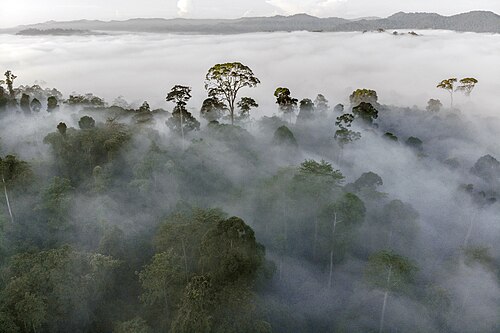
Where do jungles form? Along sunlit riverbanks, steep mountain slopes, forest edges, and clearings where a giant old tree has fallen and opened a "" in the canopy! The word comes from the ancient Sanskrit word jangala, meaning wild, untamed thicket. Earth’s three greatest tropical jungle and rainforest regions lie along the Equator: the Amazon in South America, the Congo Basin in Central Africa, and the island jungles of Borneo and Sumatra in Southeast Asia.
To analyze these defining traits accurately, specialists examine (lyte gap): A sunny opening in the rainforest canopy created when a giant tree falls or a river cuts through, triggering explosive plant growth below. Alongside Jungle (Dense, tangled ground-level vegetation of vines, shrubs, and saplings that grows where direct sunlight reaches the tropical forest floor.), these specialized characteristics set Dense Jungles of the World: Borneo, Congo & the Amazon apart within 🌴 World Biomes: Savannas, Jungles & Rainforests.
Field Observation & Evidence: Researchers studying Dense Jungles of the World: Borneo, Congo & the Amazon observe how physical form matches function in Nature & Environment. Each observable feature provides a clear advantage that supports stability, survival, or performance across changing conditions.
How It Works
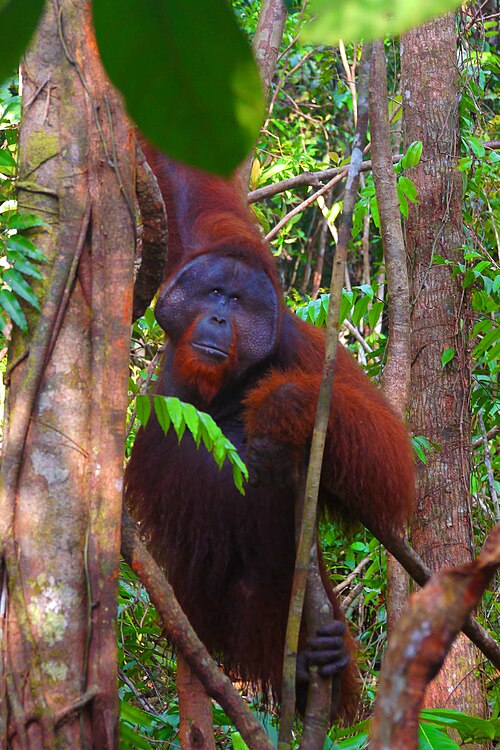
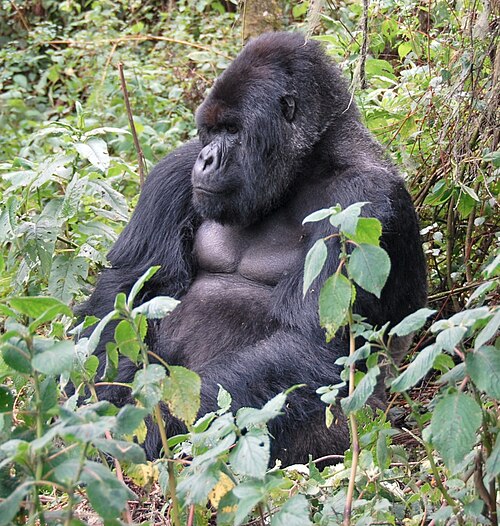
Although these three equatorial jungles share warm temperatures and heavy rains, evolution filled each one with completely different animals! In Southeast Asia’s Borneo and Sumatra jungles, red-furred orangutans ("people of the forest") swing arm-over-arm through trees alongside gliding Draco lizards and giant Rafflesia flowers. In Africa’s Congo Basin—"the second lungs of the Earth"—families of silverback gorillas, chimpanzees, okapis, and forest elephants push through dense ground ginger and marantaceae thickets!
This step-by-step process relies on (pronounced bray-kee-AY-shuhn), defined as: Swinging from branch to branch using only the arms, as orangutans and gibbons do in Southeast Asian jungles. Each stage of the process prepares the way for the next phase to unfold.
Cause-and-Effect Balance: When conditions remain balanced, and interact inside the to keep the system running smoothly. If any single link in this sequence is disrupted, the entire pace of activity shifts.
In Our World
How do animals travel through such tangled Asian and African jungles? In Borneo, high-canopy animals evolved skin membranes to glide up to 60 meters between trees—including Wallace’s flying frog (which glides on webbed toes!), flying lemurs (colugos), flying squirrels, and even flying snakes! Meanwhile, in the Congo Basin, forest elephants carve wide, cleared trail networks ("elephant highways") through the impenetrable brush that gorillas, bongos, and researchers use to travel.
Understanding how Dense Jungles of the World: Borneo, Congo & the Amazon functions in real environments also involves (lyte gap): A sunny opening in the rainforest canopy created when a giant tree falls or a river cuts through, triggering explosive plant growth below. Even when surrounding conditions shift across seasons or regions, the interaction between Jungle, Light Gap, and helps sustain balance and resilience in the wider environment.
Global & Practical Significance: Direct sunlight along riverbanks and canopy light gaps fuels the impenetrable ground thicket known as a . Furthermore, Each of the three major tropical basins evolved distinct primate and mammal communities.
Amazing Facts
1. Remarkable Scale & Numbers: Scientific Difference: A rainforest has a high canopy that shades the floor; a is the dense, sunlit tangle of ground vines and bushes along rivers and clearings where you would need a machete to walk! This discovery highlights why Jungle is central to understanding Dense Jungles of the World: Borneo, Congo & the Amazon.
2. Extraordinary Adaptation & Design: The floor of Borneo and Sumatra grows the Rafflesia arnoldii ("corpse flower")—the largest single flower on Earth, measuring 1 meter (3.3 feet) wide, weighing 11 kilograms, and smelling like rotting meat to attract carrion flies! Specialized conditions involving make these adaptations possible.
3. Surprising Scientific & Historical Record: Borneo’s jungles are over 140 million years old—more than twice as old as the Amazon Rainforest—making them the oldest tropical rainforests on planet Earth! Over time, processes linked to leave a lasting mark across 🌴 World Biomes: Savannas, Jungles & Rainforests.
Read & Review
Chapter Synthesis: Throughout this investigation of Dense Jungles of the World: Borneo, Congo & the Amazon in Nature & Environment (🌴 World Biomes: Savannas, Jungles & Rainforests), we examined its core foundations, defining traits, step-by-step mechanisms, and real-world connections using key terms like , , and .
Academic Vocabulary Review: • (JUNG-guhl): Dense, tangled ground-level vegetation of vines, shrubs, and saplings that grows where direct sunlight reaches the tropical forest floor. • (lyte gap): A sunny opening in the rainforest canopy created when a giant tree falls or a river cuts through, triggering explosive jungle plant growth below. • (bray-kee-AY-shuhn): Swinging from branch to branch using only the arms, as orangutans and gibbons do in Southeast Asian jungles.
Critical Thinking Check: (1) What is the scientific difference between a shaded rainforest interior and a ""? — A rainforest has a high canopy that blocks light from the floor, whereas a jungle has thick, tangled ground-level vines and bushes where bright sunlight reaches (such as along rivers and clearings). (2) Which three regions form Earth’s largest equatorial rainforest and jungle basins, and which great apes live in them? — Southeast Asia (Borneo/Sumatra: Orangutans & Gibbons), Central Africa (Congo Basin: Gorillas & Chimpanzees), and South America (Amazon: New World Monkeys, no great apes).