Introduction
Below 1,000 meters (3,280 feet) in the ocean, sunlight disappears completely into the midnight and hadal zones. In deep-sea trenches like the Mariana Trench, animals survive pitch-black darkness, near-freezing water, and crushing water pressure over 1,000 times greater than at sea level.
A foundational concept in this investigation is (pronounced by-oh-loo-muh-NES-uhns), which refers to: Light produced naturally by a living organism through a chemical reaction in its body. Every part of Deep-Sea Trenches within Animal Habitats builds upon this essential concept.
At the Grade 4 level of Animals (Animal Habitats), researchers compare structure, function, and environmental context to see how , , and shape measurable outcomes.
Key Features
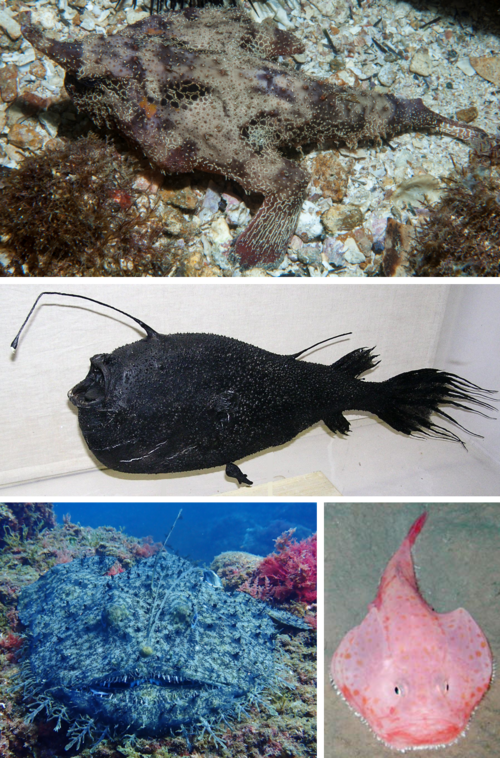
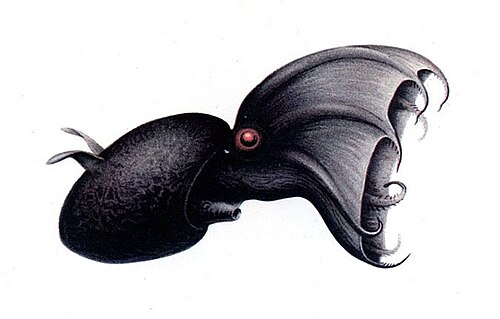
Deep-sea creatures such as the anglerfish, vampire squid, and giant snailfish lack gas-filled swim bladders that would be crushed by pressure. Instead, their bodies are made of flexible cartilage and watery gelatinous tissues.
To analyze these defining traits accurately, specialists examine (hy-droh-THUR-muhl vent): A fissure on the ocean floor that releases geothermally heated, mineral-rich water. Alongside (Light produced naturally by a living organism through a chemical reaction in its body.), these specialized characteristics set Deep-Sea Trenches apart within Animal Habitats.
Field Observation & Evidence: Researchers studying Deep-Sea Trenches observe how physical form matches function in Animals. Each observable feature provides a clear advantage that supports stability, survival, or performance across changing conditions.
How It Works
Over 75% of deep-sea animals produce their own light through —a chemical reaction between luciferin and oxygen inside glowing organs called photophores. The female deep-sea anglerfish dangles a glowing bioluminescent lure from her head to attract prey in the dark.
This step-by-step process relies on (pronounced HAY-duhl zohn), defined as: The deepest region of the ocean located inside deep-sea trenches below 6,000 meters. Each stage of the process prepares the way for the next phase to unfold.
Cause-and-Effect Balance: When conditions remain balanced, and interact inside the to keep the system running smoothly. If any single link in this sequence is disrupted, the entire pace of activity shifts.
In Our World
The Challenger Deep in the Pacific Ocean’s Mariana Trench reaches nearly 11,000 meters (36,000 feet) deep—deeper than Mount Everest is tall. Hydrothermal vents on the sea floor gush mineral-rich superheated water that feeds tube worms and ghostly white crabs.
Understanding how Deep-Sea Trenches functions in real environments also involves (hy-droh-THUR-muhl vent): A fissure on the ocean floor that releases geothermally heated, mineral-rich water. Even when surrounding conditions shift across seasons or regions, the interaction between , Hydrothermal Vent, and helps sustain balance and resilience in the wider environment.
Global & Practical Significance: Symbiotic bacteria inside the anglerfish’s esca (lure) glow in the dark to draw curious fish close. Furthermore, Liquids and gelatinous tissues are nearly incompressible, allowing deep-sea fish to withstand immense pressure.
Amazing Facts
1. Remarkable Scale & Numbers: The Mariana Trench is so deep that if Mount Everest were placed at the bottom, its peak would still be more than 2 kilometers underwater! This discovery highlights why is central to understanding Deep-Sea Trenches.
2. Extraordinary Adaptation & Design: When threatened, the vampire squid does not squirt black ink—it releases a cloud of glowing blue bioluminescent mucus to confuse predators. Specialized conditions involving make these adaptations possible.
3. Surprising Scientific & Historical Record: Deep-sea hydrothermal vents support giant tube worms over 2 meters long that have no mouth or stomach and rely on chemosynthetic bacteria. Over time, processes linked to leave a lasting mark across Animal Habitats.
Read & Review
Chapter Synthesis: Throughout this investigation of Deep-Sea Trenches in Animals (Animal Habitats), we examined its core foundations, defining traits, step-by-step mechanisms, and real-world connections using key terms like , , and .
Academic Vocabulary Review: • (by-oh-loo-muh-NES-uhns): Light produced naturally by a living organism through a chemical reaction in its body. • (hy-droh-THUR-muhl vent): A fissure on the ocean floor that releases geothermally heated, mineral-rich water. • (HAY-duhl zohn): The deepest region of the ocean located inside deep-sea trenches below 6,000 meters.
Critical Thinking Check: (1) How does a deep-sea anglerfish attract prey in pitch-black water? — With a glowing bioluminescent lure on its head. (2) Why don’t deep-sea snailfish get crushed by extreme water pressure? — Their bodies are made of watery, flexible tissues without air-filled cavities.