Introduction
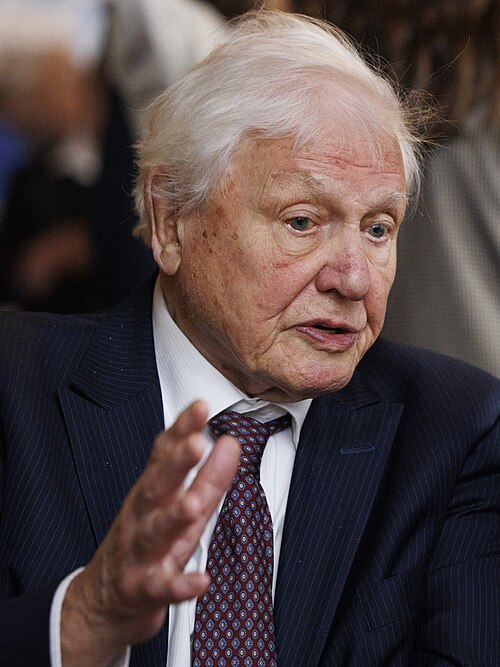
For more than 70 years, one unmistakable, hushed, awe-filled voice has guided billions of viewers from the glowing depths of the Mariana Trench to the icy peaks of the Himalayas: British and broadcaster Sir David Attenborough (born 1926)! The only person in television history to have made nature documentaries in every single format—from 1950s black-and-white TV to color, HD, 4K, 3D, and IMAX—Attenborough has had more than 50 newly discovered living and fossil species of plants and animals named in his honor!
A foundational concept in this investigation is (pronounced NACH-er-uh-list), which refers to: A scientist and observer who studies animals, plants, fossils, and ecosystems directly in nature and shares how all living things are interconnected. Every part of Sir David Attenborough: The Voice of Planet Earth within 🔬 Modern Science, Nature & Public Intellectuals builds upon this essential concept.
In Grade 5 advanced nonfiction inquiry across Famous People (Movers & Shakers) (🔬 Modern Science, Nature & Public Intellectuals), synthesizing primary evidence around , , and reveals how complex systems operate and adapt over time.
Key Features
Born on May 8, 1926, in Isleworth, Middlesex, and raised on the campus of University College, Leicester (where his father Frederick was college principal), young David spent his childhood cycling through the English countryside with a canvas knapsack collecting ammonite fossils, newts, and stones! When a visiting archaeologist at the university admired seven-year-old David’s "museum" of fossils, the boy was hooked on natural history for life! He won a scholarship to Clare College, University of Cambridge, where he earned his degree in natural sciences (geology and zoology) in 1947.
To analyze these defining traits accurately, specialists examine (by-oh-dy-VUR-sih-tee): The rich variety of all living species—animals, plants, fungi, and microorganisms—that work together to keep Earth’s ecosystems healthy and balanced. Alongside (A scientist and observer who studies animals, plants, fossils, and ecosystems directly in nature and shares how all living things are interconnected.), these specialized characteristics set Sir David Attenborough: The Voice of Planet Earth apart within 🔬 Modern Science, Nature & Public Intellectuals.
Field Observation & Evidence: Researchers studying Sir David Attenborough: The Voice of Planet Earth observe how physical form matches function in Famous People (Movers & Shakers). Each observable feature provides a clear advantage that supports stability, survival, or performance across changing conditions.
How It Works
When David applied to join BBC Television in 1952, he had only ever watched one television program in his entire life (because his family didn’t own a TV set!), and a studio boss initially told him his teeth were too big to be on camera—putting him behind the scenes as a producer! Then in 1954, during the filming of Zoo Quest in West Africa, the show’s presenter fell ill and 28-year-old Attenborough stepped in front of the camera! Instead of showing animals pacing inside iron zoo cages in London, Zoo Quest filmed wild animals in their natural tropical habitats for the first time on British television!
This step-by-step process relies on (pronounced NACH-er-uhl HAB-ih-tat), defined as: The wild forest, ocean reef, desert, or tundra environment where an animal or plant naturally lives, finds food, and raises its young. Each stage of the process prepares the way for the next phase to unfold.
Cause-and-Effect Balance: When conditions remain balanced, and interact inside the to keep the system running smoothly. If any single link in this sequence is disrupted, the entire pace of activity shifts.
In Our World
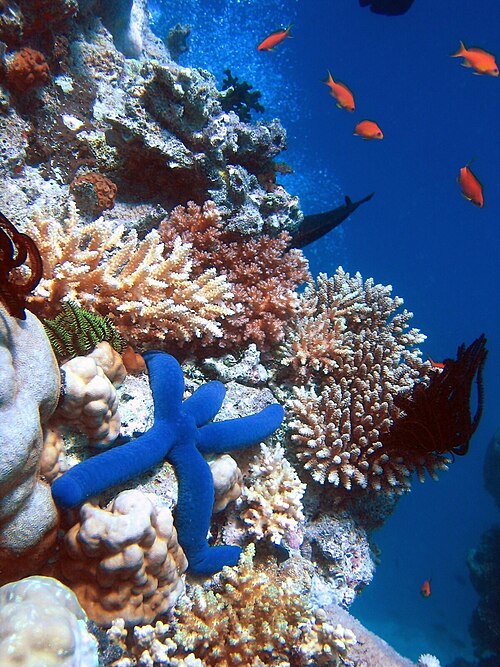
Later, while serving as Controller of BBC Two (1965–1969), Attenborough oversaw the launch of Europe’s first color television broadcasts—and then resigned from his executive desk job so he could return to the field and create his landmark "Life" series (Life on Earth, The Living Planet, The Trials of Life) and the modern masterpieces Planet Earth, Blue Planet, and Our Planet! Approaching his 100th birthday, Sir David remains one of Planet Earth’s most passionate defenders—inspiring millions to cut plastic pollution, restore coral reefs, and rewild our living planet!
Understanding how Sir David Attenborough: The Voice of Planet Earth functions in real environments also involves (by-oh-dy-VUR-sih-tee): The rich variety of all living species—animals, plants, fungi, and microorganisms—that work together to keep Earth’s ecosystems healthy and balanced. Even when surrounding conditions shift across seasons or regions, the interaction between , Biodiversity, and helps sustain balance and resilience in the wider environment.
Global & Practical Significance: Zoo Quest pioneered on-location wildlife filmmaking in animals’ natural habitats across Africa, South America, and Indonesia. Furthermore, Countless field biologists chose their careers after watching Attenborough’s documentaries as children.
Amazing Facts
1. Remarkable Scale & Numbers: More than 50 species and genera of living and prehistoric organisms are named after Sir David Attenborough—including a 430-million-year-old fossil crustacean, a long-beaked echidna (Zaglossus attenboroughi), a flesh-eating pitcher plant (Nepenthes attenboroughii), a Jurassic marine reptile (Attenborosaurus), and even a polar research ship (RRS Sir David Attenborough)! This discovery highlights why is central to understanding Sir David Attenborough: The Voice of Planet Earth.
2. Extraordinary Adaptation & Design: In 1979’s Life on Earth, over 12 million viewers watched wild mountain gorillas in Rwanda gently groom David Attenborough’s hair and play with his shoelaces as he whispered into the microphone—changing forever how the public viewed gorillas (once unfairly feared as "King Kong" monsters)! Specialized conditions involving make these adaptations possible.
3. Surprising Scientific & Historical Record: Attenborough is the only broadcaster in history to win BAFTA Awards for programs shot in black-and-white, color, High Definition (HD), 3D, and 4K Ultra-HD! Over time, processes linked to leave a lasting mark across 🔬 Modern Science, Nature & Public Intellectuals.
Read & Review
Chapter Synthesis: Throughout this investigation of Sir David Attenborough: The Voice of Planet Earth in Famous People (Movers & Shakers) (🔬 Modern Science, Nature & Public Intellectuals), we examined its core foundations, defining traits, step-by-step mechanisms, and real-world connections using key terms like , , and .
Academic Vocabulary Review: • (NACH-er-uh-list): A scientist and observer who studies animals, plants, fossils, and ecosystems directly in nature and shares how all living things are interconnected. • (by-oh-dy-VUR-sih-tee): The rich variety of all living species—animals, plants, fungi, and microorganisms—that work together to keep Earth’s ecosystems healthy and balanced. • (NACH-er-uhl HAB-ih-tat): The wild forest, ocean reef, desert, or tundra environment where an animal or plant naturally lives, finds food, and raises its young.
Critical Thinking Check: (1) How did Sir David Attenborough’s 1954 BBC television program Zoo Quest change how people watched wildlife on television? — For the first time, cameras traveled into the wild to film animals living in their natural tropical habitats rather than only showing them inside studio rooms or cages. (2) Why have biologists and paleontologists named more than 50 newly discovered species of animals, plants, and fossils (like Attenborosaurus and Nepenthes attenboroughii) after Sir David Attenborough? — To honor his 70+ years of inspiring generations of scientists and educating billions of people about the wonders of the natural world.