Introduction
With more than 2.5 billion fans across India, Australia, England, Pakistan, South Africa, the Caribbean (West Indies), New Zealand, and rapidly growing leagues in the United States, Cricket is the second most popular sport on Earth after soccer!
An important word to know in this book is (WIK-it). Wicket means: The set of three wooden stumps topped by two small wooden bails defended by the batter at each end of the cricket pitch. Learning about Wicket helps us understand how Cricket fits into Lesser-Known Sports.
Key Features
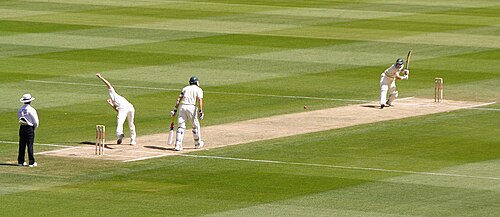
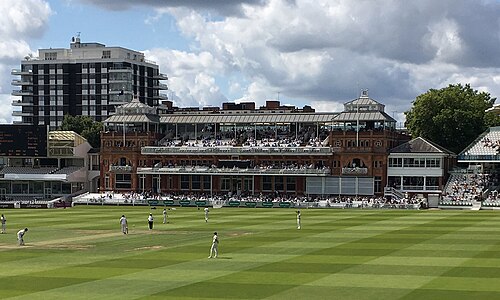
Cricket is played on a large oval grass field with a 20.12-meter (22-yard) rectangular clay strip in the center called the Pitch. At each end of the pitch stands a —three upright wooden stakes (stumps) topped by two tiny wooden crosspieces (bails). Two batters from the batting team stand at opposite wickets holding flat willow-wood bats, surrounded by 11 fielders from the bowling team.
Scientists and explorers also look closely at (BOH-ler), which means: The player who delivers (bowls) the cricket ball with a straight-arm overhand motion after a running approach, usually bouncing it once off the pitch. These special traits make Cricket easy to spot and study.
How It Works
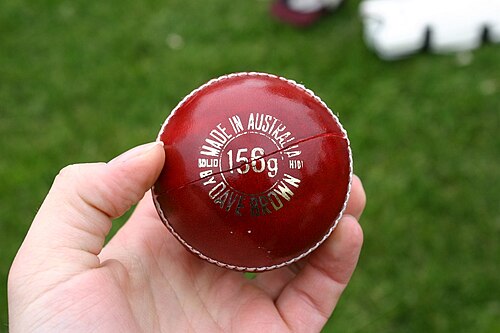
A pitcher—called the —takes a running start and delivers the hard cork-and-leather cricket ball with a straight arm, usually bouncing it once off the pitch so it seams, swings, or spins toward the batter’s ! If the batter hits the ball into the field, the two batters sprint back and forth between the two wickets, scoring 1 run each time they safely trade ends! Even better: if a batter hits the ball all the way to the outer boundary rope along the ground, it automatically scores 4 runs; if they launch it over the boundary rope in the air without bouncing (like a home run), it scores 6 runs!
Here is another helpful term: Boundary (Four & Six) (BOWN-dree). It means: Scoring 4 runs automatically when a hit ball rolls across the outer field rope, or 6 runs when it flies over the rope in the air! Step by step, and Boundary (Four & Six) work together in nature.
In Our World
How does the fielding team get a batter out (taking a "")? 1) Bowled (the pitched ball hits the wooden stumps and knocks off a bail), 2) Caught (a fielder catches a hit ball in the air before it bounces—using bare hands with no baseball gloves!), or 3) Run Out (a fielder throws the ball and knocks off the bails while the batter is running between wickets)! Matches range from thrilling 3-hour Twenty20 (T20) games to 5-day Test matches!
Understanding how Cricket works in our world also involves (BOH-ler): The player who delivers (bowls) the cricket ball with a straight-arm overhand motion after a running approach, usually bouncing it once off the pitch. Even when surrounding conditions shift across seasons or regions, the interaction between , Bowler, and Boundary (Four & Six) helps sustain balance and resilience in the wider environment.
Amazing Facts
Amazing Fact #1: Except for the one -Keeper standing behind the stumps, all 10 fielders in cricket catch hard 140 km/h (87 mph) leather balls with their BARE HANDS—no gloves allowed!
Amazing Fact #2: When a cricket batter reaches 100 runs in a single innings without getting out, it is celebrated as a "Century"—and the batter raises their willow bat to salute the cheering crowd!
Amazing Fact #3: Cricket will officially return to the Summer Olympic Games at the 2028 Los Angeles Olympics in the fast-paced Twenty20 (T20) format!
Read & Review
Let's review what we discovered about Cricket! In this book, we explored how , , and Boundary (Four & Six) connect to Lesser-Known Sports.
Key Question #1: In Cricket, how many runs does a batter score immediately if they hit the ball over the outer boundary rope in the air without bouncing? Answer: 6 runs (and 4 runs if it bounces/rolls across the rope). Clearing the boundary rope on the fly scores a "Six," while reaching the rope along the ground scores a "Four."
Key Question #2: What is the wooden target of three upright "stumps" and two "bails" standing behind the batter called? Answer: The . The batter defends their wicket with a flat willow bat to prevent the ball from knocking the bails off the stumps.