Introduction
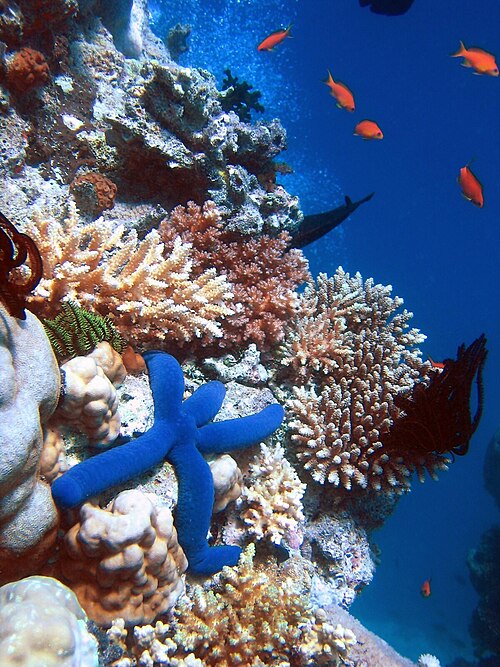
With their branching antlers, domes, and neon colors, coral reefs look like underwater flower gardens or colorful rocks—but corals are actually colonies of thousands of tiny living invertebrate animals called polyps! Often called the "rainforests of the sea," reefs cover less than 1% of the ocean floor yet shelter 25% of all marine life.
A foundational concept in this investigation is (pronounced KOR-uhl POL-ip), which refers to: A tiny, soft-bodied marine invertebrate that secretes a hard limestone skeleton to build coral reefs. Every part of Coral Reefs within Earth's Wonders builds upon this essential concept.
In Grade 3 Nature & Environment studies (Earth's Wonders), understanding how , , and work together helps explain real-world patterns. As you read each chapter, notice how these key terms connect structure, process, and environment.
Key Features
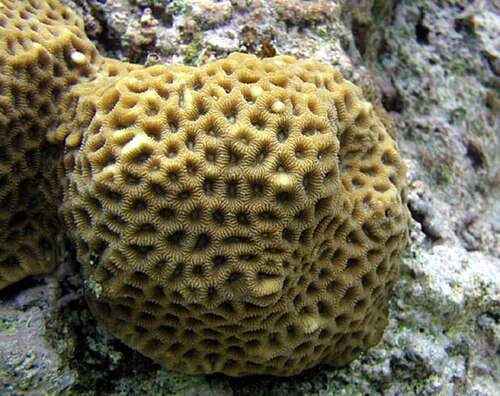
Each soft is a tiny cousin of jellyfish and sea anemones, measuring just millimeters across with a ring of stinging tentacles. Hard (stony) corals extract calcium and carbonate from seawater to build a protective cup of limestone () around themselves.
To analyze these defining traits accurately, specialists examine (sim-by-OH-sis): A close partnership between two different species that benefits both, such as coral polyps and microscopic algae. Alongside (A tiny, soft-bodied marine invertebrate that secretes a hard limestone skeleton to build coral reefs.), these specialized characteristics set Coral Reefs apart within Earth's Wonders.
Field Observation & Evidence: Researchers studying Coral Reefs observe how physical form matches function in Nature & Environment. Each observable feature provides a clear advantage that supports stability, survival, or performance across changing conditions.
How It Works
Reef-building corals survive in warm, clear, sunlit water thanks to a remarkable partnership () with microscopic algae called zooxanthellae living inside their tissues. The algae use sunlight to make sugar that feeds the coral up to 90% of its energy, and the algae also give corals their vibrant gold, purple, and pink colors!
This step-by-step process relies on (pronounced KAL-see-uhm KAR-buh-nayt), defined as: The hard limestone mineral ($CaCO_3$) that corals, clams, and snails extract from seawater to build their skeletons and shells. Each stage of the process prepares the way for the next phase to unfold.
Cause-and-Effect Balance: When conditions remain balanced, and interact inside the to keep the system running smoothly. If any single link in this sequence is disrupted, the entire pace of activity shifts.
In Our World
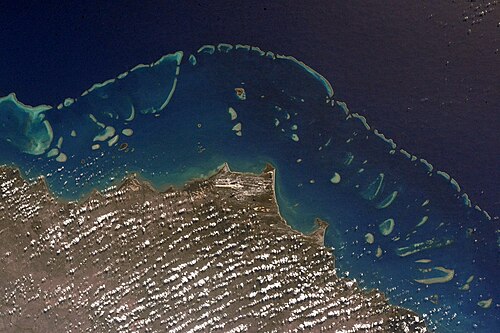
Australia’s Great Barrier Reef stretches over 2,300 kilometers (1,400 miles) and is the largest living structure on Earth—big enough to be seen from outer space! When ocean water gets too hot, stressed corals expel their colorful algae and turn white ("coral bleaching"), which is why protecting clean, cool oceans is vital.
Understanding how Coral Reefs functions in real environments also involves (sim-by-OH-sis): A close partnership between two different species that benefits both, such as coral polyps and microscopic algae. Even when surrounding conditions shift across seasons or regions, the interaction between , Symbiosis, and helps sustain balance and resilience in the wider environment.
Global & Practical Significance: Coral polyps are tiny animals that build interconnected skeletons over centuries. Furthermore, Photosynthetic zooxanthellae algae inside coral polyps require sunlight to produce food.
Amazing Facts
1. Remarkable Scale & Numbers: Although coral reefs cover less than 1% of the ocean floor, they provide homes and nurseries for 1 out of every 4 fish species in the ocean! This discovery highlights why is central to understanding Coral Reefs.
2. Extraordinary Adaptation & Design: Parrotfish crunch algae off coral rock with their beak-like teeth and poop out fine white sand—a single large parrotfish can make 300 kilograms of beach sand a year! Specialized conditions involving make these adaptations possible.
3. Surprising Scientific & Historical Record: Some deep-water brain coral colonies are over 900 years old, growing just 1 to 2 centimeters per year. Over time, processes linked to leave a lasting mark across Earth's Wonders.
Read & Review
Chapter Synthesis: Throughout this investigation of Coral Reefs in Nature & Environment (Earth's Wonders), we examined its core foundations, defining traits, step-by-step mechanisms, and real-world connections using key terms like , , and .
Academic Vocabulary Review: • (KOR-uhl POL-ip): A tiny, soft-bodied marine invertebrate that secretes a hard limestone skeleton to build coral reefs. • (sim-by-OH-sis): A close partnership between two different species that benefits both, such as coral polyps and microscopic algae. • (KAL-see-uhm KAR-buh-nayt): The hard limestone mineral ($CaCO_3$) that corals, clams, and snails extract from seawater to build their skeletons and shells.
Critical Thinking Check: (1) What is a coral reef actually built by? — Colonies of thousands of tiny invertebrate animals called coral polyps. (2) Why do reef-building corals need clear, shallow, sunlit water? — So the symbiotic algae living inside their tissues can perform photosynthesis and feed the coral.